Skip to content
Briefings are running a touch slower this week while we rebuild the foundations.See roadmap
Iran Conflict 2026
10APR

Reuters reports extension talks; Leavitt denies

3 min read
08:05UTC

Reuters cited senior Iranian sources on 18 April saying Washington and Tehran were close to a 60-day ceasefire extension; White House press secretary Karoline Leavitt said the US had not formally requested one.

ConflictDeveloping
Key takeaway

The 60-day ceasefire extension exists in Reuters reporting but not in any signed Iranian or US document.

Reuters reported on 18 April, citing senior Iranian sources, that Washington and Tehran were close to a 60-day ceasefire extension 1. White House press secretary Karoline Leavitt told reporters the US had not formally requested an extension, and a senior US official told CBS News "there are no new terms for an extension yet agreed" 2. The current Iran ceasefire expires on 22 April.

The Reuters framing ran into two denials inside 24 hours. Leavitt had already denied a formal US extension request on 17 April . Tasnim News Agency then labelled the Reuters report US psychological warfare. An extension that exists in a wire report, but not in a signed US request and not in an Iranian acknowledgement, is an extension only in the grammatical sense.

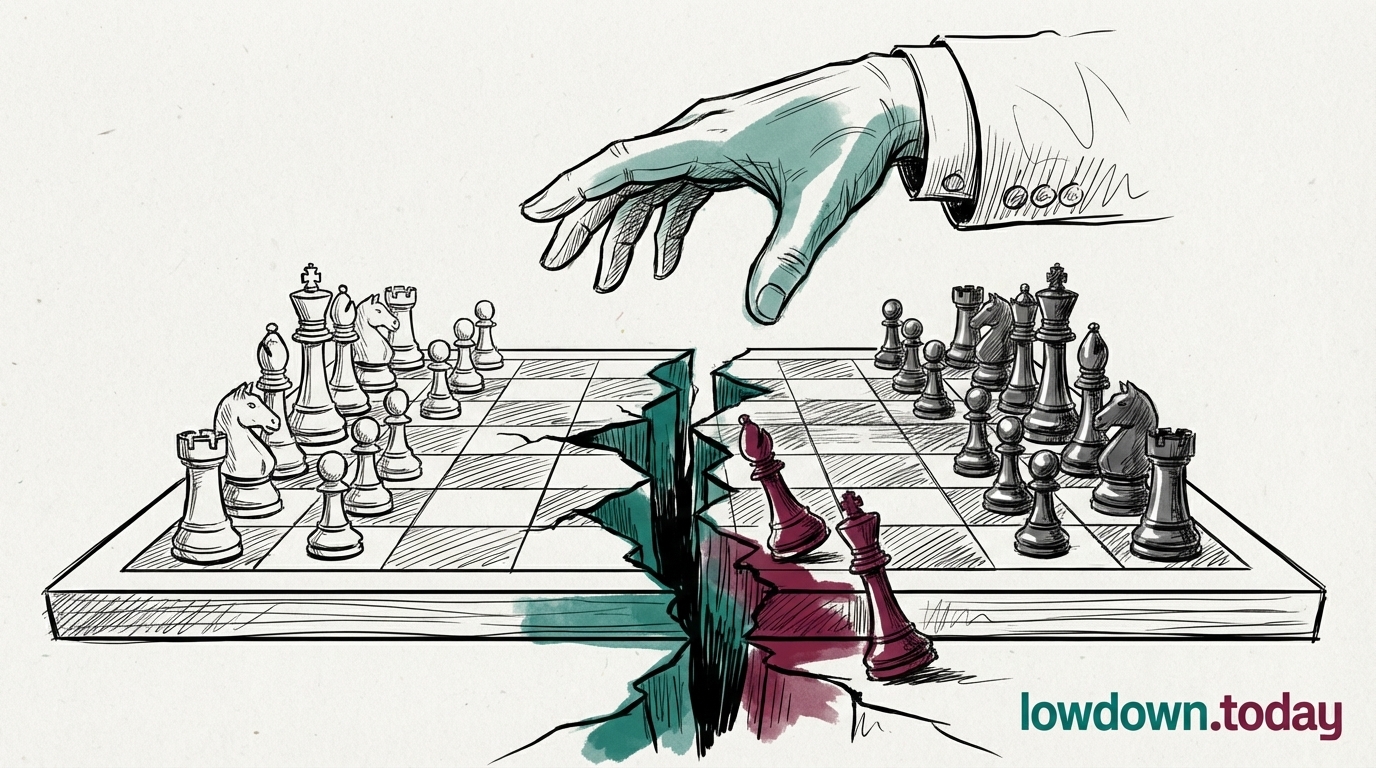
The absence of signed paper here fits a broader convergence. Four unsigned deadlines now sit inside 10 days: GL-U (already lapsed), the Iran ceasefire (22 April), the Lebanon truce (around 26 April) and the War Powers Resolution 60-day clock (29 April) . None of the four has a signed text in hand. The 60-day ceasefire extension is the third of those deadlines, and Saturday's reporting extends the pattern in which Iran-adjacent outcomes are announced on wires and social media rather than committed to paper.

Deep Analysis

In plain English

Reuters, one of the world's major wire news agencies, reported on 18 April that the United States and Iran were close to agreeing a 60-day extension of their ceasefire. The ceasefire is currently set to expire on 22 April. Within hours, White House press secretary Karoline Leavitt said the US had not 'formally requested' an extension. A senior US official separately told CBS News no new terms had been agreed. This kind of contradiction between news reports and official denials is common in diplomacy ; governments often allow unofficial channels to test ideas before committing publicly. But it creates real uncertainty: if no extension is formally agreed before 22 April, both sides could technically return to full hostilities without either having explicitly chosen to do so.

What could happen next?
  • Risk

    With the ceasefire expiring on 22 April and no signed extension, Hormuz IRGC operations, US blockade enforcement, and GL-U's lapsed legal cover converge into a potential triple escalation point over a 72-hour window.

  • Consequence

    Leavitt's denial that a formal request was made means the US retains the legal and diplomatic position that the original ceasefire terms remain operative ; giving Washington flexibility to blame Iran if hostilities resume on 22 April.

First Reported In

Update #73 · Russia yes, Iran no: Treasury signs only one waiver

The White House· 19 Apr 2026
Read original
Different Perspectives
Lloyd's of London
Lloyd's of London
The Joint War Committee left Hormuz war-risk premiums at $10-14 million per voyage on 25 May, declining to move on Brent's 5% fall. The JWC's protocol requires a UN Security Council resolution or bilateral government certification letter before de-listing, and neither has arrived: a verbal understanding does not satisfy the formal condition the reinsurance market's treaty terms require.
Gulf Arab producers
Gulf Arab producers
Saudi Arabia and UAE depend on Hormuz for their own crude exports; Aramco CEO Nasser has warned no oil market recovery arrives until 2027 if the blockade continues past mid-June. Monday's $98.96 Brent settlement shortens nothing for Gulf producers without a signed instrument and a Pentagon mine-clearance timeline that runs up to six months post-ceasefire.
Qatar
Qatar
Qatar holds $12bn of frozen Iranian assets at the centre of the sequencing dispute but cannot release them without explicit US Treasury authorisation, given the original freeze was a US instrument. As the asset-holding state, Qatar's leverage is real but passive: it is the escrow holder, not the decision-maker, and any resolution requires US Treasury sign-off that Trump has withheld.
Pakistan
Pakistan
With both Prime Minister Sharif and army chief Munir simultaneously in Beijing on 25 May, Pakistan has for the first time consolidated its civilian and military mediation tracks under China's roof. Munir's direct Tehran-to-Beijing flight signals that the security and financial threads of the sequencing problem are now being worked in parallel rather than sequentially.
China
China
Beijing hosted Pakistan's principal mediators and Iran's China envoy Ghalibaf simultaneously on 25 May while its banking regulator capped new state-bank lending to five sanctioned refiners. China is simultaneously the most credible third-party underwriter of the $12bn sequencing and the state whose institutions face live OFAC secondary-sanctions exposure if the deadlock persists through GL V's expiry.
United States
United States
Trump posted on 24 May that the blockade holds until a deal is certified and signed, ruling out the informal MOU structure both sides had been building. The 'certified, and signed' condition is the first operational bar Trump has attached in 87 days, but it arrived without an executive instrument, maintaining the gap between posted ultimatum and signed US policy.