Skip to content
Briefings are running a touch slower this week while we rebuild the foundations.See roadmap
Iran Conflict 2026
9APR

Iran's five peace terms: Hormuz first

2 min read
11:02UTC

Tehran published five conditions for ending the war. The fifth, permanent control of the Strait of Hormuz, would rewrite international maritime law.

ConflictDeveloping
Key takeaway

Iran is legislating Hormuz control into permanent law before any ceasefire.

Iran's stated terms for ending the war, relayed through PressTV on 25 March via a senior political-security official, are: (1) complete cessation of all attacks; (2) concrete security mechanisms preventing reimposition of war; (3) guaranteed reparations; (4) end of war across all fronts for all resistance groups; and (5) recognition of Iran's right to control the Strait of Hormuz. 1

Condition five is not a ceasefire demand. Under UNCLOS, the strait of Hormuz is an international waterway; Iran may regulate transit through its territorial waters but cannot claim sovereignty over passage itself. No US administration could accept this. Iran almost certainly knows that.

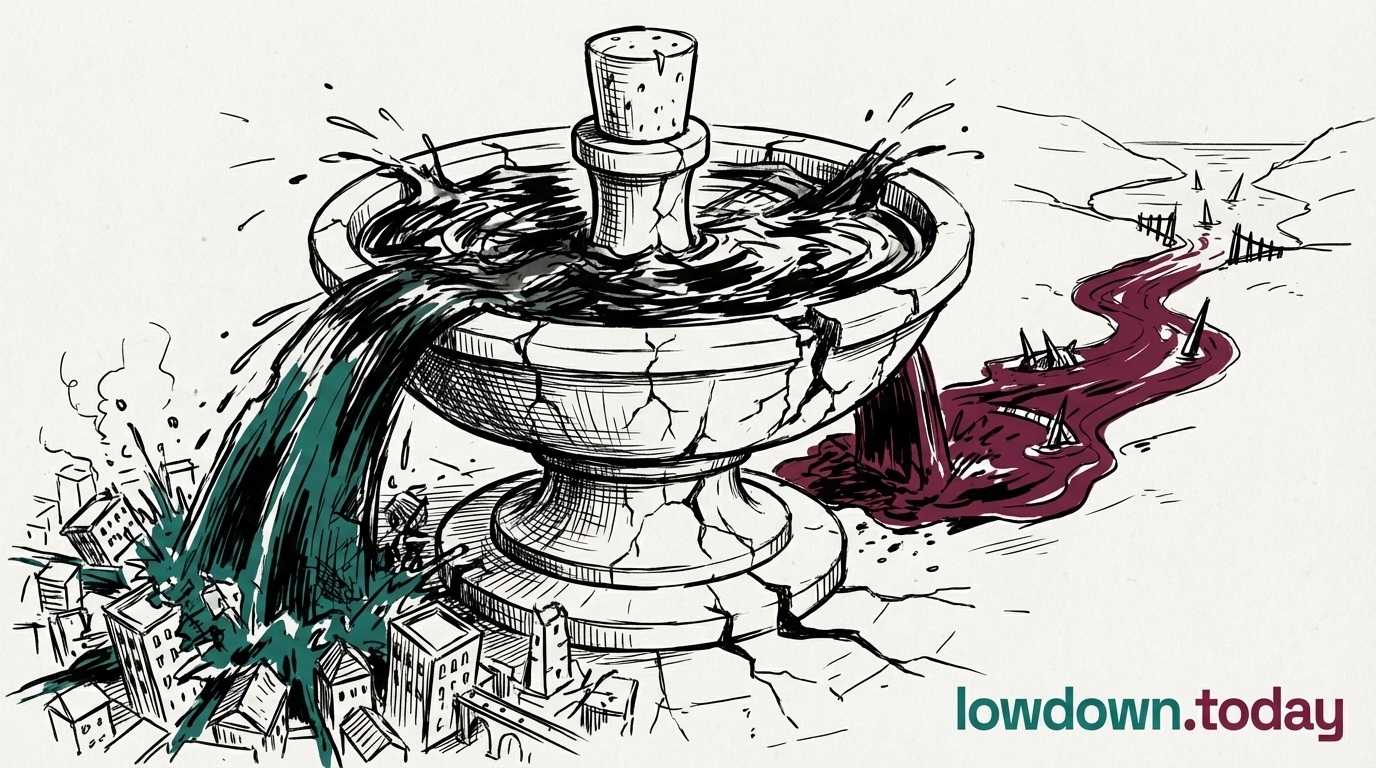
Western coverage has framed Iran as simply "refusing talks" . The five-condition structure tells a different story: Iran has a formal position, and its most consequential demand is being legislated domestically through the Majlis bill and formalised internationally through the IMO notification . Iran is building legal architecture to outlast the war, following the same model Egypt used after Suez in 1957: establish physical control during a crisis, then legislate before it ends.

Deep Analysis

In plain English

Iran has published five demands it says must be met before it will stop fighting. The first four involve ceasefire terms and compensation. The fifth is different: Iran wants permanent legal recognition that it controls the Strait of Hormuz, the narrow passage through which most of the Persian Gulf's oil leaves. Under current international law, the strait is an international waterway. Every country's ships have the right to pass through it. Iran cannot legally block that passage, even though the water runs alongside its coast. Iran's fifth condition would change that law. No US president can agree to this. And Iran almost certainly knows that. The more telling detail is that Iran is not just saying it; it is also passing a law in its parliament to formalise the toll regime, and filing paperwork with the international shipping body. Iran is building the legal infrastructure of permanent control while the war is still ongoing.

Deep Analysis
Root Causes

Iran's Hormuz sovereignty demand is thirty years in development. Tehran has consistently argued since the 1994 Law of the Sea negotiations that its territorial waters include the strait's northern half, and that innocent passage rights are not absolute for warships of hostile states. The IRGC's toll infrastructure built between 2015 and 2025 was designed to create an operational fact before any legal claim was tested.

The war created the opportunity to formalise what the IRGC had been building. The Majlis toll bill and the IMO notification are the legal superstructure on top of an operational infrastructure that already exists.

What could happen next?
  • Consequence

    Iran's five conditions remove diplomatic off-ramps: any deal requires accepting demands that no allied government can publicly endorse, guaranteeing talks collapse if aired publicly.

  • Precedent

    If the Majlis bill passes before a ceasefire, the Hormuz toll regime becomes Iranian domestic law that any future government would need to repeal, entrenching the leverage beyond this war.

First Reported In

Update #50 · Houthis join; Iran holds two chokepoints

PressTV· 28 Mar 2026
Read original
Different Perspectives
Civilians and prisoners inside Iran
Mojtaba Kian was hanged in under 50 days from arrest, the fastest wartime espionage case in Hengaw's record, as Trump announced a peace deal. Amnesty places Iran's 2026 execution count above 200 at its fastest pace in 44 years; the diplomatic track has not altered the internal enforcement tempo.
China
China
Beijing accepted a Pakistani civilian briefing mission on the same day OFAC's GL V expired, keeping itself inside the deal architecture without being a named signatory. How Chinese banks respond to Monday's Hengli dollar-clearing decision is the first real-world test of whether the verbal MOU carries any institutional weight.
Pakistan
Pakistan
Islamabad split its highest-level delegation: army chief Munir to Tehran on the security track, Prime Minister Sharif and Foreign Minister Dar to Beijing before Monday's GL V-driven bank compliance decision. The architecture routes the deal's hardest problem, IRGC buy-in, through the general-officer channel that has extracted every wartime concession.
Israeli government
Israeli government
An unnamed Israeli official told the Times of Israel that Trump privately told Netanyahu the deal will dismantle Iran's nuclear programme and remove all its uranium, terms incompatible with what Tehran and a Reuters source describe. If Netanyahu believes he was promised full dismantlement and the deal delivers less, Israel holds a sabotage veto before any signature.
Iranian Foreign Ministry
Spokesman Esmail Baghaei told state agency IRNA that nuclear issues are 'not in the current negotiations text' and the sequencing is: end the war first, then negotiate nuclear over two months. Baghaei's formulation preserves Khamenei's 21 May uranium-stay directive while letting the civilian diplomacy track continue.
Donald Trump / White House
Trump declared the Iran deal 'largely negotiated' on 23 May via Truth Social and signed nothing; the White House's only paper was a Memorial Day proclamation. The verbal-track method converts maximum political signalling into minimum legal exposure: no congressional notification, no Senate treaty ratification, no instrument for Iran to formally reject.