Skip to content
Briefings are running a touch slower this week while we rebuild the foundations.See roadmap
Iran Conflict 2026
9APR

12,300 Targets Struck; Strait Still Closed

2 min read
11:02UTC

The US has fired more Tomahawk missiles than in any campaign in history and destroyed 155 Iranian vessels. The Strait of Hormuz remains shut.

ConflictDeveloping
Key takeaway

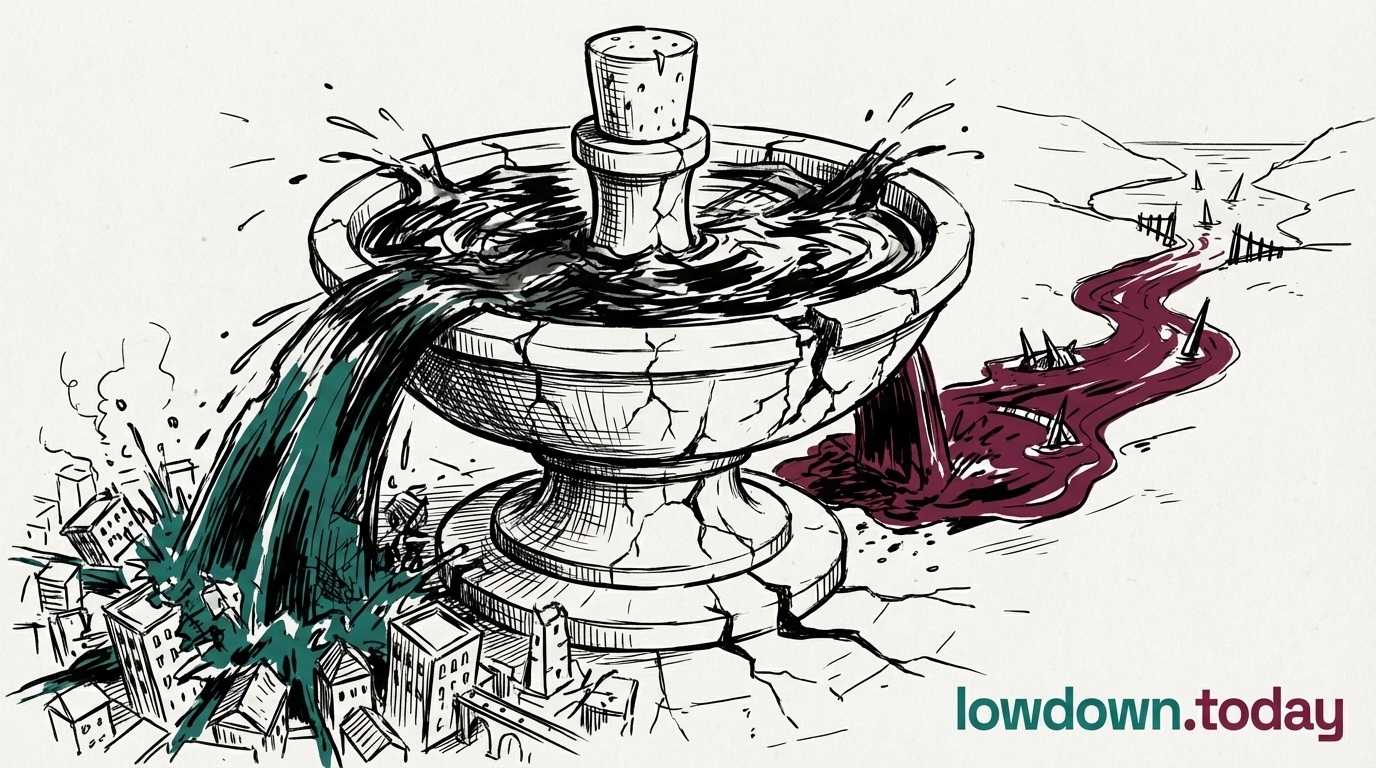
Record-breaking bombing has not shifted Iran's posture or reopened Hormuz.

CENTCOM reported on 1 April that US forces have struck over 12,300 targets and fired 850 Tomahawk cruise missiles in Operation Epic Fury, the most in any single US campaign in history 1. 155 Iranian vessels have been destroyed. B-52 bombers now fly overland inside Iran , a transition from the standoff-only strikes of the war's first 30 days.

The numbers are imposing. The outcome is not. Hormuz remains closed. The toll system operates . Eleven vessels transited on 31 March, 93% below the pre-war baseline 2. ACLED concludes that 'full capitulation remains unlikely' and 'the only clear path to decisive victory would be a change of government' 3. Heavy bombing has reinforced Iran's siege mentality rather than breaking it.

CSIS counts 850 Tomahawks expended 4. The US Navy's total Tomahawk inventory before the war was approximately 4,000. At current consumption, the stockpile question joins Israel's Arrow-3 depletion as a constraint on sustained operations.

Deep Analysis

In plain English

The US has now struck more targets and fired more cruise missiles than in any war in American history. It has also destroyed 155 Iranian naval vessels. Despite all of this, the Strait of Hormuz is still closed. The question this raises is whether more bombing will change the outcome. The evidence so far says no: Iran is firing fewer missiles per day than at the war's start, but it has not changed its fundamental position.

Deep Analysis
Root Causes

The bombing has not changed Iran's strategic calculus because the campaign was designed around target categories, not political outcomes. CENTCOM is striking what it can locate and destroy; Iran's decision to keep Hormuz closed resides in a small number of IRGC commanders whose locations are either unknown or protected by anticipated US domestic opposition to decapitation strikes.

Russia's provision of satellite imagery showing US warship and aircraft locations increases Iran's ability to absorb the campaign by reducing tactical surprise. An adversary that knows where your aircraft are cannot be coerced by those aircraft in the same way as one operating without that intelligence.

The 850 Tomahawk expenditure rate also matters structurally. At pre-war inventory of roughly 4,000, the campaign has consumed 21% of the total supply in 34 days. The US cannot sustain current strike rates indefinitely without accepting munitions constraints that will become visible to Iran and its partners.

First Reported In

Update #55 · The Last Door Closes

Irish Times / Majorca Daily Bulletin· 2 Apr 2026
Read original
Different Perspectives
Civilians and prisoners inside Iran
Mojtaba Kian was hanged in under 50 days from arrest, the fastest wartime espionage case in Hengaw's record, as Trump announced a peace deal. Amnesty places Iran's 2026 execution count above 200 at its fastest pace in 44 years; the diplomatic track has not altered the internal enforcement tempo.
China
China
Beijing accepted a Pakistani civilian briefing mission on the same day OFAC's GL V expired, keeping itself inside the deal architecture without being a named signatory. How Chinese banks respond to Monday's Hengli dollar-clearing decision is the first real-world test of whether the verbal MOU carries any institutional weight.
Pakistan
Pakistan
Islamabad split its highest-level delegation: army chief Munir to Tehran on the security track, Prime Minister Sharif and Foreign Minister Dar to Beijing before Monday's GL V-driven bank compliance decision. The architecture routes the deal's hardest problem, IRGC buy-in, through the general-officer channel that has extracted every wartime concession.
Israeli government
Israeli government
An unnamed Israeli official told the Times of Israel that Trump privately told Netanyahu the deal will dismantle Iran's nuclear programme and remove all its uranium, terms incompatible with what Tehran and a Reuters source describe. If Netanyahu believes he was promised full dismantlement and the deal delivers less, Israel holds a sabotage veto before any signature.
Iranian Foreign Ministry
Spokesman Esmail Baghaei told state agency IRNA that nuclear issues are 'not in the current negotiations text' and the sequencing is: end the war first, then negotiate nuclear over two months. Baghaei's formulation preserves Khamenei's 21 May uranium-stay directive while letting the civilian diplomacy track continue.
Donald Trump / White House
Trump declared the Iran deal 'largely negotiated' on 23 May via Truth Social and signed nothing; the White House's only paper was a Memorial Day proclamation. The verbal-track method converts maximum political signalling into minimum legal exposure: no congressional notification, no Senate treaty ratification, no instrument for Iran to formally reject.