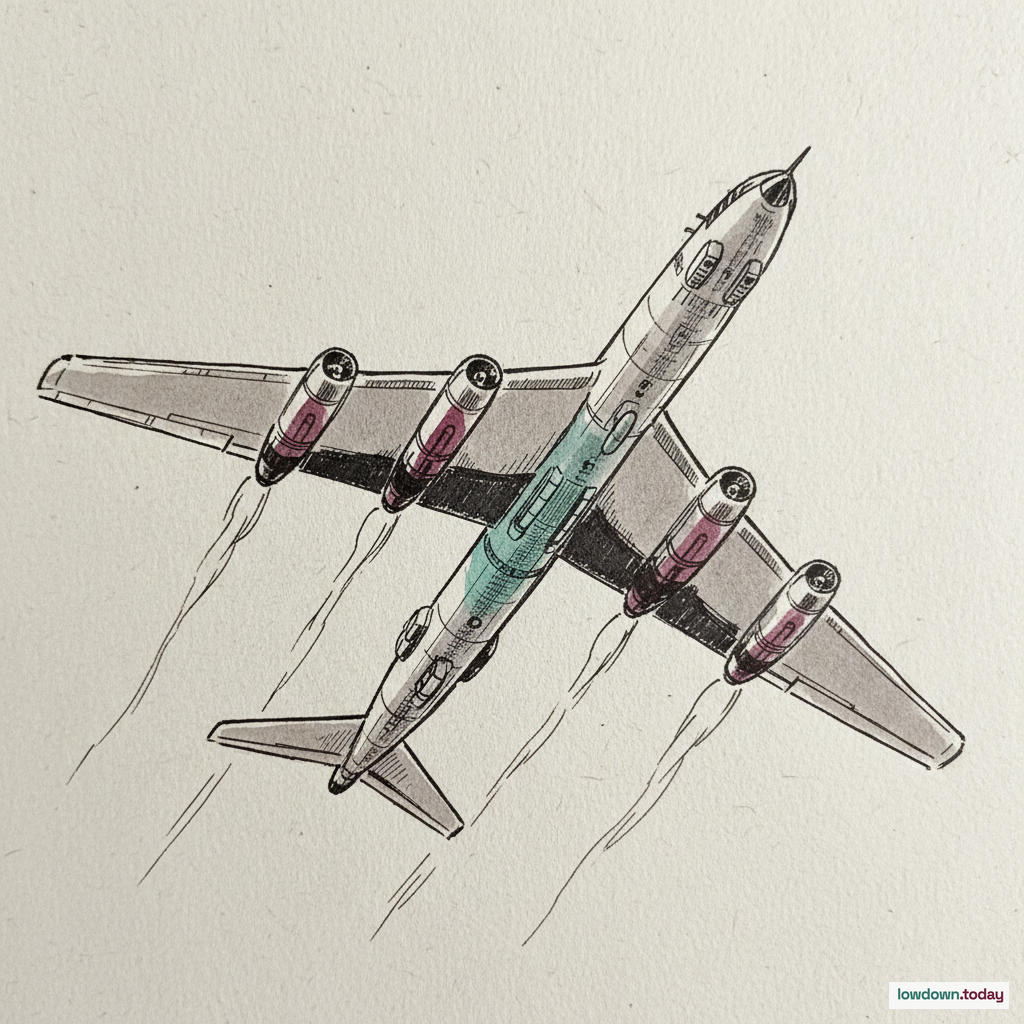
B-52 Stratofortress
USAF long-range strategic bomber now flying overland missions inside Iranian airspace.
Last refreshed: 1 April 2026 · Appears in 1 active topic
Why is a 70-year-old bomber still the backbone of US strategic airpower?
Timeline for B-52 Stratofortress
CENTCOM strikes 12,300 targets, Hormuz closed
Iran Conflict 2026Mentioned in: US Military Dead Rise to Fifteen
Iran Conflict 2026B-52s over Iran; 50,000 US troops in
Iran Conflict 2026Background
The B-52H Stratofortress began conducting overland missions inside Iranian airspace after coalition forces established air superiority in March 2026, marking the first time the 70-year-old bomber had flown combat sorties directly over a state adversary since the 2003 Iraq invasion. Operating from Diego Garcia in the Indian Ocean, the aircraft contributed to a campaign that exceeded 11,000 strikes on Iranian targets. The shift from standoff to overland missions was authorised by CENTCOM after a formal assessment that Iran no longer possessed effective air defences.
Boeing built 744 B-52s from 1952; the USAF currently operates 76 active B-52H airframes, primarily with the 2nd and 5th Bomb Wings. The aircraft carries up to 70,000 lb of mixed ordnance including precision-guided munitions and Cruise Missiles, with an unrefuelled combat range exceeding 8,800 miles and unlimited range with aerial refuelling. That payload is roughly four times the 18,000 lb a typical F-35 sortie delivers, making each B-52 mission disproportionately impactful in a tonnage-intensive campaign. A CREW of five operates each aircraft.
The B-52's deployment over Iran underscored Washington's commitment to sustained strategic bombardment rather than a limited strike campaign, sending a signal to both Tehran and regional allies that the US was prepared to employ its full conventional arsenal.