Skip to content
Briefings are running a touch slower this week while we rebuild the foundations.See roadmap
Iran Conflict 2026
7APR

Trump waives Russia sanctions; G7 balks

4 min read
10:19UTC

A 30-day reprieve on Russian oil sanctions aims to cool crude prices past $100 — but six G7 members called it the wrong signal, and Zelenskyy warned the waiver hands Moscow $10 billion.

ConflictDeveloping
Key takeaway

The US is subsidising Russian war revenues to offset oil prices its own war created.

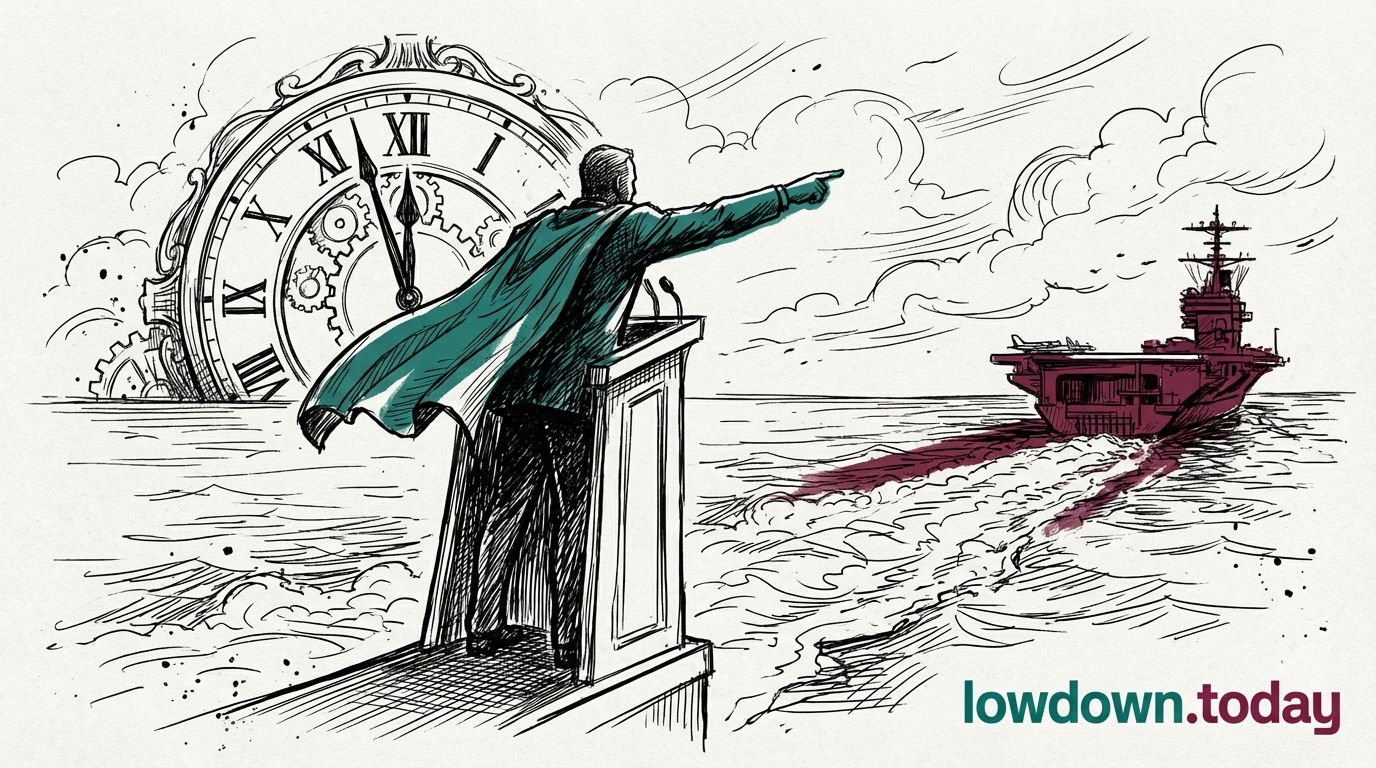
President Trump issued a 30-day waiver on Russian oil sanctions, seeking to ease crude prices that have risen more than 40% since the war began on 28 February 1. Six of seven G7 members — Germany, France, the United Kingdom, Japan, Italy, and Canada — told The Administration the waiver sends "not the right signal" 2. Zelenskyy estimated the reprieve could deliver $10 billion to Moscow 3.

The waiver is a response to market conditions The Administration's own campaign created. Brent Crude breached $100 on a closing basis on 11 March after the International Energy Agency declared the Iran war "the largest supply disruption in the history of the global oil market" — Gulf production down at least 10 million barrels per day, Hormuz transits reduced to single digits against a pre-war average of 138 . The IEA's record 400-million-barrel strategic reserve release failed to hold prices below $100. Brent closed Friday at $103.14 , with Monday futures pointing to $104.89–106.44 — the war's highest sustained range. The Administration needs crude on the market. Russia has crude to sell.

The policy contradiction is direct. On the same day the waiver was announced, Zelenskyy told CNN that Russia is manufacturing Shahed drones at the Alabuga factory in Tatarstan and shipping them to Iran for use against American forces 4. If that intelligence is accurate, the waiver eases financial pressure on a state arming Washington's current battlefield adversary. Russian oil revenue flows to the same defence industrial base producing drones that US forces intercept over The Gulf. The United States is, in practical effect, financing both sides of its own war — prosecuting a campaign against Iran while relaxing sanctions on Iran's arms supplier to manage the economic consequences of that campaign.

G7 opposition is broad but without enforcement leverage. The objecting six do not control the sanctions architecture — the United States does. European leaders face their own bind: the continent is still restructuring energy supply away from Russian gas dependency, and a simultaneous Gulf disruption and Russian supply contraction would push import-dependent economies toward the recession that Deutsche Bank and Oxford Economics have already warned of . Their objection is genuine. Their capacity to offer an alternative mechanism that puts barrels on the market within 30 days is not. The waiver will hold because no ally can propose a substitute — and because The Administration has decided that $103 oil is a greater immediate political liability than the contradiction of easing sanctions on one adversary to fight another.

Deep Analysis

In plain English

Since Russia's 2022 invasion of Ukraine, the US and allies imposed sanctions to reduce Russia's oil revenues and limit its war capacity. Trump is now temporarily lifting some of those restrictions — not because Russia took any constructive action, but because US military operations against Iran are pushing up global oil prices. Six of the seven major Western economies publicly objected. The circularity identified by Zelenskyy and G7 members is the core problem: US actions raise oil prices, the waiver allows Russia to earn more from oil, and that revenue may fund the arms transfers supplying Iran against US forces — making the policy self-defeating at the strategic level.

Deep Analysis
Synthesis

Six-of-seven G7 public dissent is structurally extraordinary. G7 communiqués and public statements almost universally paper over bilateral disputes with consensus language; a six-to-one break — on the record, on a US unilateral economic action toward Russia — signals that European capitals judge this waiver as categorically different from previous US-Russia economic adjustments. The dissent is itself a deterrence signal to Washington: further unilateral carve-outs risk formal G7 fragmentation on Russia policy, weakening the sanctions architecture that European capitals have invested three years constructing.

Root Causes

The US Strategic Petroleum Reserve was drawn down substantially during 2022–2023, materially reducing the administration's non-market tool for oil price management. The IEA coordinated emergency release mechanism requires consensus among member states, which the US has not sought. The waiver is therefore a supply-side fix for a price shock the US itself generated, reflecting a structural absence of short-term alternatives rather than a considered strategic choice.

Escalation

The waiver signals to Iran that US economic coercion has a domestic price ceiling: once oil rises high enough, sanctions relief follows regardless of adversary behaviour. This reduces Iranian incentive to seek terms and provides a replicable template — sustain the conflict at a cost level that keeps prices elevated without triggering decisive US escalation, and wait for Washington's domestic economics to force concessions.

What could happen next?
  • Meaning

    US sanctions credibility is now explicitly conditional on domestic petrol prices, giving adversaries a replicable template: sustain conflict at a price-elevating tempo until sanctions relief follows.

    Medium term · Assessed
  • Risk

    If incremental Russian revenues within the waiver window accelerate Shahed deliveries to Iran, the waiver directly shortens the US-Israel military advantage at a critical phase of the air campaign.

    Short term · Suggested
  • Consequence

    Six-of-seven G7 public dissent normalises allied defection from US-led sanctions coalitions, weakening economic coercion as a collective instrument precisely when it is most needed against Iran.

    Long term · Assessed
  • Precedent

    Granting sanctions relief to offset inflation caused by a US military campaign creates a template adversaries can exploit in future conflicts by operating at a price-escalating rather than militarily decisive tempo.

    Long term · Suggested
First Reported In

Update #37 · Six more weeks of strikes; Hormuz deal dead

ABC News· 16 Mar 2026
Read original
Causes and effects
This Event
Trump waives Russia sanctions; G7 balks
The waiver exposes a structural policy contradiction: the US is easing financial pressure on Russia to manage oil prices driven up by the US war on Iran, while Russia — per Ukrainian intelligence — is arming Iran against US forces with Shahed drones manufactured at Alabuga.
Different Perspectives
Islamabad (Pakistan Armed Forces and Foreign Ministry)
Munir's cancellation reflects Islamabad's assessment that no bridging formula survives the collision of Khamenei's uranium directive, Rubio's Hormuz red line, and the sequencing gap simultaneously; Naqvi's relay role signals continued Pakistani engagement without a mandate to close any of the three gaps.
Lloyd's of London war-risk market
Published PGSA coordinates give underwriters the cartographic input to model tanker route exposure inside the claimed zone; OFAC's Sunday GL V ruling determines whether Hengli-Singapore dollar-clearing routes carry secondary-sanctions risk from Monday, adding a compliance layer to the existing kinetic war-risk premium.
Hengaw Human Rights Organisation
Zaleh's trial lasted 'only a few minutes' before a conviction on PDKI membership charges at Naqadeh; the pattern of solitary detention, coerced confession, and minutes-long hearing is consistent with wartime political-charge architecture the organisation has documented across the Kurdish northwest.
Gulf Arab states (UAE, Bahrain, Kuwait)
The UAE has not published counter-coordinates to the PGSA's Hormuz zone map, leaving Emirati silence as the maritime-law response to Iran's charted boundary claim. Abu Dhabi's published position now defaults by omission toward implied acceptance of the zone's cartographic fact.
Beijing's Ministry of Commerce
MOFCOM's blocking order covers Hengli and four other designated refineries on the mainland but does not extend to the dollar-clearing layer in Singapore, making Sunday's GL V expiry the first live test of whether Beijing's sanctions-defiance architecture reaches the place where dollars settle.
The White House
The White House
Trump's verbal track on Iran has produced no signed Iran-specific presidential instrument across 84 days; both financial-sector EOs signed on 19 May are unrelated to Hormuz or the IRGC. Rubio's public naming of the Hormuz toll architecture as a deal-killer is the administration's most concrete new position this week.