Skip to content
You can now search across every topic, entity and event.What's new
Iran Conflict 2026
6APR

Gulf States Collectively Invoke Self-Defence Rights

2 min read
09:43UTC

All six GCC members affirmed Article 51 rights against Iran, establishing a legal framework for collective military action while insisting diplomacy remains the preferred path.

ConflictAssessed
Key takeaway

Legal framework established; operational commitment absent.

The full Gulf Cooperation Council, not just Saudi Arabia , collectively affirmed UN Charter Article 51 self-defence rights at their 50th Extraordinary Ministerial Council. The statement cited Iranian attacks on civilian airports, oil facilities, desalination plants, and ports. It called on the UN Security Council to ensure cessation of Iranian aggression.

But the same statement declared that dialogue and diplomacy remain the optimal path. This is a legal framework without an operational commitment. Article 51 does not require Security Council approval; it enables a state, and its allies, to act in collective self-defence against armed attack. The GCC has now positioned the legal instrument. Whether any member state converts that instrument into military action remains an open question.

The record so far: legal posture, diplomatic language, zero kinetic response. The simultaneous assertion of self-defence rights and preference for dialogue is standard diplomatic positioning: maximise legal options while minimising operational commitment. The GCC has never conducted a collective military operation against a state actor. The Article 51 invocation is a ceiling-raising exercise, expanding what is legally permissible without committing to what will actually be done.

Deep Analysis

In plain English

All six Gulf states together said they have the legal right to defend themselves against Iran's attacks, citing strikes on water plants, airports, and oil facilities. Having the right to act is not the same as planning to act. They also said they still prefer talking. But the legal permission is now on the table if they change their minds.

Deep Analysis
Root Causes

Iran's escalating strikes on Gulf civilian infrastructure (Kuwait desalination plants supplying 90% of drinking water, Mina al-Ahmadi refinery, Abu Dhabi aluminium smelters) crossed a threshold that individual bilateral responses could not adequately address. The collective framework consolidates the legal position of six nations simultaneously.

Escalation

Potentially escalatory in legal terms but not yet in operational terms. The Article 51 framework creates permissive conditions for military action that did not previously exist in collective form. The probability of GCC military action remains low but the legal barrier has been removed.

What could happen next?
  • Legal basis for collective Gulf military action established without UNSC approval

  • Iran must now factor collective Gulf response into its targeting calculations

First Reported In

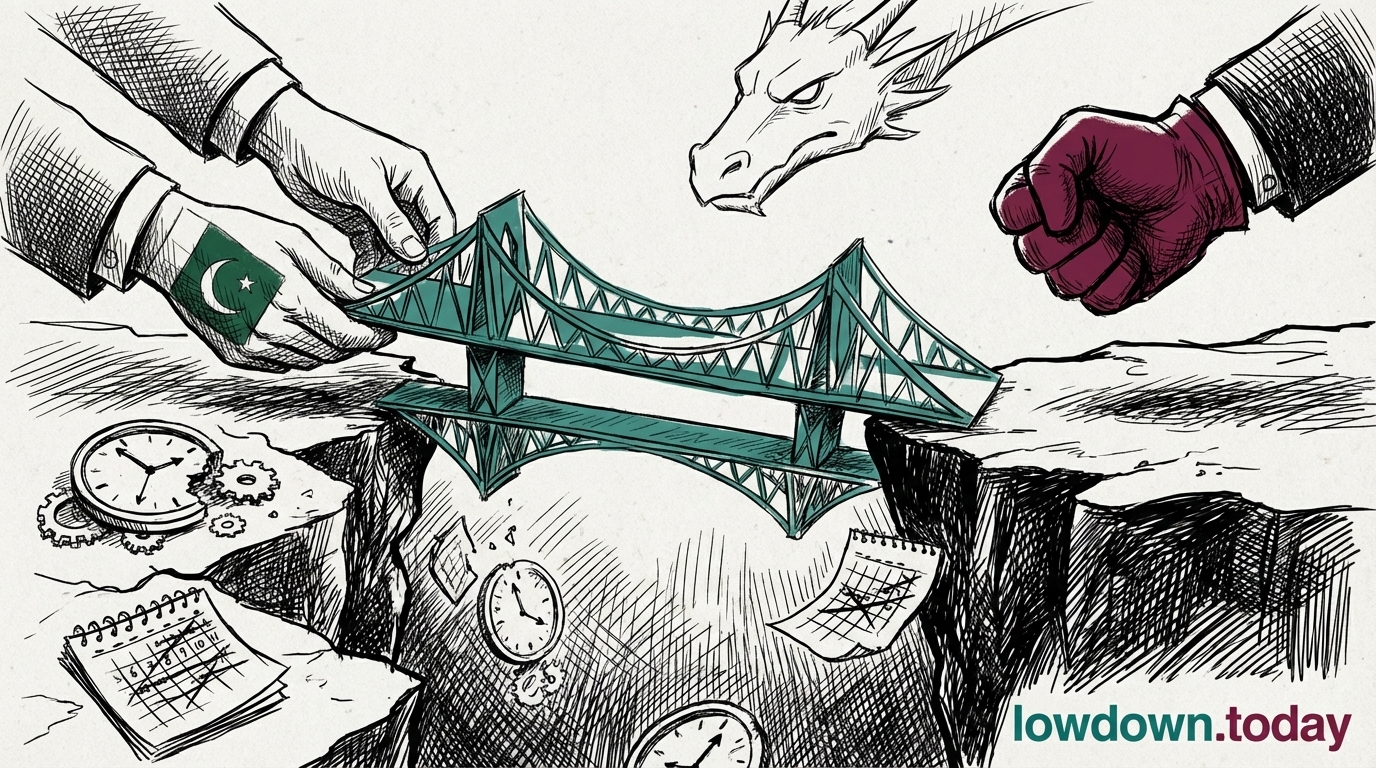
Update #60 · Pakistan's Ceasefire Plan Fills the Vacuum

GCC Secretariat / Arabian Business· 6 Apr 2026
Read original
Causes and effects
This Event
Gulf States Collectively Invoke Self-Defence Rights
This expands the legal framework from Saudi Arabia's individual Article 51 invocation {{EVREF:/t/iran-conflict-2026/59/saudi-arabia-invokes-article-51-after-water-strikes/}} to a collective Gulf position. Article 51 does not require Security Council approval; it enables a state, and its allies, to act in collective self-defence against armed attack. The GCC has now positioned the legal instrument. Whether any member state converts that instrument into military action remains an open question.
Different Perspectives
Oil market and P&I insurers
Brent cleared $87 intraday only once CENTCOM's blockade became physical rather than declared, even though P&I Clubs had already excluded Hormuz war risk a week earlier on 7 July: capital hedged ahead of enforcement, but prices moved only after it.
UAE reporting
UAE reporting
UAE reporting placed the Omani tanker deaths at one seafarer against the International Maritime Agency's count of two, the first time in this war that a Gulf state's casualty figures have diverged from an international monitor's.
Jordan
Jordan
Iranian strikes reached Jordan again on 14 July as part of the Gulf-wide retaliation for the Hormuz blockade, extending the conflict's geographic footprint to a state with no direct stake in the strait itself.
Bahrain
Bahrain
Bahrain sounded air-raid sirens on 14 July during Iran's Gulf-wide retaliation, the same day CENTCOM's blockade order and fourth night of strikes pushed the conflict's physical reach into the wider Gulf littoral.
Kuwait
Kuwait
Kuwait intercepted Iranian missiles and drones on 14 July as Tehran's blockade retaliation reached Gulf states beyond Iran's immediate shoreline, confirming Kuwaiti airspace now sits inside Iran's retaliatory envelope.
Oman
Oman
Oman absorbed the war's first tanker casualties in its own waters on 14 July, with two supertankers disabled and seafarers killed, putting the sultanate's shipping lanes directly in the path of the blockade fight for the first time.