Skip to content
Briefings are running a touch slower this week while we rebuild the foundations.See roadmap
Iran Conflict 2026
5APR

Hengaw Confirms 7,300 Killed; IRGC Used Schools and Mosques

2 min read
12:52UTC

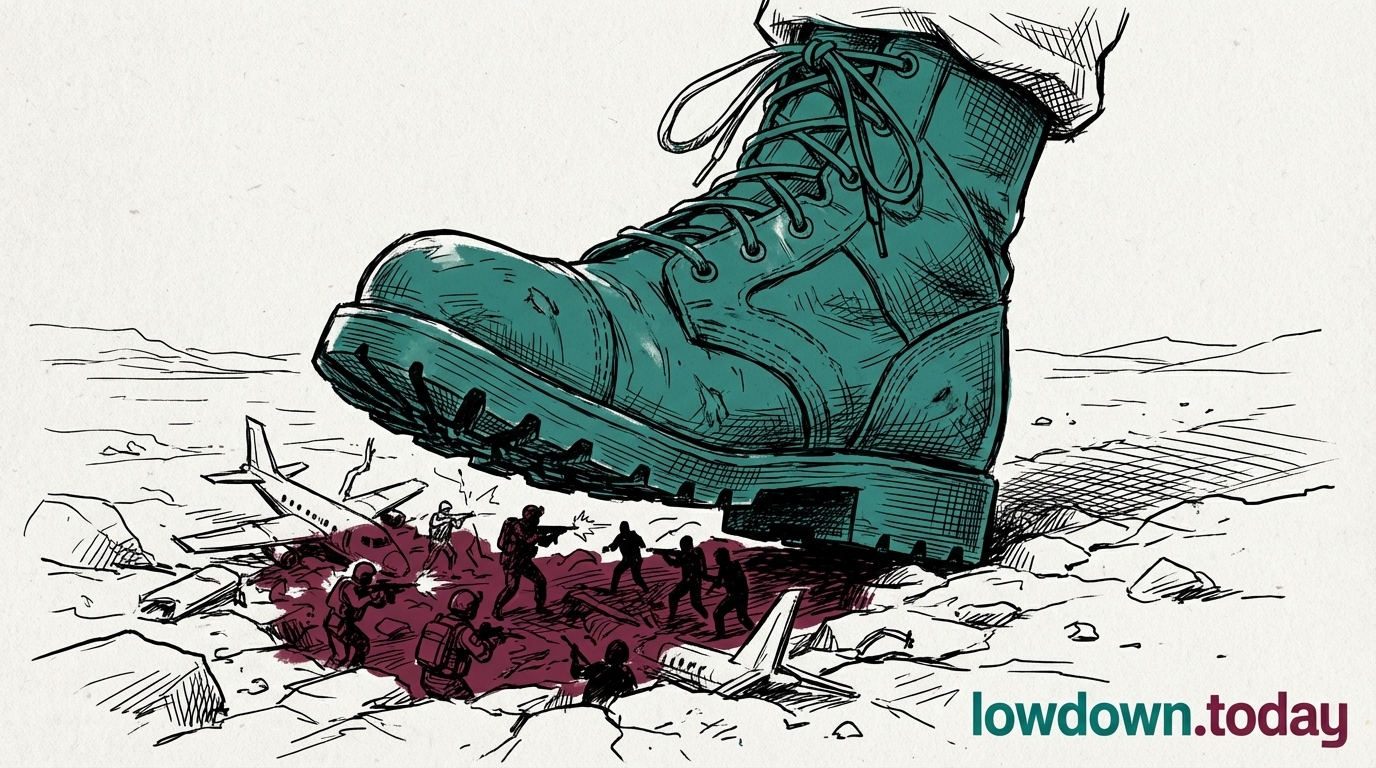
Hengaw Human Rights Organisation published its overdue 9th casualty report on 2 April: 7,300 killed in 34 days, including 890 civilians, 180 minors, and 210 women. New findings document IRGC forces sheltering in schools, dormitories, and mosques.

ConflictDeveloping
Key takeaway

At 7,300 killed, Hengaw's count is 3.7 times Iran's official figure, with new evidence of IRGC use of protected buildings.

Hengaw Human Rights Organisation published its 9th casualty report on 2 April, five or more days overdue . The report confirms 7,300 killed in 34 days, including 890 civilians, 180 minors, and 210 women. The toll rose 400 from the previous floor of 6,900 . Iran's official count remains frozen at 1,937; state media separately reported 2,076, a figure that has drifted upward without acknowledging the discrepancy.

The gap between Hengaw's 7,300 and Iran's official 1,937 is now 3.7-fold. Both figures carry methodological caveats: Hengaw counts all conflict-related deaths across provinces; Iran's count uses a narrower definition. Hengaw's methodology is the more transparent of the two, and its prior reports have been broadly consistent with HRANA and other independent monitors.

The new element in the 9th report is the documented evidence of IRGC forces stationing in schools, dormitories, and mosques. Under the laws of armed conflict, using protected civilian buildings as military positions creates dual violations: one by the party using the shield, one potentially by the party that strikes through it. Both tracks will feature in any subsequent accountability process.

Hengaw's five-day publication delay is itself a data point. The organisation has published on a regular cycle since the war began. Delays correlate with access restrictions inside Iran, not with a lower toll.

Deep Analysis

In plain English

Iran struck Kuwait's main oil refinery for the third time and also hit a water purification plant. The water plant matters more: in Kuwait, most drinking water comes from plants that remove salt from seawater. Attacking those plants threatens ordinary people's access to clean water, not just energy supply.

Deep Analysis
Root Causes

Iran's targeting of Kuwaiti infrastructure reflects its strategic calculation that raising the cost for Gulf states hosting coalition forces will create political pressure for those states to distance themselves from the US campaign.

Kuwait, like the UAE, hosts critical US logistics infrastructure; Iran is attempting to make that hosting unacceptably costly.

Escalation

Highly escalatory. The targeting of desalination infrastructure crosses from energy disruption into civilian life support targeting. Kuwait may face pressure from its population to seek accommodation with Iran, which would further erode the Gulf coalition supporting US operations.

What could happen next?
  • Risk

    Sustained desalination targeting in Kuwait (and potentially UAE or Saudi Arabia) poses a direct civilian welfare threat that could fracture Gulf political support for the coalition.

    Short term · Medium
  • Consequence

    Third strike on Mina al-Ahmadi suggests Iran has persistent targeting capability against the refinery despite coalition air defences; production disruption is increasingly likely.

    Immediate · High
  • Precedent

    Targeting of desalination infrastructure in an armed conflict, without triggering a specific IHL response, extends the permissive norm established by the Yemen campaign.

    Long term · Medium
First Reported In

Update #57 · Bridge strike kills eight; Army chief fired

Hengaw Human Rights Organisation· 3 Apr 2026
Read original
Causes and effects
Different Perspectives
Gulf shipping and insurance markets
With Hormuz and Bab el-Mandeb both hostile at once, war-risk underwriters face their first dual-chokepoint pricing problem; the rerouting hedge that absorbed one closure is gone for Israeli-linked hulls. Any deal that reopens Hormuz without a Houthi stand-down clause delivers only partial shipping relief.
Russia and China
Russia and China
Russia and China met IAEA chief Grossi jointly in Geneva on 5 June to coordinate an advance blocking position against Washington's censure resolution, the first documented instance of proactive pre-session obstruction rather than reactive post-vote dissent. Beijing's move came four days after OFAC designated Shanghai Qianye Energy under Iran energy sanctions.
Saudi Arabia
Saudi Arabia
Saudi Arabia was left out of the emergency $4.01 billion Patriot waiver Qatar received on 2 May as its own PAC-3 stocks ran near-empty from intercepting Iranian salvoes over Aramco facilities. Riyadh is on a standard 18-month FMS queue behind a production line booked through 2030, with no equivalent priority to Qatar's Al Udeid basing role.
Houthis (Ansar Allah)
The Houthis declared a complete ban on Israeli Red Sea navigation on 8 June and struck Jaffa, their first attack on Israeli territory since April, seven days after the Tasnim authorisation to activate other fronts including Bab el-Mandeb. The declaration put both chokepoints under hostile authority simultaneously.
Iran
Iran
Iran agreed the 9 June mutual halt after the Mahshahr exchange and coordinated with Russia and China to block Washington's IAEA censure resolution, using the Board as a second front while the bilateral pause held on the military one. Tehran's acceptance of the Lebanon carve-out contradicts the linkage position it stated on 1 June.
Benjamin Netanyahu and the IDF
Israel struck the Karun Petrochemical plant at Mahshahr on 8 June over Trump's explicit objection, then agreed a halt with Iran the following day scoped on Israeli terms with Lebanon carved out. Netanyahu's posture is that the IDF will not accept Iranian missile factories as off-limits regardless of US diplomatic timelines.