Skip to content
You can now search across every topic, entity and event.What's new
Iran Conflict 2026
4APR

Guterres calls for exit; no exit exists

3 min read
09:24UTC

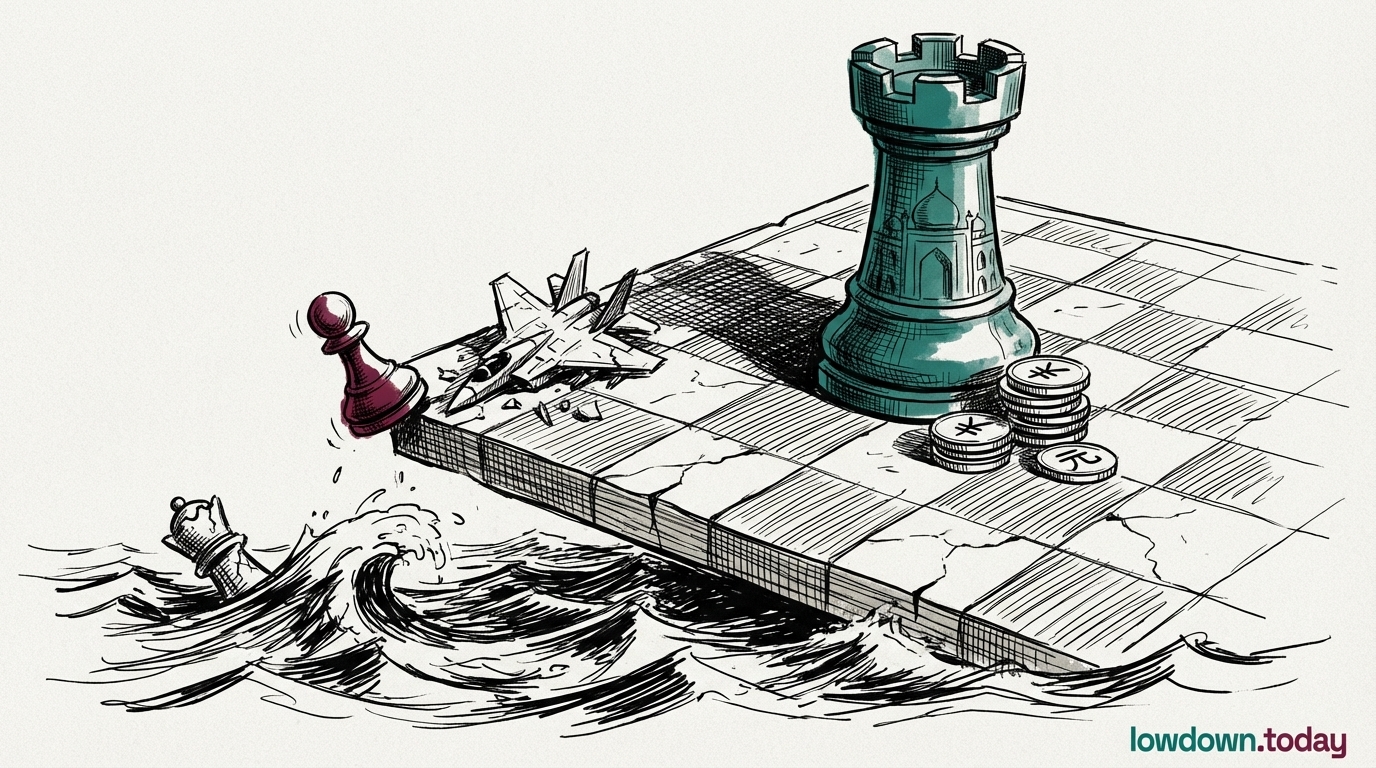
The UN Secretary-General shifted from condemnation to calling for an exit mechanism. Seventy-two hours into the war, no ceasefire proposal is on the table, the Security Council is structurally blocked, and the only backchannel runs through Oman to a government that may not control its own forces.

ConflictDeveloping
Key takeaway

Guterres's shift from condemnation to 'exit mechanism' signals the UN Secretariat's private assessment that a formal ceasefire is currently unachievable, and represents an attempt to lower the political bar to something the US might not veto.

UN Secretary-General António Guterres shifted his public posture on Monday from condemnation — he had called the US-Israeli strikes violations of international law at Saturday's emergency session — to calling for a practical exit. "What is needed now more than anything is a way out," he stated. Seventy-two hours into a campaign that has killed six Americans, closed the strait of Hormuz to commercial traffic, shut Gulf energy infrastructure, and displaced hundreds of thousands across Lebanon, no ceasefire proposal exists.

Two mediation channels are active but informal. Oman remains the only functioning backchannel; Iran's foreign minister told his Omani counterpart that Tehran is open to mediated de-escalation but will not engage Washington directly . Turkey offered to broker talks on Monday — President Erdogan has relationships with all parties as the head of NATO's second-largest military, Iran's western neighbour, and a continuing buyer of Iranian oil. Neither channel has produced a formal process. The gap between informal willingness and a structured negotiation is wide, and both channels are complicated by the fact that Ali Larijani, a senior adviser to Iran's Interim Leadership Council, stated flatly that Iran will not negotiate with the United States — while President Trump, on the same day, claimed Iranian officials "want to talk" .

The structural impediment is the Security Council itself. The United States holds a veto. Saturday's emergency session produced condemnation from Russia and China but no binding action . The body tasked with imposing ceasefires cannot impose one on a state that holds a veto over its decisions. The precedent is discouraging even in cases where no permanent member was a belligerent: UN Security Council Resolution 598, which ended the Iran-Iraq War, was passed in July 1987. The ceasefire did not take effect until August 1988 — thirteen months later.

Beneath the diplomatic architecture, there is a more fundamental obstacle. Iran's foreign minister has stated that military units are operating outside central government direction . The Supreme Leader is dead . No successor has been named; the Assembly of Experts may not convene until operations wind down, and its Tehran headquarters was struck in the campaign's opening hours . Even if Oman or Turkey produced a framework, the question is whether any Iranian interlocutor can deliver compliance from commanders in the field. A ceasefire requires someone on each side with the authority to order forces to stop firing. On the Iranian side, it is unclear that person exists.


Deep Analysis

In plain English

The UN Secretary-General has stopped asking both sides to stop fighting and is now asking for someone to find any way out of the conflict at all. This is a significant downgrade in ambition — it means the UN privately believes a ceasefire is off the table. The problem is that the two diplomatic channels that exist (Oman and Turkey) have produced nothing formal, and the UN Security Council cannot pass a ceasefire resolution because the US would veto it, as it did multiple times during the Gaza conflict.

Deep Analysis
Synthesis

The Oman and Turkey channels are structurally incompatible with each other: Iran will not engage Washington directly (requiring Oman as intermediary), while Turkey's offer has not been accepted by either party. Notably absent from every reported diplomatic channel is China — which has the economic leverage over both Iran (primary oil customer) and the US (major creditor) to apply meaningful pressure, and which has used that leverage in regional diplomacy before (the 2023 Saudi-Iran normalisation). China's silence is itself a strategic choice that has received no analysis in the briefing.

Root Causes

The UN's structural impotence is a function of P5 veto mechanics: the US vetoed four UNSC ceasefire resolutions during the 2023–24 Gaza conflict, establishing the precedent. Guterres's only viable bypass is the General Assembly's emergency special session mechanism — used for Ukraine in 2022 — which can pass non-binding resolutions by simple majority, raising reputational costs without legal force.

Escalation

Guterres's pivot indicates the UN Secretariat's internal assessment is that neither belligerent is currently seeking a ceasefire — a finding that implies continued escalation in the immediate term. The absence of any US signal of restraint is the binding constraint; the SG's public statements are an attempt to raise the reputational cost of continued fighting rather than a reflection of available diplomatic machinery.

What could happen next?
  • Meaning

    The shift from 'ceasefire' to 'exit mechanism' language signals that the UN has privately concluded neither party is willing to halt operations, and is seeking any lower-threshold de-escalation step.

    Immediate · Assessed
  • Risk

    If neither the Oman backchannel nor Turkey's offer produces a formal process, the absence of any functioning diplomatic architecture increases the probability that escalation continues until one party suffers a military or domestic political shock severe enough to force unilateral de-escalation.

    Short term · Assessed
  • Opportunity

    China's unreported diplomatic posture represents the most significant unused lever: its role in brokering the 2023 Saudi-Iran normalisation demonstrates capability, and its economic exposure to Gulf energy disruption provides motivation.

    Short term · Suggested
First Reported In

Update #12 · Rubio rewrites war's legal case in Congress

NBC News· 3 Mar 2026
Read original
Causes and effects
This Event
Guterres calls for exit; no exit exists
Guterres's shift from condemning the strikes to seeking an exit reflects an acknowledgement that the UN Security Council cannot impose a ceasefire on a conflict involving one of its permanent members. The US veto renders the Council's enforcement machinery inoperative. The Omani and Turkish mediation channels remain informal, and Iran's admission that military units are operating outside central command raises the question of whether any Iranian interlocutor can deliver a ceasefire even if one were negotiated.
Different Perspectives
Oil traders
Oil traders
Sent Brent down 2.29 per cent to $98.38 a barrel on reports that mediation was reviving, moving the price on CENTCOM's quiet night rather than on Trump's same-day promise of a bigger operation with no deadline attached.
Iran
Iran
An Iranian official called the same mediation account completely misleading, denying it received any US proposal via Baghdad on the same day Iraq denied delivering one, leaving neither denial able to settle what actually passed between the two capitals.
Iraq
Iraq
Called groundless the New York Times account that its prime minister carried a US ceasefire proposal to Tehran, a denial that also protects Baghdad's effort to avoid becoming a party to a war fought by aircraft it does not control.
OHCHR
OHCHR
Recorded 17 civilian seafarer deaths since the war began, a population neither the Pentagon nor Iran's Health Ministry counts in its own tally, and called for urgent action on 6,000 crew stranded across roughly 400 vessels in the Strait of Hormuz.
Houthis
Houthis
Enforced the blockade on Saudi-linked shipping it declared on 20 July by hitting the NCC Masa and then an Aramco facility at Jazan, moving from radio warnings to strikes on land after four days without a confirmed hit.
Saudi Arabia
Saudi Arabia
Struck Houthi military sites near Hodeidah the same day the NCC Masa was hit, while its coalition spokesman insisted Hodeidah, Ras Issa and Salif all remain open to navigation. The distinction protects the ports Yemen's population depends on for food and fuel even while punishing the group behind the tanker strike.



