Skip to content
Briefings are running a touch slower this week while we rebuild the foundations.See roadmap
Iran Conflict 2026
4APR

$1.9bn a day, no bill to Congress

4 min read
09:24UTC

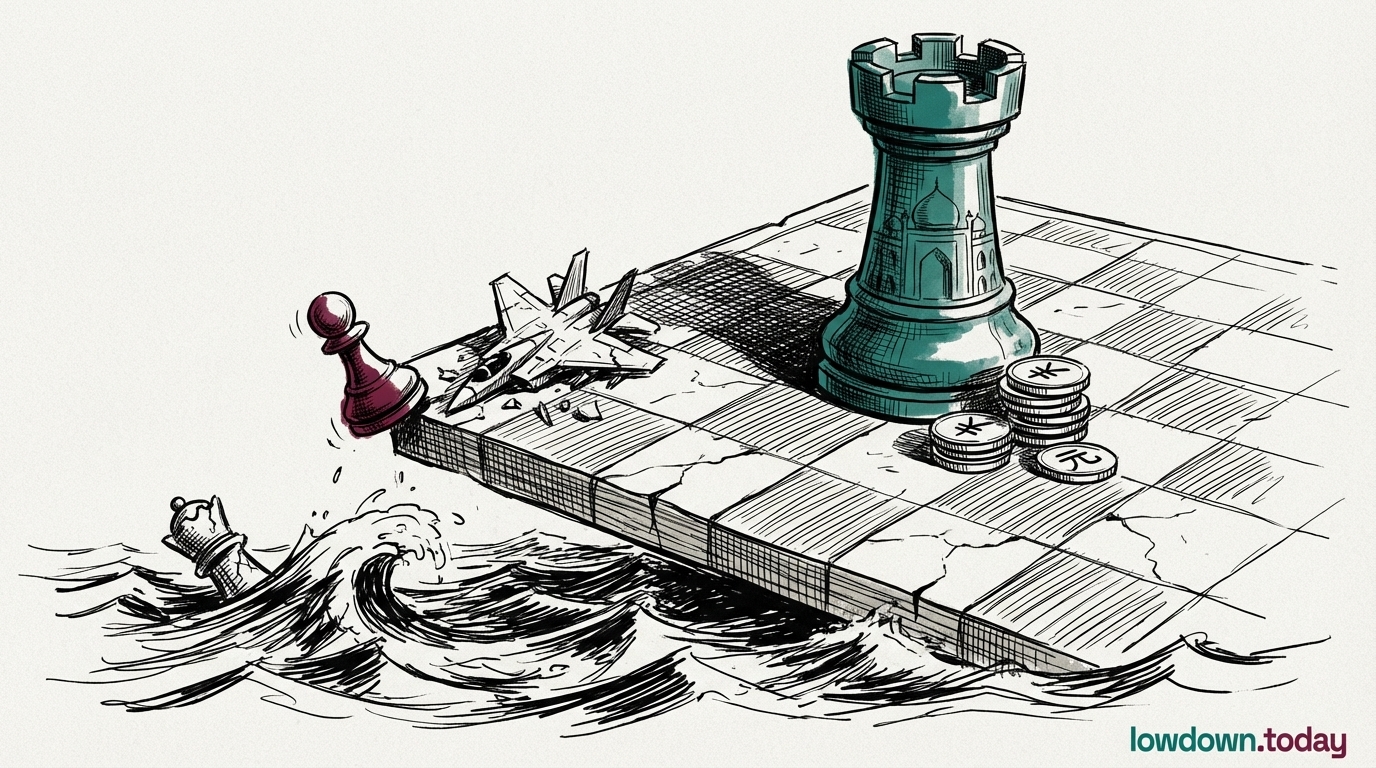
The Pentagon told senators behind closed doors that Operation Epic Fury burns $1.9 billion per day — a figure that excludes the missiles being fired and that no one has asked Congress to fund.

ConflictDeveloping
Key takeaway

The US is fighting an unfunded war on existing accounts, consuming defence readiness that Congress has not authorised replacing.

Defence Department officials told the Senate Appropriations subcommittee in closed session on Tuesday that Operation Epic Fury's first six days cost an estimated $11.3 billion — approximately $1.9 billion per day. The figure, disclosed after the briefing by Senator Chris Coons, substantially exceeds the $3.7 billion that CSIS had independently estimated for the first 100 hours. Coons stated the true cost exceeds even the Pentagon's number: $11.3 billion excludes munitions replacement — the Tomahawk cruise missiles, JDAMs, and other precision-guided weapons expended in strikes across Iran, which carry per-unit costs of $1.5 million to $2.4 million.

At the disclosed daily rate, the war's 13-day running total exceeds $24 billion — roughly equivalent to Iceland's annual GDP. Neither the White House nor the Pentagon has requested supplemental funding from Congress. The same Congress rejected the Massie-Khanna war powers resolution by seven votes, leaving no legislative mechanism in motion to either fund or constrain the campaign.

The cost disclosure arrived in a closed session — not a public hearing, not a White House budget request. Supplemental war funding historically requires congressional debate: the 2003 Iraq War's first supplemental was $78.5 billion, submitted weeks after the invasion began. The 2011 Libya intervention cost approximately $1.1 billion over seven months. Operation Epic Fury has spent more in two weeks than the US spent in the entire Libya campaign. Without a supplemental request, costs are being absorbed within existing defence budgets — meaning either other programmes are being deferred or the Pentagon intends to seek retroactive funding once the political dynamics of an active war make denial difficult.

The $1.9 billion per day does not account for economic costs outside the defence budget: the IEA's 400-million-barrel strategic reserve release, the impact on domestic fuel prices as WTI approaches $95, or downstream effects on allied economies. South Korea's KOSPI triggered circuit breakers twice in four sessions . European markets fell 2–3% in a single day . The fiscal cost to the US Treasury is one line in a broader ledger that no single institution is yet consolidating.


Deep Analysis

In plain English

When the US military fights a war, it pays through one of two routes. It can draw from existing defence budget accounts — money set aside for training, maintenance, and equipment. Or it can ask Congress for extra funds, called a supplemental appropriation, which requires a formal vote and public debate. The Trump administration has done neither of the latter. It is spending approximately $1.9 billion per day from existing accounts without requesting congressional approval or additional money. This matters for two reasons. First, Congress is being bypassed on the largest US military operation in over a decade — raising constitutional questions about executive war-making authority. Second, the military is consuming reserves it needs for readiness: training schedules, spare parts, and weapons stockpiles that take years to replace. The true cost is not just the dollars spent — it is the reduced military capacity that will persist long after this conflict ends.

Deep Analysis
Synthesis

The munitions consumption rate creates a cross-theatre readiness problem the $24 billion headline figure conceals. Every long-range precision weapon expended against Iran is unavailable for the Taiwan scenario that US Indo-Pacific strategy is built around. The fiscal cost is theoretically recoverable through future supplementals; readiness depletion on a two-to-five-year munitions replacement timeline is not. The real long-term cost of this operation will be measured in deterrence capacity, not dollars.

Root Causes

Requesting supplemental funding would trigger a mandatory War Powers Resolution debate and force a formal congressional authorisation vote. The administration avoided this by drawing on broad AUMF interpretations and existing appropriations authority. The seven-vote margin on the Massie-Khanna resolution demonstrated the political risk of forcing a formal vote. Fiscal avoidance and legal avoidance are a single strategic decision executed through the appropriations process.

What could happen next?
  • Meaning

    Congress has been effectively bypassed on the largest US military operation in over a decade, with no formal funding authorisation and no war powers vote.

    Immediate · Assessed
  • Risk

    O&M account depletion within the fiscal year may force an emergency supplemental request, triggering the congressional authorisation debate the administration sought to avoid.

    Short term · Suggested
  • Risk

    Precision munitions stockpile depletion reduces US deterrence capacity in the Indo-Pacific on a two-to-five-year replacement timeline, creating a window of reduced cross-theatre readiness.

    Medium term · Assessed
  • Precedent

    Funding a large-scale active war from existing appropriations without supplemental or formal authorisation establishes a template for bypassing congressional war finance oversight.

    Long term · Assessed
First Reported In

Update #32 · UN condemns Iran 13-0; ceasefire blocked

NBC News· 12 Mar 2026
Read original
Causes and effects
This Event
$1.9bn a day, no bill to Congress
The Pentagon's disclosed cost of $1.9 billion per day — which excludes munitions replacement — means the war has already cost more than the entire 2011 Libya intervention. At 13 days the running total exceeds $24 billion, with no supplemental funding request submitted and no legislative mechanism to constrain spending after Congress rejected the only war powers challenge by seven votes.
Different Perspectives
Gulf shipping and insurance markets
With Hormuz and Bab el-Mandeb both hostile at once, war-risk underwriters face their first dual-chokepoint pricing problem; the rerouting hedge that absorbed one closure is gone for Israeli-linked hulls. Any deal that reopens Hormuz without a Houthi stand-down clause delivers only partial shipping relief.
Russia and China
Russia and China
Russia and China met IAEA chief Grossi jointly in Geneva on 5 June to coordinate an advance blocking position against Washington's censure resolution, the first documented instance of proactive pre-session obstruction rather than reactive post-vote dissent. Beijing's move came four days after OFAC designated Shanghai Qianye Energy under Iran energy sanctions.
Saudi Arabia
Saudi Arabia
Saudi Arabia was left out of the emergency $4.01 billion Patriot waiver Qatar received on 2 May as its own PAC-3 stocks ran near-empty from intercepting Iranian salvoes over Aramco facilities. Riyadh is on a standard 18-month FMS queue behind a production line booked through 2030, with no equivalent priority to Qatar's Al Udeid basing role.
Houthis (Ansar Allah)
The Houthis declared a complete ban on Israeli Red Sea navigation on 8 June and struck Jaffa, their first attack on Israeli territory since April, seven days after the Tasnim authorisation to activate other fronts including Bab el-Mandeb. The declaration put both chokepoints under hostile authority simultaneously.
Iran
Iran
Iran agreed the 9 June mutual halt after the Mahshahr exchange and coordinated with Russia and China to block Washington's IAEA censure resolution, using the Board as a second front while the bilateral pause held on the military one. Tehran's acceptance of the Lebanon carve-out contradicts the linkage position it stated on 1 June.
Benjamin Netanyahu and the IDF
Israel struck the Karun Petrochemical plant at Mahshahr on 8 June over Trump's explicit objection, then agreed a halt with Iran the following day scoped on Israeli terms with Lebanon carved out. Netanyahu's posture is that the IDF will not accept Iranian missile factories as off-limits regardless of US diplomatic timelines.



