Skip to content
You can now search across every topic, entity and event.What's new
Iran Conflict 2026
4APR

Two warships sunk at Chah Bahar

3 min read
09:24UTC

CENTCOM video confirms two Iranian warships destroyed at Chah Bahar berths. Combined with the torpedoed IRIS Dena, three of the Pentagon's claimed twenty sinkings are now independently verified.

ConflictDeveloping
Key takeaway

Destroying Chah Bahar's corvettes collapses Iran's two-ocean naval posture: without those hulls, Iran cannot project surface power into the Indian Ocean without first transiting the Strait of Hormuz, which the US already controls.

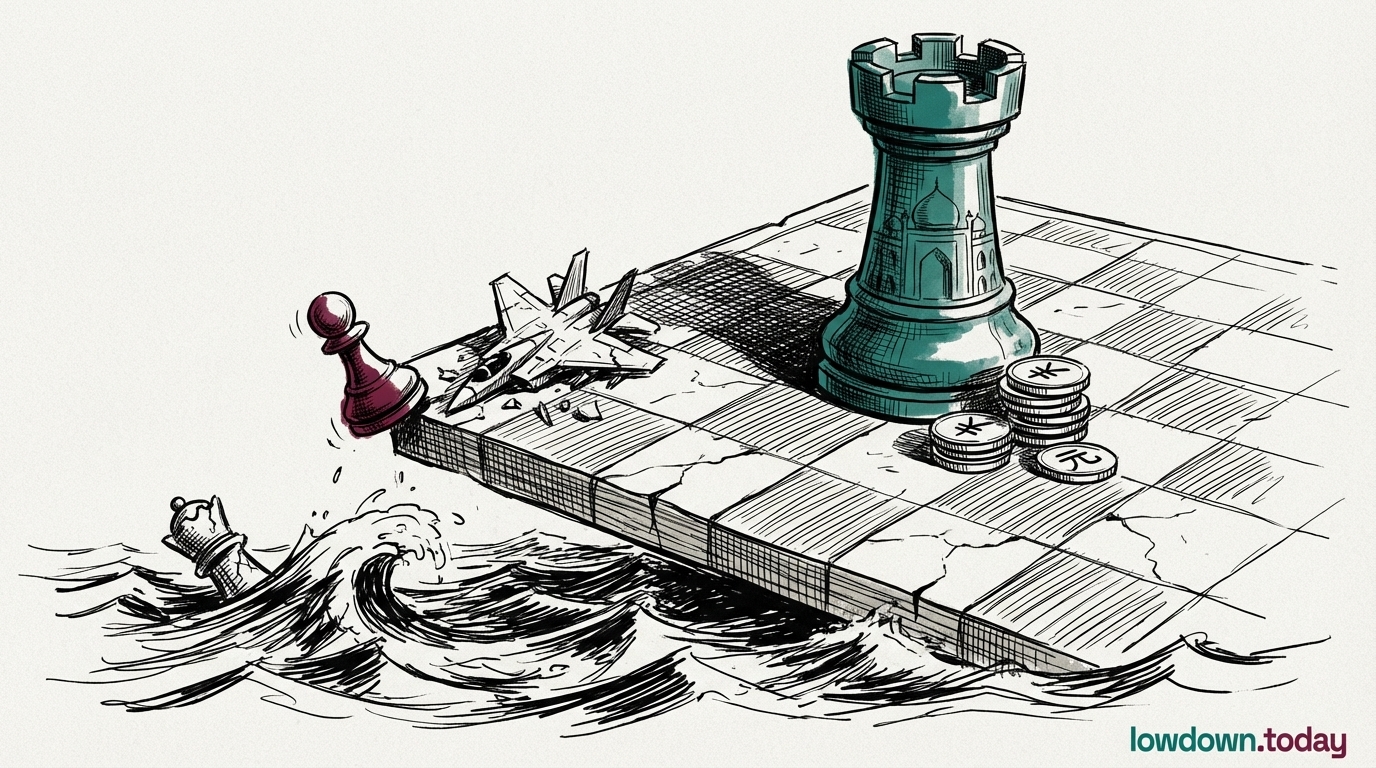
CENTCOM released video on 5 March showing two Iranian warships destroyed at their berths in Chah Bahar, on Iran's southeast coast: the IRIS Shahid Sayyad Shirazi, a Soleimani-class corvette, filmed ablaze and sinking at pier, and an unnamed Jamaran-class corvette, also struck and sunk dockside. Combined with the IRIS Dena — torpedoed by a US submarine south of Sri Lanka in the first confirmed US torpedo kill of an enemy warship since 1945 — three Iranian naval vessels have now been identified by name or class. The Pentagon has claimed 20 warships sunk . These are the first three independently confirmed.

The gap between three confirmed and twenty claimed is where credibility is contested. Iran's regular navy operates roughly six frigates and corvettes alongside fast-attack craft; the IRGC Navy adds several hundred smaller vessels. If the twenty-ship figure is accurate, it would represent the heaviest naval losses any state has absorbed since the Falklands War in 1982. The Shahid Sayyad Shirazi belongs to Iran's newest domestically built corvette class, commissioned from 2023 — its destruction at berth means one of the navy's most modern platforms was eliminated before it could sortie.

The Chah Bahar strikes carry a distinct tactical signature. Both vessels were destroyed dockside — unable to deploy, unable to defend. Chah Bahar is also the port India has invested in as a trade corridor to Afghanistan bypassing Pakistan, a detail that widens the strike's diplomatic resonance beyond the immediate naval loss. Striking warships in port rather than at sea eliminates the ambiguity of open-ocean engagement and produces imagery that is unambiguous from satellite or close-range video.

Under Iran's internet blackout — now in its sixth day at 1% of normal capacity — independent verification of most Pentagon claims is impossible. The three confirmed sinkings validate a fraction of the US account. The remaining seventeen exist in an information vacuum where neither confirmation nor refutation is currently available. For diplomatic audiences weighing the scale and proportionality of the campaign, the ratio of verified to claimed losses matters as much as the operational damage itself.


Deep Analysis

In plain English

Iran has two coastlines: one on the Persian Gulf and one on the Arabian Sea via Chah Bahar. Ships based at Chah Bahar can sail into the broader Indian Ocean without passing through the Strait of Hormuz — the narrow chokepoint the US already dominates. By destroying the warships at Chah Bahar specifically, the strikes remove Iran's only route to contest Indian Ocean shipping lanes without US permission to pass Hormuz. Combined with the Dena's sinking mid-transit, Iran has effectively lost its Indian Ocean surface presence in under a week.

Deep Analysis
Synthesis

With Chah Bahar's corvettes destroyed and the Dena sunk in transit, Iran's Indian Ocean surface naval presence is functionally eliminated by Day 6. The 17-vessel gap between the Pentagon's 20-warship claim and the 3 independently verified are almost certainly concentrated in the Persian Gulf — suggesting the campaign's Indian Ocean component is complete while the Gulf attrition campaign remains the unverified majority.

Root Causes

Iran's investment in Chah Bahar as a naval base reflects its dispersed-basing doctrine — spreading assets to avoid Hormuz-region concentration and ensure Indian Ocean access. Targeting it suggests the US campaign was designed to collapse Iran's naval dispersal strategy pre-emptively, not simply to engage vessels as they sortied.

Escalation

CENTCOM's release of the Chah Bahar video is an information operation choice that raises reputational stakes for the IRGC Navy — providing two of the three named kills while the other 17 remain unverified. Public humiliation of the IRGC at this level historically generates internal institutional pressure to respond, independent of the Supreme Leader's strategic calculus.

What could happen next?
  • Consequence

    Iran's Indian Ocean surface naval presence has been functionally eliminated, removing its ability to threaten commercial shipping lanes east of the Strait of Hormuz.

    Immediate · Assessed
  • Precedent

    CENTCOM's selective video disclosure provides partial corroboration of claimed kills while leaving 17 vessels unverified, establishing a pattern of curated battle-damage reporting that will shape how analysts and allies assess future Pentagon claims.

    Short term · Suggested
  • Risk

    India's $500M Chabahar port investment may be operationally disrupted if military operations have damaged commercial port infrastructure beyond the naval berths.

    Short term · Suggested
  • Meaning

    The destruction of Iran's most advanced domestically built surface combatants before combat deployment eliminates a future capability, not merely a current force — the Soleimani-class programme may not be reconstituted for a decade.

    Long term · Assessed
First Reported In

Update #21 · $1.1bn radar destroyed; warships named

Naval News· 5 Mar 2026
Read original
Causes and effects
This Event
Two warships sunk at Chah Bahar
The first independently verified warship destructions provide a concrete floor for Iran's naval losses while leaving the vast majority of Pentagon claims unverifiable under Iran's communications blackout — a gap that shapes credibility assessments for both sides.
Different Perspectives
Oil traders
Oil traders
Sent Brent down 2.29 per cent to $98.38 a barrel on reports that mediation was reviving, moving the price on CENTCOM's quiet night rather than on Trump's same-day promise of a bigger operation with no deadline attached.
Iran
Iran
An Iranian official called the same mediation account completely misleading, denying it received any US proposal via Baghdad on the same day Iraq denied delivering one, leaving neither denial able to settle what actually passed between the two capitals.
Iraq
Iraq
Called groundless the New York Times account that its prime minister carried a US ceasefire proposal to Tehran, a denial that also protects Baghdad's effort to avoid becoming a party to a war fought by aircraft it does not control.
OHCHR
OHCHR
Recorded 17 civilian seafarer deaths since the war began, a population neither the Pentagon nor Iran's Health Ministry counts in its own tally, and called for urgent action on 6,000 crew stranded across roughly 400 vessels in the Strait of Hormuz.
Houthis
Houthis
Enforced the blockade on Saudi-linked shipping it declared on 20 July by hitting the NCC Masa and then an Aramco facility at Jazan, moving from radio warnings to strikes on land after four days without a confirmed hit.
Saudi Arabia
Saudi Arabia
Struck Houthi military sites near Hodeidah the same day the NCC Masa was hit, while its coalition spokesman insisted Hodeidah, Ras Issa and Salif all remain open to navigation. The distinction protects the ports Yemen's population depends on for food and fuel even while punishing the group behind the tanker strike.



