Skip to content
Briefings are running a touch slower this week while we rebuild the foundations.See roadmap
Iran Conflict 2026
1APR

Baltic Terminals Stay Offline; Russia Reroutes Through Arctic

2 min read
12:41UTC

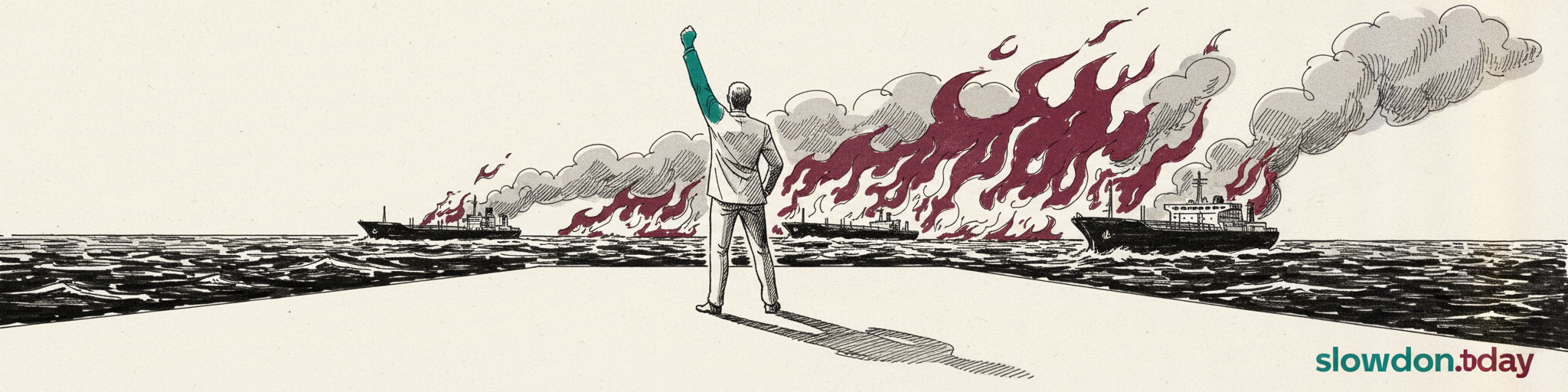
Both Ust-Luga and Primorsk remained closed for petroleum products into a second week, with Primorsk's 40% storage loss confirming lasting physical damage as Russia attempts Arctic rerouting.

ConflictDeveloping
Key takeaway

Ust-Luga's crude terminal is intact, pointing to faster crude recovery; Primorsk's 40% storage loss constrains product exports for weeks.

Planet Labs satellite imagery from 1 April confirmed Ust-Luga's crude terminal is physically intact, while fuel and product terminals bear fire traces from Ukraine's four-strike Baltic campaign . Primorsk suffered more lasting damage: eight 50,000 cubic metre reservoir losses represent permanent storage reduction until repairs complete.

Transneft CEO Nikolai Tokarev publicly acknowledged that rerouting volumes to Murmansk at short notice is difficult. Ice-class vessels are not abundant and Arctic transit times nearly double those from the Baltic (15 to 20 days versus 8 to 10). Russia's earlier refinery strikes at Promsintez and YANOS compounded the logistics challenge by reducing inland processing capacity.

Eighty-five sanctioned shadow tankers have sailed along Norwegian coastal waters since October 2025. Norwegian security officials describe a monitoring gap in their territorial waters. The Arctic logistics infrastructure was not built to absorb Baltic volumes at short notice, and each week of delay brings Russia closer to the storage saturation threshold that would force production cuts.

Deep Analysis

In plain English

Russia's main oil export terminals on the Baltic Sea are still shut down for fuel products two weeks after Ukrainian drone strikes. Russia is trying to redirect oil shipments through Arctic routes near Murmansk, but those routes are slower and require specialist ice-capable ships that are in short supply.

Deep Analysis
Root Causes

Russia built its seaborne export infrastructure around Baltic terminals — Ust-Luga and Primorsk handle roughly 60% of seaborne crude — with no equivalent Arctic alternative at scale. The shadow fleet expansion since 2022 added volume capacity but not port infrastructure.

Arctic ice-class vessel supply is a structural constraint: Russia commissioned fewer than 30 vessels capable of sustained Arctic routing, against demand requiring 50+. Primorsk's eight damaged reservoirs represent a storage bottleneck that rerouting cannot bypass — crude must still pass through terminal storage before loading.

What could happen next?
  • Consequence

    Crude terminal structural integrity at Ust-Luga suggests faster recovery for crude exports than for petroleum products.

  • Risk

    Norway faces a monitoring gap as 85+ sanctioned shadow tankers transit its coastal waters en route to Arctic export routes.

First Reported In

Update #11 · Russia Sells Less Oil but Earns More

Reuters via US News· 5 Apr 2026
Read original
Causes and effects
This Event
Baltic Terminals Stay Offline; Russia Reroutes Through Arctic
Partial physical recovery is underway but Arctic rerouting constraints mean full restoration will take weeks, creating a window for Ukraine to sustain the production squeeze if strike tempo continues.
Different Perspectives
Markets
Markets
Brent crude rose 2.2 per cent to $96.34 on 10 June, reversing a 7 per cent weekly decline built on deal optimism, as the overnight exchange repriced the Strait of Hormuz risk premium in a single session. The move reflects transit-risk repricing rather than supply shock: Iran's exports had already collapsed to below 300,000 barrels per day.
Pakistan
Pakistan
Pakistan's Naqvi channel, the only mediation track carrying both civilian and military buy-in, was stress-tested by live ordnance within 48 hours of the 6-7 June Tehran visit. Whether Washington informed Islamabad of the imminent strike plan while Naqvi was in Tehran remains undisclosed, putting the channel's neutrality under scrutiny.
Kuwait
Kuwait
Kuwait hosted the third Iranian strike on its soil since the 3 June airport drone attack, with Ali Al Salem airbase targeted in the three-country salvo. Its recent $1.98 billion Anduril Anvil counter-drone purchase signals it is rearming rather than reconsidering its hosting posture.
Bahrain
Bahrain
Bahrain absorbed the IRGC barrage via PAC-3 intercepts with its magazine already at 87 per cent depletion and no resupply before 2027. Sounding air-raid sirens over Manama, it faced the intercept burden with the thinnest defensive stack in the Gulf coalition.
Jordan
Jordan
Jordan reported all five incoming missiles intercepted with no injuries and no damage, a clean defensive performance that strengthens Amman's case for staying in the Western coalition without escalating its own posture. It now sits on Iran's target list for the first time despite not being a party to the Abraham Accords confrontation.
Iran / IRGC
Iran / IRGC
Foreign Minister Araghchi posted on X that US forces should 'leave our region if you want to be safe' and framed the exchange as a US defeat, while the IRGC claimed 21 targets hit and an F-35 hangar destroyed. The claims serve a domestic and Arab-audience framing rather than a verified battle-damage assessment.