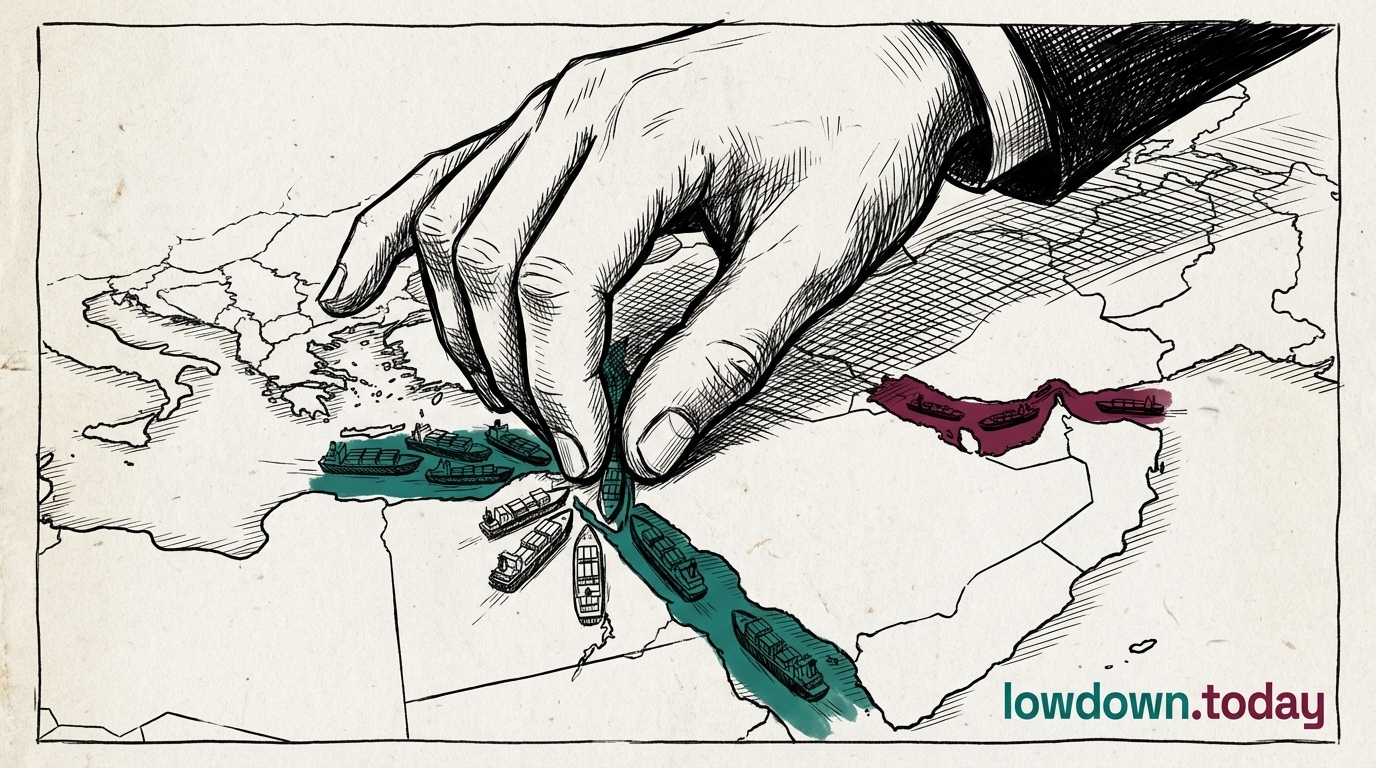
Russia's Q1 2026 budget deficit reached 4.6 trillion rubles, ahead of the government's full-year target of 3.8 trillion rubles, per Meduza's 7 May economic analysis 1. Q1 gross domestic product (GDP) contracted 0.3 per cent year on year against the government's own 1.3 per cent forecast, putting Russia in technical contraction. April oil and gas revenues fell to 855.6 billion rubles, down 21.2 per cent year on year and extending the 38.3 per cent year-on-year drop for January to April . The liquid share of the National Wealth Fund (NWF) sits at 3.89 trillion rubles, down 60 per cent from the 9.74 trillion at the invasion's start.
Maxim Reshetnikov, Russia's Economic Development Minister, had told Meduza on 17 April that internal reserves were 'largely exhausted' . The Q1 numbers put that warning on a single three-month window: the year-target overshoot is no longer a projection, it is the published quarterly print.
The central-bank rate sits at 14.5 per cent. Rate cuts risk capital flight, rate hikes choke business activity, which means Russia has effectively exhausted monetary policy as a tool. Enterprise overdue debt has reached 8 trillion rubles, 3.8 per cent of GDP, so Russian firms are not paying bills on time at scale 2. The cash-flow squeeze inside the Russian economy is now showing up in inter-firm credit as well as at the federal level .
None of that necessarily breaks the war effort. Russia financed a 38 per cent defence-budget share in 2025 and absorbed worse than minus 0.3 per cent contractions in 2009 and 2020 without political consequence. The NWF still has liquid headroom and the Finance Ministry retains domestic debt capacity. What the Q1 print does close is the option to do everything at once: Moscow can fight or negotiate at this burn rate, but financing both fronts plus civilian wage indexation plus inter-firm liquidity support is the part that does not pencil.





