Skip to content
Briefings are running a touch slower this week while we rebuild the foundations.See roadmap
Iran Conflict 2026
24MAR

IRGC controls Khamenei, sources say

4 min read
05:37UTC

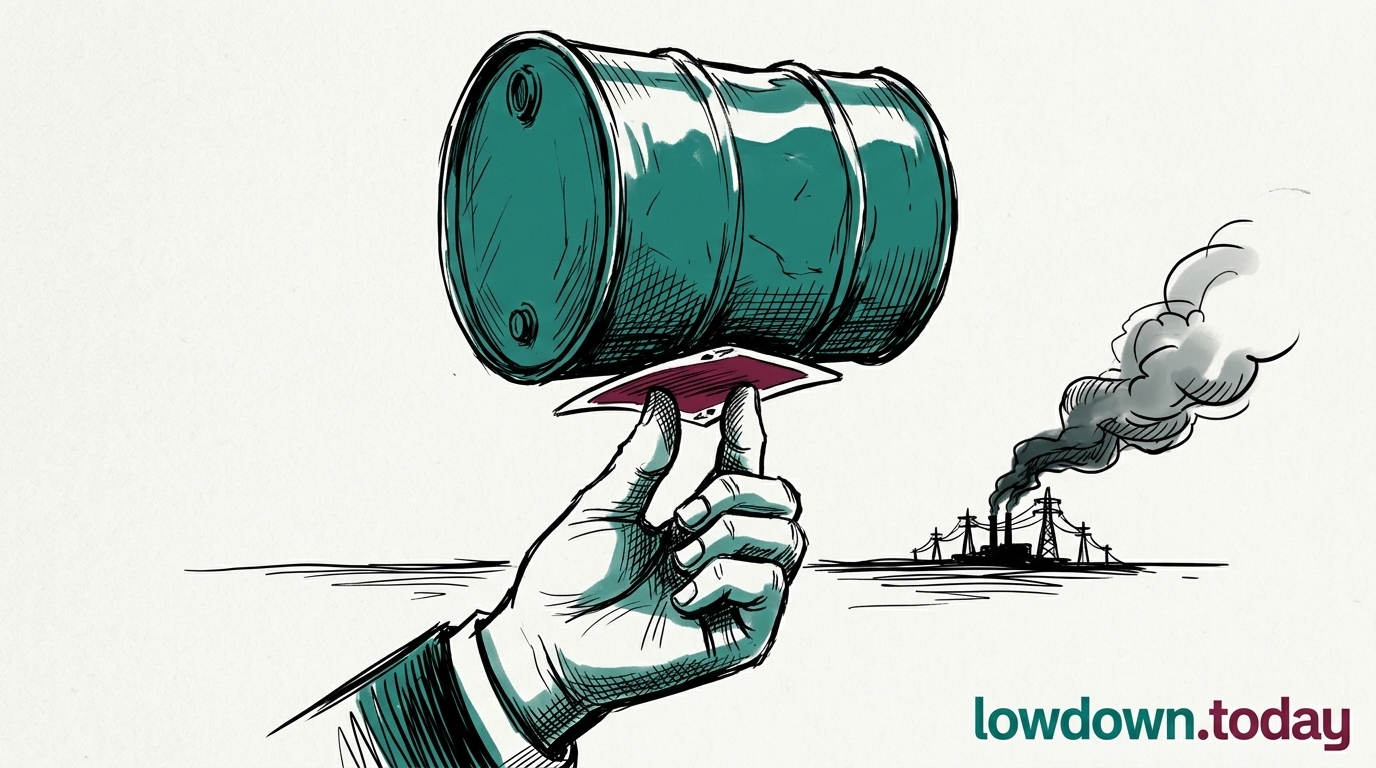
Sources inside and outside Iran describe an inverted power structure: the IRGC installed Mojtaba Khamenei and controls his decisions, leaving wartime command in the hands of an institution that profits from the conflict's continuation.

ConflictAssessed
Key takeaway

The IRGC now operates as Iran's effective governing authority, without a credible check above it.

Jerusalem Post sources described Iran's post-succession power arrangement bluntly: "The Revolutionary Guards are controlling him, not the other way around" 1. A senior fellow at the Middle East Institute assessed that Mojtaba Khamenei "owes his position to the Revolutionary Guards and is not going to be as supreme as his father" 2. A US official offered a more cautious formulation to Axios: "We don't think the Iranians would have gone through all this trouble to choose a dead guy as The Supreme Leader, but at the same time, we have no proof that he is taking the helm" 3.

The characterisation gains weight from what is known about Mojtaba's condition. CNN reported he sustained a fractured foot and facial lacerations in the 28 February strikes that killed his father 4. A leaked audio recording obtained and verified by The Telegraph placed his wife and son among the dead . Fourteen days after the Assembly of Experts installed him, no verified video, voice recording, or authenticated photograph has surfaced. His sole public communication — a written Nowruz message read on state television — claimed "the enemy has been defeated" and urged media to avoid reporting weaknesses. CIA, Mossad, and allied agencies are actively searching for evidence he is functioning . The IDF has publicly named him as an assassination target .

The Islamic Republic's constitution vests extraordinary authority in The Supreme Leader: command of the armed forces, final say over Foreign Policy, power to dismiss presidents. Ayatollah Ruhollah Khomeini designed the role as the apex of the state. Ali Khamenei, when he assumed it in 1989, was widely regarded as a compromise candidate without Khomeini's charismatic authority — but he spent three decades methodically building personal networks within the IRGC, the judiciary, and The Guardian Council until the office bent to the man. Mojtaba has had three weeks, most of them spent wounded and hidden, during the most destructive military campaign in Iran's modern history. The comparison is not favourable.

The practical consequence is that Iran's wartime decisions are being made by the IRGC as an institution. The Guards have lost four senior figures in a single week — Larijani, Basij Commander Soleimani, Intelligence Minister Khatib, and spokesman Naeini , , — yet they continue launching daily attack waves (the 70th was announced Saturday), manage the strait of Hormuz toll system collecting up to $2 million per vessel, and maintain operational tempo across multiple theatres simultaneously. This is institutional momentum, not individual leadership. For any future negotiation — whether over Hormuz, the nuclear programme, or a ceasefire — the question is no longer what The Supreme Leader wants. It is what the IRGC's institutional interests require. An organisation generating direct revenue from the blockade, prosecuting a war it frames in existential terms, and answering to no functioning civilian authority above it has limited structural incentive to accept terms that end all three.


Deep Analysis

In plain English

Iran's system gives ultimate authority to a supreme leader above the government, courts, and military. That figure is supposed to be a senior cleric with independent religious legitimacy. Mojtaba Khamenei inherited the title but reportedly lacks that independent authority base. The Revolutionary Guards — Iran's elite military-political force — appear to have installed him and may effectively be running Iran themselves. This is the organisation firing missiles daily, managing the Hormuz toll system, and replacing killed commanders without pause. If no single figure above them can order a halt, there may be no single figure with whom outside parties can negotiate a genuine ceasefire.

Deep Analysis
Synthesis

Iran's Velayat-e Faqih constitutional doctrine requires a supreme leader with unquestioned religious authority to legitimise IRGC actions. A figurehead who owes his position to the Guards hollows that doctrine structurally, not merely practically.

This matters beyond the immediate crisis: if the IRGC consolidates governance during wartime, post-conflict Iran may no longer have a supreme leader capable of restraining the military wing — permanently altering the constitutional balance that Western and regional interlocutors have navigated for four decades.

Root Causes

The IRGC's independent power base grew deliberately under Khamenei Sr. as a bulwark against reformist civilian politics. That accumulation — control of an estimated 20–40% of Iran's formal economy, plus its covert financial architecture — means the organisation does not require supreme leader sanction to sustain operations. Mojtaba's succession by IRGC preference rather than clerical consensus is the product of that deliberate, decades-long structural design.

Escalation

An IRGC without credible civilian oversight has no internal actor capable of signalling restraint through the back-channel clerical networks that historically modulated Iranian crises. The 70-wave operational tempo of Operation True Promise 4 — sustained despite four senior command losses in a week — is consistent with institutional momentum that a figurehead supreme leader cannot arrest.

What could happen next?
  • Risk

    Diplomatic back-channels routed through FM Araghchi and civilian interlocutors may not produce IRGC compliance with negotiated terms, as civilian officials may lack command authority over military operations.

    Immediate · Assessed
  • Risk

    An IRGC operating without supreme leader oversight removes the institutional brake that has historically prevented Iranian crises from breaching certain escalatory thresholds.

    Short term · Assessed
  • Precedent

    A supreme leader installed by and functionally subordinate to the IRGC would mark the first de facto military coup in the Islamic Republic's 46-year constitutional history.

    Medium term · Suggested
  • Consequence

    Post-conflict reconstruction and sanctions diplomacy will require a counterpart capable of binding Iran to commitments — a figurehead supreme leader cannot credibly provide that assurance.

    Long term · Suggested
First Reported In

Update #45 · Ultimatum expires; Iran tolls Hormuz at $2m

Axios· 23 Mar 2026
Read original
Causes and effects
This Event
IRGC controls Khamenei, sources say
The assessment that the IRGC controls Iran's supreme leader — rather than the reverse — inverts the foundational power structure of the Islamic Republic and raises immediate questions about who holds authority to negotiate, escalate, or accept a ceasefire.
Different Perspectives
Islamabad (Pakistan Armed Forces and Foreign Ministry)
Munir's cancellation reflects Islamabad's assessment that no bridging formula survives the collision of Khamenei's uranium directive, Rubio's Hormuz red line, and the sequencing gap simultaneously; Naqvi's relay role signals continued Pakistani engagement without a mandate to close any of the three gaps.
Lloyd's of London war-risk market
Published PGSA coordinates give underwriters the cartographic input to model tanker route exposure inside the claimed zone; OFAC's Sunday GL V ruling determines whether Hengli-Singapore dollar-clearing routes carry secondary-sanctions risk from Monday, adding a compliance layer to the existing kinetic war-risk premium.
Hengaw Human Rights Organisation
Zaleh's trial lasted 'only a few minutes' before a conviction on PDKI membership charges at Naqadeh; the pattern of solitary detention, coerced confession, and minutes-long hearing is consistent with wartime political-charge architecture the organisation has documented across the Kurdish northwest.
Gulf Arab states (UAE, Bahrain, Kuwait)
The UAE has not published counter-coordinates to the PGSA's Hormuz zone map, leaving Emirati silence as the maritime-law response to Iran's charted boundary claim. Abu Dhabi's published position now defaults by omission toward implied acceptance of the zone's cartographic fact.
Beijing's Ministry of Commerce
MOFCOM's blocking order covers Hengli and four other designated refineries on the mainland but does not extend to the dollar-clearing layer in Singapore, making Sunday's GL V expiry the first live test of whether Beijing's sanctions-defiance architecture reaches the place where dollars settle.
The White House
The White House
Trump's verbal track on Iran has produced no signed Iran-specific presidential instrument across 84 days; both financial-sector EOs signed on 19 May are unrelated to Hormuz or the IRGC. Rubio's public naming of the Hormuz toll architecture as a deal-killer is the administration's most concrete new position this week.



