Jerusalem Post sources described Iran's post-succession power arrangement bluntly: "The Revolutionary Guards are controlling him, not the other way around" 1. A senior fellow at the Middle East Institute assessed that Mojtaba Khamenei "owes his position to the Revolutionary Guards and is not going to be as supreme as his father" 2. A US official offered a more cautious formulation to Axios: "We don't think the Iranians would have gone through all this trouble to choose a dead guy as The Supreme Leader, but at the same time, we have no proof that he is taking the helm" 3.
The characterisation gains weight from what is known about Mojtaba's condition. CNN reported he sustained a fractured foot and facial lacerations in the 28 February strikes that killed his father 4. A leaked audio recording obtained and verified by The Telegraph placed his wife and son among the dead . Fourteen days after the Assembly of Experts installed him, no verified video, voice recording, or authenticated photograph has surfaced. His sole public communication — a written Nowruz message read on state television — claimed "the enemy has been defeated" and urged media to avoid reporting weaknesses. CIA, Mossad, and allied agencies are actively searching for evidence he is functioning . The IDF has publicly named him as an assassination target .
The Islamic Republic's constitution vests extraordinary authority in The Supreme Leader: command of the armed forces, final say over foreign policy, power to dismiss presidents. Ayatollah Ruhollah Khomeini designed the role as the apex of the state. Ali Khamenei, when he assumed it in 1989, was widely regarded as a compromise candidate without Khomeini's charismatic authority — but he spent three decades methodically building personal networks within the IRGC, the judiciary, and The Guardian Council until the office bent to the man. Mojtaba has had three weeks, most of them spent wounded and hidden, during the most destructive military campaign in Iran's modern history. The comparison is not favourable.
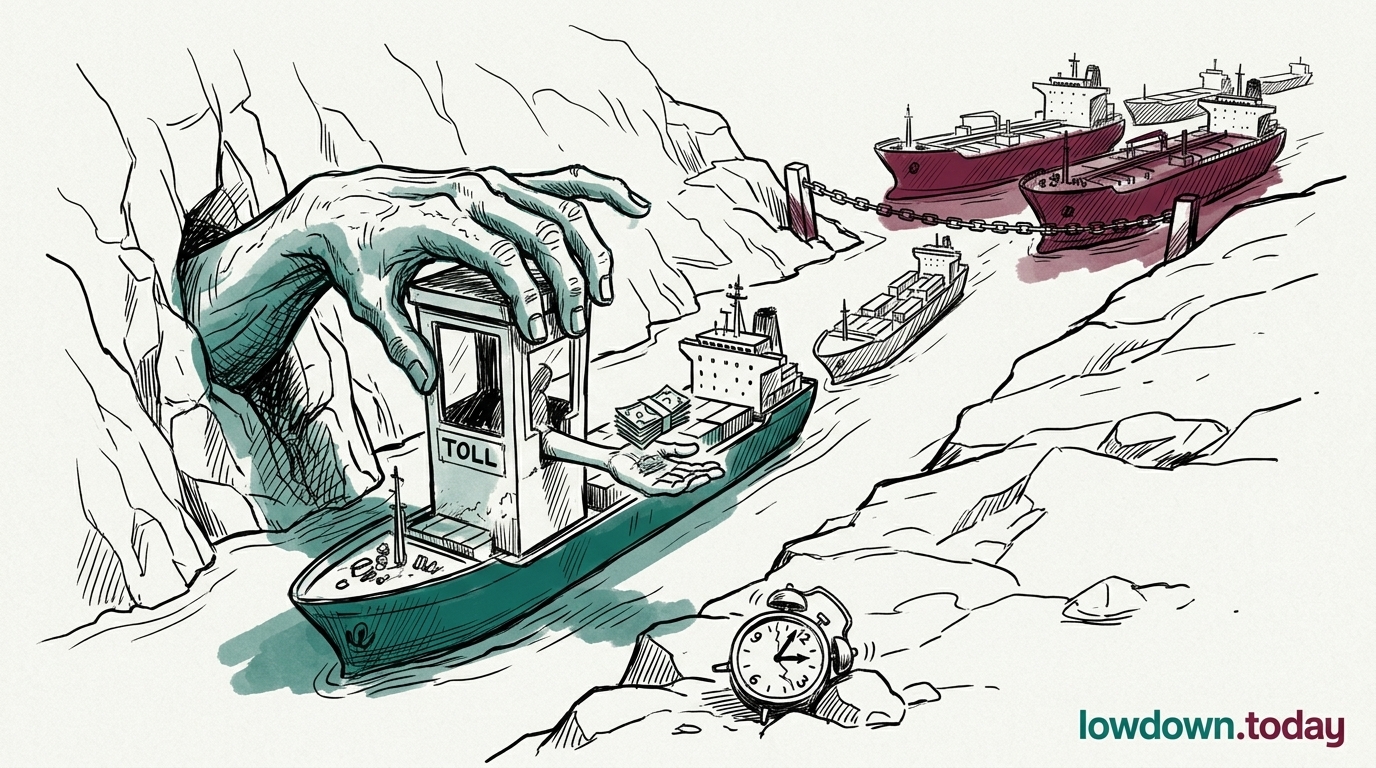
The practical consequence is that Iran's wartime decisions are being made by the IRGC as an institution. The Guards have lost four senior figures in a single week — Larijani, Basij Commander Soleimani, Intelligence Minister Khatib, and spokesman Naeini — yet they continue launching daily attack waves (the 70th was announced Saturday), manage the strait of Hormuz toll system collecting up to $2 million per vessel, and maintain operational tempo across multiple theatres simultaneously. This is institutional momentum, not individual leadership. For any future negotiation — whether over Hormuz, the nuclear programme, or a ceasefire — the question is no longer what The Supreme Leader wants. It is what the IRGC's institutional interests require. An organisation generating direct revenue from the blockade, prosecuting a war it frames in existential terms, and answering to no functioning civilian authority above it has limited structural incentive to accept terms that end all three.





