Skip to content
You can now search across every topic, entity and event.What's new
Iran Conflict 2026
22MAR

UK opens RAF Fairford to US Iran strikes

4 min read
05:50UTC

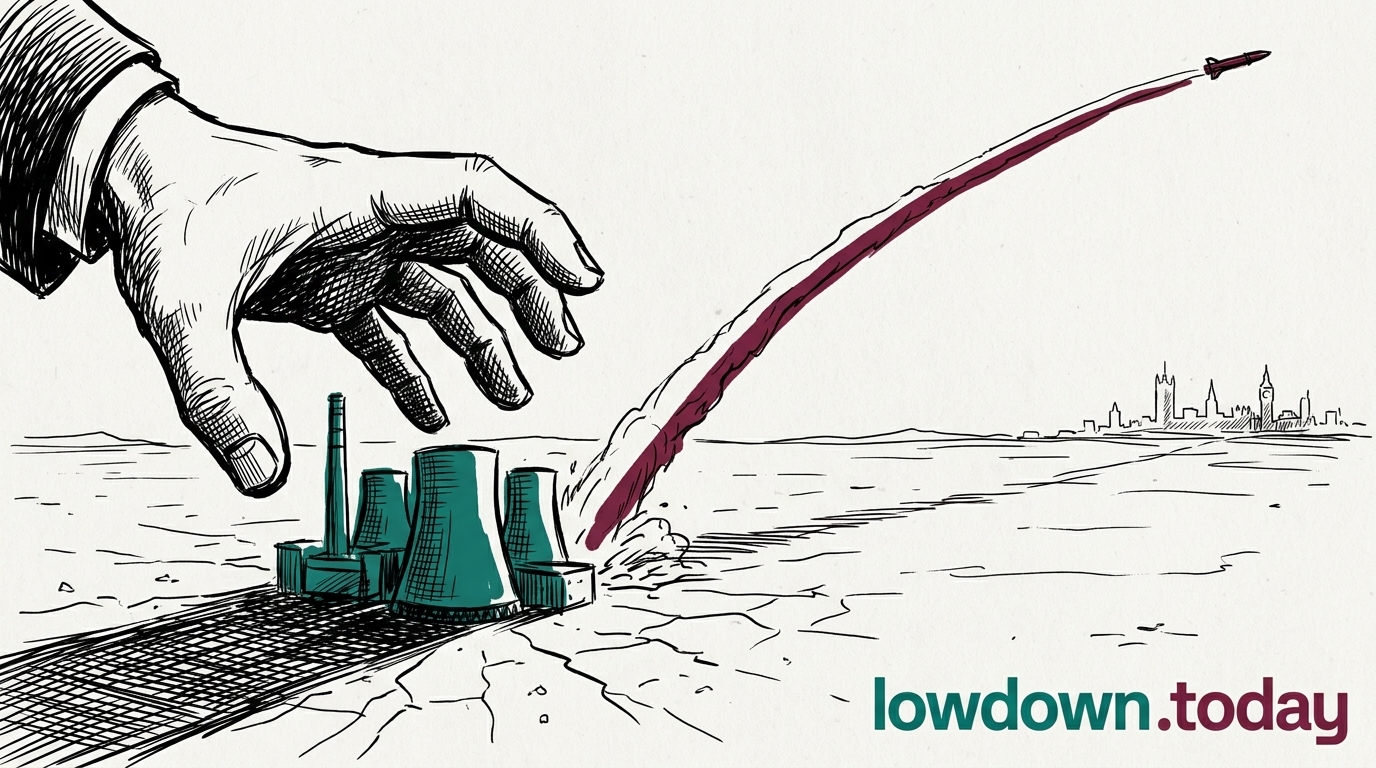
Hours after London authorised US operations from Diego Garcia, Iranian missiles arrived — and the UK's own attorney general had advised the war is unlawful.

ConflictDeveloping
Key takeaway

A sitting attorney general's legal warning was overridden by alliance pressure in under 72 hours.

The UK granted Washington permission for "specific and limited defensive operations" from RAF Fairford in Gloucestershire and Diego Garcia in the Indian Ocean 1. London refused use of RAF Akrotiri in Cyprus for offensive operations. The distinction between defensive and offensive base use is the legal architecture on which Britain's involvement now rests.

That architecture is contested from within. The UK attorney general, Lord Hermer KC, advised that the US-Israeli operation does not accord with international law — advice that shaped Prime Minister Starmer's initial refusal to grant any base access on 28 February 2. Starmer reversed on 1 March 3. Chatham House published analysis arguing the UK's attempt to separate defensive from offensive base use "blur[s] the line between lawful self-defence and unlawful war on Iran" 4. The parallel to 2003 is direct: Attorney General Lord Goldsmith's contested legal opinion on the Iraq invasion consumed British politics for a decade, triggered the Chilcot Inquiry, and permanently altered how the UK government handles military legal advice. Hermer's advice, reportedly against involvement, has been overridden rather than reinterpreted — and the political costs have barely begun to register.

Iran's response was measured in hours, not days. Two intermediate-range ballistic missiles struck at Diego Garcia after London confirmed the base authorisations — one malfunctioned, one was intercepted, and no damage resulted. Iran had warned the UK on Thursday that permitting US access to British bases made Britain "a participant in aggression" 5. Diego Garcia sits approximately 4,000 km from Iran — double the missile range Tehran had publicly claimed. IDF Chief of Staff Lt. Gen. Eyal Zamir stated that Berlin, Paris, and Rome now fall within Iran's direct threat range 6. Every European government hosting US military facilities received the same message Diego Garcia did — delivered by Ballistic missile rather than diplomatic cable.

Starmer's room to manoeuvre has contracted sharply. Britain co-signed the five-nation statement cautioning Israel against a "significant ground offensive" days earlier while now providing the United States with bases to prosecute its air campaign. The UK was among the five allies that declined Trump's request for warships in the Strait but has opened sovereign territory to US combat aircraft. London is cautioning Israel against ground escalation in Lebanon while facilitating American strikes on Iran — a posture that satisfies Washington's operational requirements while exposing Britain to both Iranian targeting and legal liability, without the political clarity of full belligerency or the protection of non-involvement.

Deep Analysis

In plain English

Britain has military bases around the world — including the remote Indian Ocean island of Diego Garcia and an airfield in Gloucestershire. The United States asked to use them for this war. Britain's top government lawyer advised that the war likely breaks international law. Despite that warning, Britain agreed to give the US limited access anyway. Iran responded by firing a missile at Diego Garcia hours after the authorisation was publicly confirmed. Britain has not formally declared war, but it is now directly in the conflict's line of fire. The 'defensive operations only' restriction is intended to limit legal exposure, but critics — including the government's own lawyers — argue the distinction may not hold under international law.

Deep Analysis
Synthesis

The speed of Starmer's reversal — faster than any British prime minister's change of position on military cooperation since Suez — signals that the AUKUS and Five Eyes frameworks now function as hard constraints on UK executive legal discretion. The attorney general's advice was not overcome by new legal reasoning; it was superseded by political calculation. This structurally weakens the role of independent legal advice in future UK military decisions, normalising the precedent that alliance pressure is a sufficient basis for override.

Root Causes

The reversal from refusal to access in 72 hours, with no published change in legal analysis, indicates the decision was driven by alliance management rather than juridical reassessment. This reflects the UK's post-Brexit strategic vulnerability: without EU collective security frameworks, the US alliance is the sole guarantor of UK global military reach, creating asymmetric dependence that constrains legal autonomy in ways EU membership partially offset.

Escalation

The 'defensive only' designation is operationally unstable. Once infrastructure is committed, scope tends to expand under operational necessity rather than contracted. The Akrotiri refusal — driven by Cyprus's proximity to Iranian targets and Cypriot political sensitivities — may not hold if US strike requirements from the Eastern Mediterranean become operationally critical in coming days.

What could happen next?
  • Risk

    Iran may escalate to targeting RAF Fairford on UK soil, bringing kinetic conflict to British territory for the first time since the Falklands.

    Short term · Suggested
  • Consequence

    Parliamentary scrutiny of the legal basis for base access is now unavoidable; judicial review proceedings are possible given the published contrary attorney general advice.

    Immediate · Assessed
  • Precedent

    The reversal establishes that UK attorney general international law advice can be overridden by alliance pressure without new legal analysis or parliamentary authorisation.

    Long term · Suggested
  • Risk

    The Akrotiri refusal creates an operational gap that may force a second UK reversal as US Eastern Mediterranean strike requirements intensify.

    Short term · Suggested
First Reported In

Update #44 · Trump: 48 hours to destroy Iran power grid

Middle East Eye· 22 Mar 2026
Read original
Causes and effects
This Event
UK opens RAF Fairford to US Iran strikes
Britain's entry into basing operations — against its own attorney general's reported legal advice — reshapes UK liability in the conflict and immediately drew Iranian fire at 4,000 km range, collapsing the distinction between support and participation that London's legal framework depends on.
Different Perspectives
Oil market and P&I insurers
Brent cleared $87 intraday only once CENTCOM's blockade became physical rather than declared, even though P&I Clubs had already excluded Hormuz war risk a week earlier on 7 July: capital hedged ahead of enforcement, but prices moved only after it.
UAE reporting
UAE reporting
UAE reporting placed the Omani tanker deaths at one seafarer against the International Maritime Agency's count of two, the first time in this war that a Gulf state's casualty figures have diverged from an international monitor's.
Jordan
Jordan
Iranian strikes reached Jordan again on 14 July as part of the Gulf-wide retaliation for the Hormuz blockade, extending the conflict's geographic footprint to a state with no direct stake in the strait itself.
Bahrain
Bahrain
Bahrain sounded air-raid sirens on 14 July during Iran's Gulf-wide retaliation, the same day CENTCOM's blockade order and fourth night of strikes pushed the conflict's physical reach into the wider Gulf littoral.
Kuwait
Kuwait
Kuwait intercepted Iranian missiles and drones on 14 July as Tehran's blockade retaliation reached Gulf states beyond Iran's immediate shoreline, confirming Kuwaiti airspace now sits inside Iran's retaliatory envelope.
Oman
Oman
Oman absorbed the war's first tanker casualties in its own waters on 14 July, with two supertankers disabled and seafarers killed, putting the sultanate's shipping lanes directly in the path of the blockade fight for the first time.