Skip to content
You can now search across every topic, entity and event.What's new
Iran Conflict 2026
17MAR

Fujairah oil hub struck a second time

3 min read
04:31UTC

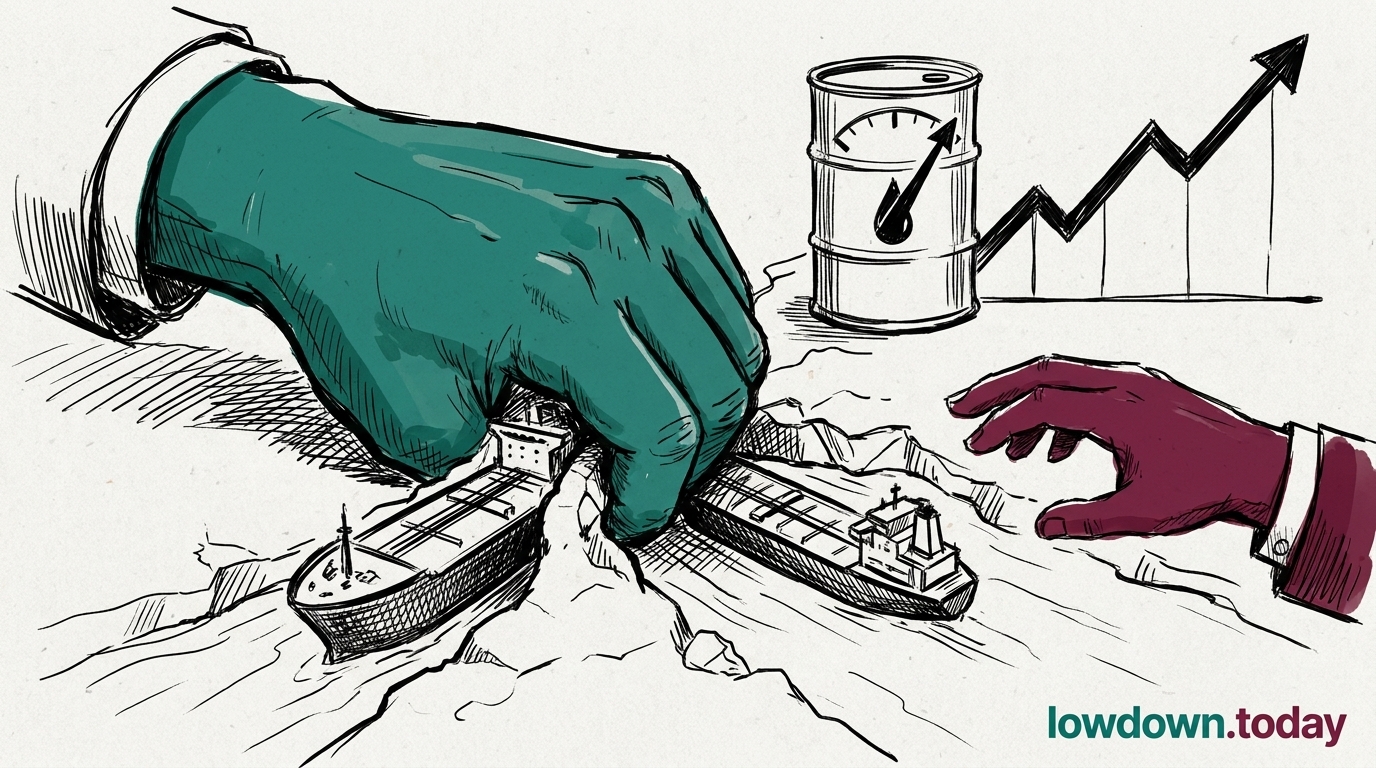
Bloomberg reports oil loading operations suspended at the world's third-largest bunkering port after a second drone attack in three days — closing both the Strait of Hormuz and its main bypass simultaneously.

ConflictDeveloping
Key takeaway

Fujairah's suspension closes the Gulf's only significant oil export route outside the Strait of Hormuz.

A drone struck Fujairah's oil trading hub on Monday — the second attack on the port in three days 1. Bloomberg reported oil loading operations have been suspended 2. Saturday's strike saw debris from intercepted missiles ignite a fire at the bunkering facility; Monday's attack hit the hub directly.

Fujairah is the world's third-largest bunkering port after Singapore and Rotterdam, and The Gulf's primary oil export facility outside the strait of Hormuz. It sits on The Gulf of Oman coast, east of the strait. When the IRGC declared that "not a litre of oil" would pass through Hormuz , the implicit safety net was that crude could still flow overland by pipeline to Fujairah and load onto tankers without entering the Persian Gulf. That bypass is now compromised.

With Hormuz transits down to single digits against a historical average of 138 and Fujairah loading suspended, no major Gulf oil export route is operating at normal capacity. The Shah Gas Field — processing one billion cubic feet of gas per day — went offline the same morning after a separate drone strike 3. Saudi Arabia intercepted more than 60 drones on Monday alone. Brent Crude closed at $106.18, more than 50% above its pre-war level .

Iran does not need to sink tankers to achieve an effective blockade. It needs only to make loading, transit, and bunkering unsafe enough that commercial operators suspend activities on their own. At Fujairah, that threshold has been crossed.


Deep Analysis

In plain English

Because Iran is attacking ships in the Strait of Hormuz — the narrow waterway through which Gulf oil normally travels — oil companies have been trying to use Fujairah instead. Fujairah sits on the UAE's eastern coast, directly on the open ocean, so tankers there never need to pass through the strait at all. Now Fujairah itself is under attack and oil loading has stopped. Gulf oil producers are simultaneously losing their main route and their backup route. There is no third option at meaningful scale.

Deep Analysis
Synthesis

Hormuz closure plus Fujairah suspension creates a strategic pincer that the body treats as separate events. Together they represent near-total Gulf export interdiction. Saudi Arabia continues producing — under daily drone attack itself — but has nowhere to send crude even if its own infrastructure survives. The combination converts physical supply disruption into systemic export paralysis that rising prices alone cannot resolve, because there is no price at which supply can physically move.

Root Causes

Fujairah was specifically developed to bypass Hormuz — which made it the obvious second-priority interdiction target once strait closure was established. The commercial logic that made Fujairah strategically valuable converted it directly into a high-leverage military objective. Infrastructure built to solve one vulnerability simply displaces the target to the new node.

Escalation

Two attacks in three days on the same facility indicate deliberate sustained interdiction rather than opportunistic targeting. The attacker is methodically closing export routes in sequence: Hormuz blockade first, then Fujairah onshore strikes. At the current tempo, sustained loading suspension is probable even if individual repairs are completed between attacks, as damage cycles will overlap with repair timelines.

What could happen next?
  • Meaning

    Fujairah suspension eliminates the only scalable Gulf oil export route that bypasses the Strait of Hormuz.

    Immediate · Assessed
  • Consequence

    Bunkering diversion costs of $200,000–$480,000 per vessel will propagate through global shipping freight rates within days.

    Immediate · Assessed
  • Risk

    Fujairah tank farm back-up will force upstream production curtailments within 3–5 days if loading remains suspended, reducing supply further.

    Short term · Assessed
  • Precedent

    Successful repeated targeting of Fujairah establishes that bypass infrastructure provides no durable protection from a determined interdiction campaign.

    Medium term · Suggested
First Reported In

Update #38 · Israel enters Lebanon; Hormuz pact fails

CNBC Fujairah· 17 Mar 2026
Read original
Causes and effects
This Event
Fujairah oil hub struck a second time
Fujairah is the Gulf's primary oil export facility outside the Strait of Hormuz — the main bypass for crude that can reach tankers by pipeline without transiting the strait. With loading operations suspended, the war has closed both the chokepoint and its alternative, eliminating the last functioning major Gulf oil export route at normal capacity.
Different Perspectives
Oil market and P&I insurers
Brent cleared $87 intraday only once CENTCOM's blockade became physical rather than declared, even though P&I Clubs had already excluded Hormuz war risk a week earlier on 7 July: capital hedged ahead of enforcement, but prices moved only after it.
UAE reporting
UAE reporting
UAE reporting placed the Omani tanker deaths at one seafarer against the International Maritime Agency's count of two, the first time in this war that a Gulf state's casualty figures have diverged from an international monitor's.
Jordan
Jordan
Iranian strikes reached Jordan again on 14 July as part of the Gulf-wide retaliation for the Hormuz blockade, extending the conflict's geographic footprint to a state with no direct stake in the strait itself.
Bahrain
Bahrain
Bahrain sounded air-raid sirens on 14 July during Iran's Gulf-wide retaliation, the same day CENTCOM's blockade order and fourth night of strikes pushed the conflict's physical reach into the wider Gulf littoral.
Kuwait
Kuwait
Kuwait intercepted Iranian missiles and drones on 14 July as Tehran's blockade retaliation reached Gulf states beyond Iran's immediate shoreline, confirming Kuwaiti airspace now sits inside Iran's retaliatory envelope.
Oman
Oman
Oman absorbed the war's first tanker casualties in its own waters on 14 July, with two supertankers disabled and seafarers killed, putting the sultanate's shipping lanes directly in the path of the blockade fight for the first time.