Skip to content
You can now search across every topic, entity and event.What's new
Iran Conflict 2026
21SEP

G7 ends with no joint statement

3 min read
15:34UTC

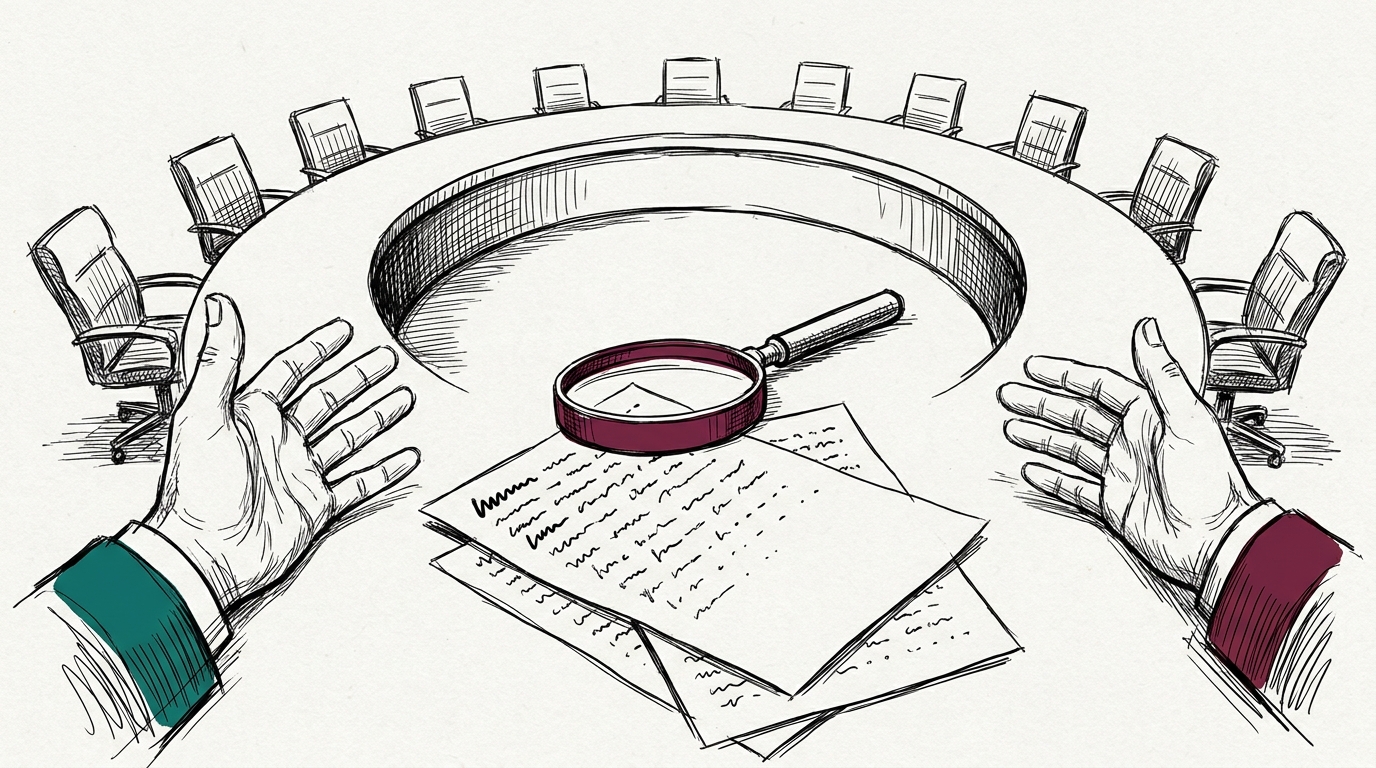
The G7 summit at Kananaskis in Alberta closed without a joint communique, an unusual breakdown for a body whose entire output is consensus text. Trump left early as the Iran deal moved; Macron and Trump then contradicted each other on whether the summit mattered.

ConflictDeveloping
Key takeaway

The G7 spent three days on the war and could not agree a single shared sentence about it.

The G7, the Group of Seven major industrial democracies, ended its summit at Kananaskis in Alberta without a joint communique. 1 For a body whose entire purpose is to issue consensus text, no agreed statement is an unusual breakdown. Donald Trump left early as the Iran deal developed, the same declaration he had posted to Truth Social before the signing now pulling him out of a multilateral room.

The leaders managed only a line on staying "vigilant" over the conflict's energy impact and a reaffirmation of Israel's right to self-defence. France's Emmanuel Macron credited G7 pressure with speeding the ceasefire; Trump publicly denied the summit played any role. The two could not even agree on whether the gathering had mattered.

The absence of a framework carries forward. A Modi-Trump bilateral is set for 17 June at the summit's close , and it will now have to handle the deaths of three Indian sailors on the Settebello without any multilateral structure behind it. The forum designed to coordinate the Western response to the war produced no coordinated position on it.


Deep Analysis

In plain English

The G7 is a group of seven wealthy democracies: the United States, the United Kingdom, France, Germany, Italy, Japan and Canada. They meet once a year and almost always publish a joint statement (called a communique) that represents their agreed position on global issues. Not publishing one is rare and is treated as a sign the group could not agree. At Kananaskis in Alberta, Canada, on 15 June, the leaders produced no such joint statement. Trump left early to manage the Iran deal. Macron publicly said G7 pressure had helped speed the deal; Trump denied the summit played any role. The result is that the world's seven biggest democracies have no shared, published position on the Iran deal, its nuclear terms, or what happens next. That absence matters because France, Germany and the UK have their own legal obligations under the JCPOA and had expected to shape any new Iran framework.

First Reported In

Update #129 · Iran deal signed, but no paper to show

Global News Canada· 16 Jun 2026
Read original
Different Perspectives
Shipping and insurance industry
UKMTO counted about 20 US-facilitated Hormuz transits a day to 11 September against only 6 visible on AIS, with traffic still around 90% below the 138-a-day pre-war baseline. War-risk underwriters cannot price hulls they cannot see, or resolve whether the tanker El Gaia hit a mine, as Iran claims, or a missile and drone, as CENTCOM says.
European refiners
European refiners
European refiners, including Poland's Orlen, absorbed a roughly $26 gap between Dated Brent at $130.80 on 15 September and ICE Brent futures settling at $103.87 on 18 September, a spread that widened from $13.45 on 9 September rather than newly opening. Their futures hedges no longer cover what they now pay for physical barrels.
Saudi Arabia
Saudi Arabia
Saudi Aramco zeroed European term customers' October allocations and rerouted roughly 60 million barrels to Asia through Ras Tanura and Sohar, using Red Sea and Gulf terminal capacity built years ago to cut Hormuz exposure. Riyadh reallocated existing supply rather than negotiating a shortfall with Europe.
Qatar
Qatar
Qatar's energy minister Saad al-Kaabi told Bloomberg at the Qatar Economic Forum on 20 September that Bessent's two-year Hormuz-obsolescence forecast is wrong, and that Doha has deliberately built no bypass pipeline. Qatar's gas exports run through one waterway by choice, not oversight.
Iran (foreign ministry and Majlis)
Iran's foreign ministry and 130 Majlis deputies moved toward NPT withdrawal this week, with lawmaker Hossein-Ali Haji Deligani filing a triple-urgency bill on 20 September that Speaker Qalibaf has not yet scheduled. Tehran treats treaty membership as leverage still on the table, not yet spent.
Russia and China
Russia and China
Moscow and Beijing vetoed the Panel of Experts' renewal, maintaining Resolution 2231 lapsed in October 2025 and the 2025 snapback was never validly triggered, so the sanctions architecture the Panel enforces has no current legal standing. Both governments frame the veto as upholding law, not shielding Tehran.



