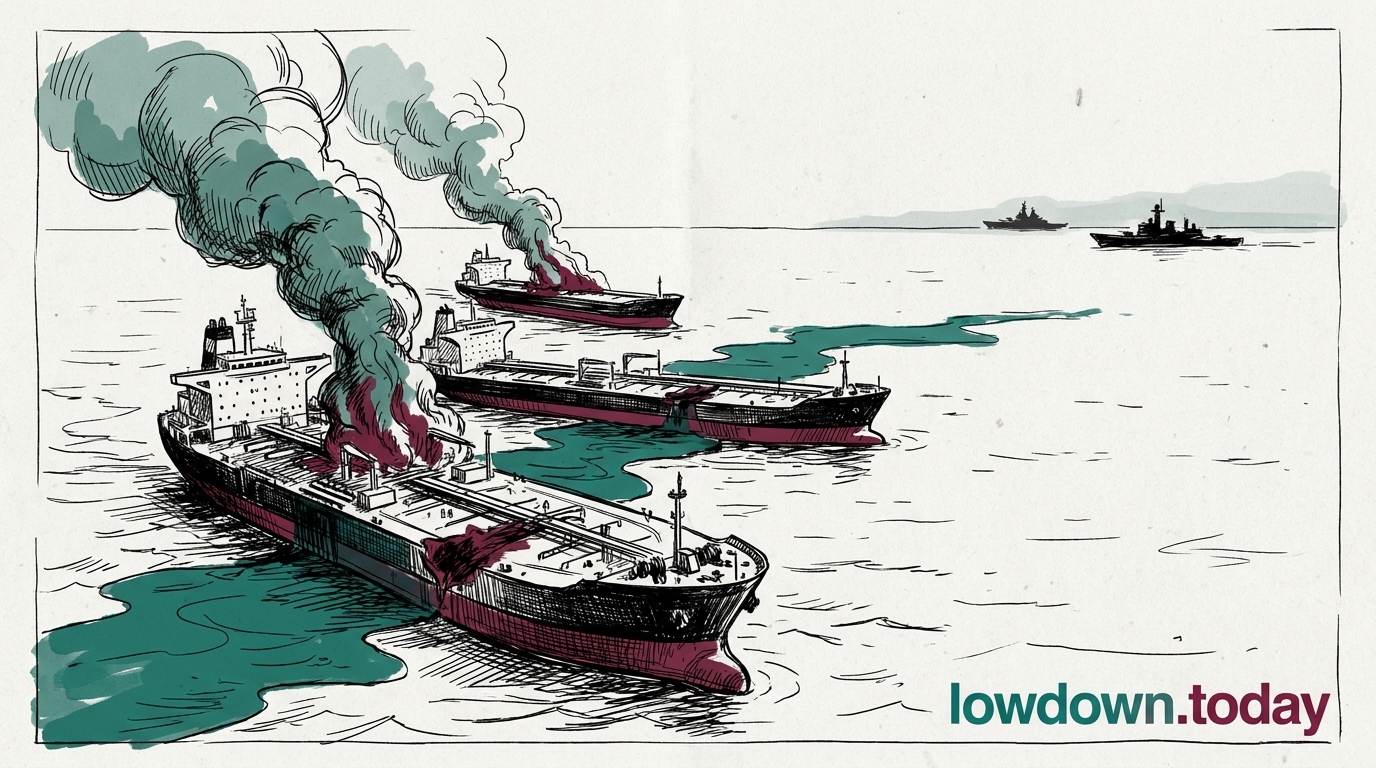
Associated Press reported on 3 September that tanker operators are still moving oil through the strait by taking a southern route near the coast of Oman under the guidance of US forces, while Lloyd's List Intelligence logged 102 Hormuz transits in the preceding week1. The week's calendar boundaries were not published, so the count cannot be lined up precisely against any other week's.
That traffic level says something on its own. Shipping had fallen to a single transit on one day in mid-August, recorded by S&P Global. Cargo is moving again, and it is moving because somebody is telling masters where to sail.
Each navy now tells masters where they may sail. The IRGC's own statement called the route its targets were taking "unauthorized", which asserts a right to license traffic through an international waterway. Iran signed the UN Convention on the Law of the Sea, which guarantees transit passage through straits used for international navigation, but never ratified it, and that gap sits underneath every Iranian closure claim of this war. Washington runs the mirror image: American forces route the southern shuttle, and the IRGC calls that route unauthorised.
The physical argument runs alongside the legal one. Iran's Khatam al-Anbiya headquarters said it had laid new mines south of the strait by 2 September, in lanes the US Navy had cleared days before. A master on the southern shuttle is steering between a mine risk on one side and a legal claim on the other, with a war-risk premium attached to both.


