Skip to content
Welcome, thoughtbot's Giant Robots listeners!Start here
Iran Conflict 2026
3SEP

IRGC claims six vessels, concedes its own losses

2 min read
16:40UTC

The IRGC Navy said it had attacked three oil tankers on an unauthorised Hormuz route and three vessels it called American-affiliated. The same statement acknowledged damage to Iranian tankers.

ConflictDeveloping
Key takeaway

Iran claimed an attack in the strait by name, and admitted its own tankers were damaged.

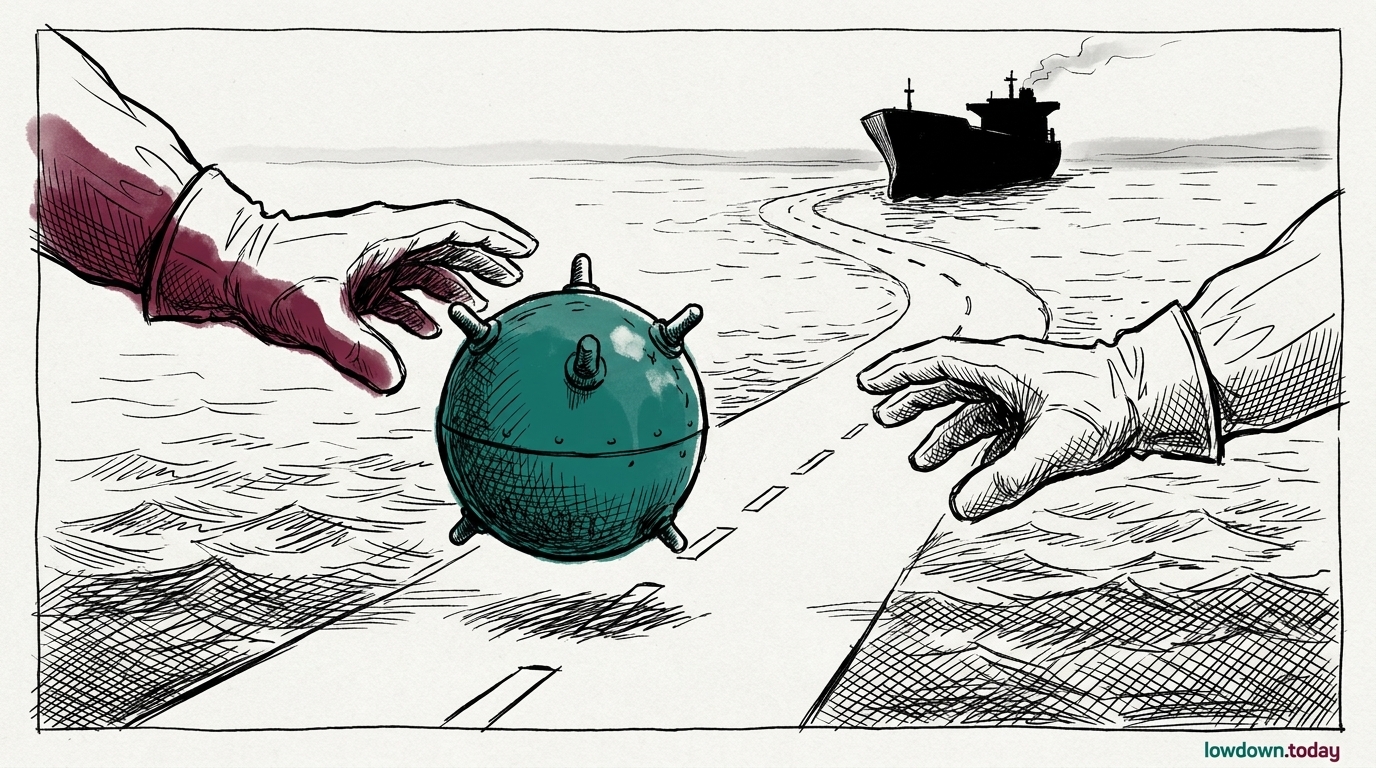
The IRGC Navy said its forces had attacked three oil tankers "traveling along an unauthorized route through the strait of Hormuz" and three vessels it described as affiliated with "the child-killing America", in a statement carried by Iran's state broadcaster Press TV on the evening of 5 September⁠1. The statement names no vessel and gives no coordinates. None of the six claimed attacks has been independently confirmed.

Tehran has rarely put its name to an attack in this strait. Projectiles struck the Saudi tanker Sidr and the Sinokor-managed Senegal Prosperity near Khasab on 1 September and nobody has claimed them since; an unknown projectile killed a crew member aboard a Hormuz-transiting vessel on 18 August with the same silence afterwards. Attacks in this strait have mostly arrived without an author. This one arrived with one.

The same statement acknowledges damage to Iranian tankers. A government announcing a good day does not usually concede its own losses in the same breath, and the admission runs against Tehran's interest in the argument it is having with Washington. It names no hull and locates nothing, so it confirms none of the three vessels CENTCOM listed. It is still the single point in the whole exchange where both capitals agree that Iranian tankers were hit.

For a master and an underwriter, an attribution changes the calculation more than a hull count does. An unclaimed strike could be Iranian, a proxy, a mine or a mistake, and there is nobody to deter or to negotiate with. A claimed one has a return address.

Deep Analysis

In plain English

The IRGC's naval branch put out a statement saying its forces had hit six vessels in one day: three oil tankers travelling a route it called unauthorised through the strait of Hormuz, and three more it described as linked to the United States. The statement names no ship and gives no coordinates for any of the six. In the same statement, the IRGC admitted some of its own tankers had been damaged. That is unusual. A military claiming a successful day of attacks does not normally use the same breath to admit its own losses, which makes the admission harder to dismiss as pure propaganda even though the attack claims themselves remain unverified.

Deep Analysis
Root Causes

Iran signed the UN Convention on the Law of the Sea on 10 December 1982 and has never ratified it, so it remains a signatory rather than a party to the treaty that guarantees transit passage through international straits.

Calling a Hormuz route "unauthorized" asserts a licensing right over that water that Iran's own treaty status does not establish.

What could happen next?
  • Consequence

    A claim naming no vessel and no coordinates cannot be checked against a shipping registry, an insurance claim, or a port record, so unless a named ship surfaces with matching damage, the six-vessel claim is likely to remain a statement rather than a documented event.

First Reported In

Update #176 · Three tankers for two warships

Press TV· 7 Sept 2026
Read original →
Different Perspectives
International Energy Agency
G7 members agreed on 2 October to release up to 100 million barrels through the IEA over four months, front-loading diesel.
China
China
China signed the 15 October text reaffirming the Resolution 2216 arms embargo on the Houthis. The Wall Street Journal reported that Conflict Armament Research found Chinese parts in a Houthi copy of Iran's Kheibarshekan missile.
Russia
Russia
Russia joined the 15 October consensus condemning the Houthis, a month after vetoing a mandate for a UN panel of experts on Iran sanctions on 17 September. One Western official told Bloomberg that Moscow is providing Iran with missiles, and the White House rejected the assessment.
India
India
National Security Adviser Ajit Doval raised seafarer safety with Mohsen Rezaei on 12 October, after a drone hit the Petro Dolphin with 11 Indians aboard at Sohar. External Affairs Minister S. Jaishankar urged that attacks on commercial shipping and seafarers be avoided.
Lebanon
Lebanon
President Joseph Aoun met UN peacekeeping chief Jean-Pierre Lacroix in Beirut on 14 October as UNIFIL winds down before its mandate ends on 31 December. Two days later Qatar's prime minister pledged in Beirut to fund a solar plant for Lebanon.
Kataib Hezbollah
Kataib Hezbollah
The militia announced a halt to operations except against "hostile aircraft" and denied any disarmament deal with Prime Minister Ali al-Zaidi. A day later Quds Force chief Esmail Qaani urged eliminating "remaining traces of the US presence in other arenas".

Written with AI from Lowdown's published reporting. Not individually reviewed by an editor. Editorial standards.