Skip to content
Welcome, thoughtbot's Giant Robots listeners!Start here
Iran Conflict 2026
3SEP

CENTCOM disables two Iranian tankers, destroys a third

2 min read
16:40UTC

Hours after the missile attack, CENTCOM said American forces had permanently disabled M/T Downy off Kharg Island and M/T Stark 1 near Jask, and destroyed M/T Kylo in the Gulf of Oman.

ConflictDeveloping
Key takeaway

Cooper named a three-for-two exchange rate and applied it the same day, giving shipowners a number to price.

CENTCOM said American forces had permanently disabled the crude carrier M/T Downy off Kharg Island and M/T Stark 1 near Jask, and had completely destroyed the unladen carrier M/T Kylo, also known as Noxen, in the Gulf of Oman after directing its crew to abandon ship⁠1. M/T stands for motor tanker. All three strikes came hours after the missile attack on the two American warships, and the release presents them as the reply to it.

CENTCOM's release accounts for Kylo's crew and for no other. It says nothing about the men aboard the Downy or the Stark 1, and no other source we hold fills that gap in either direction.

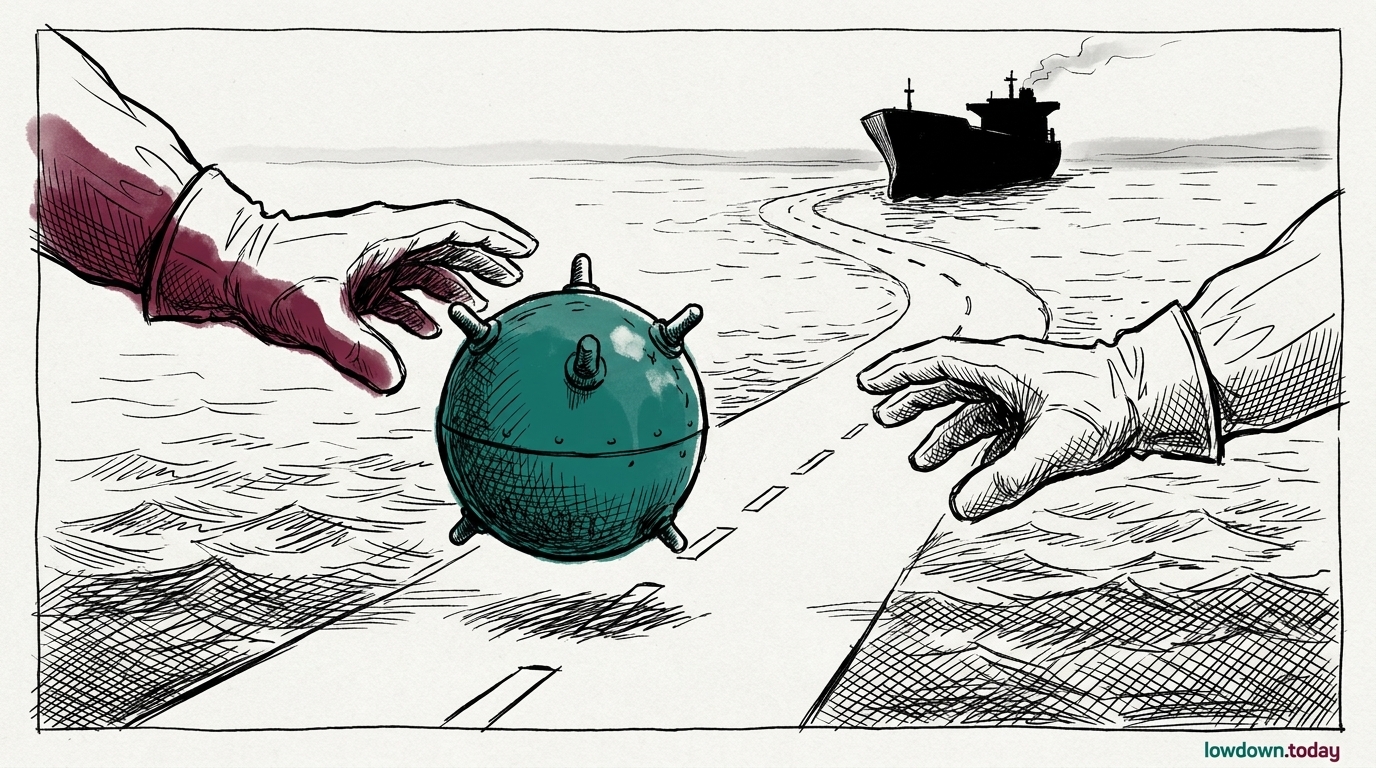
Admiral Brad Cooper, the CENTCOM Commander, put the rate on the record: "If you shoot at two of our ships, we will impose an even higher economic cost, taking out three of yours." He added: "We will not hesitate to defend American forces, and if necessary, destroy Iran's limited and exposed oil fleet"⁠2. Anonymous officials had described a tanker-for-tanker rule to Axios on 1 September, and CENTCOM would not confirm it then. Cooper has now named the ratio himself and applied it inside a day.

A stated ratio does work that a strike alone does not. It hands an underwriter, a charterer and a shipowner a number they can put into a rate, so the cost of the next Iranian attack starts accruing before it happens. Note also where that cost lands. The missiles came from the IRGC; the reply hit crude carriers, which reaches Tehran's export earnings rather than the unit that fired.

Deep Analysis

In plain English

American forces disabled two Iranian oil tankers, the M/T Downy and the M/T Stark 1, so badly damaged that neither can carry cargo, and destroyed a third, the empty M/T Kylo, after ordering its crew off first. CENTCOM named each ship, each location and each outcome within hours of the missile attack, unlike the warship attack itself, where the two governments still disagree on what happened. Admiral Brad Cooper, the top US commander for the region, put the exchange rate into words: for every two US ships Iran fires on, three of its tankers will be destroyed. That is a specific, public promise, which means the next time missiles fly, everyone will be able to check whether Cooper's rate holds.

Deep Analysis
Root Causes

CENTCOM's own release frames the choice of target directly. It describes the three tankers as part of "a multibillion-dollar shadow network that funds the IRGC and its regional proxies" and adds that "Iran has no means by which to defend them."

That framing explains the target selection as much as the missile exchange does. Washington picked assets it judged both economically load-bearing, because tanker revenue funds the IRGC network Treasury has separately sanctioned, and militarily undefended, rather than answering a missile attack with a matching strike on Iranian forces.

What could happen next?
  • Consequence

    Cooper's three-for-two ratio is now a public, numbered commitment rather than an unconfirmed policy, so any future IRGC strike on a US vessel will be measured against a specific figure Washington itself supplied.

First Reported In

Update #176 · Three tankers for two warships

U.S. Central Command· 7 Sept 2026
Read original →
Different Perspectives
International Energy Agency
G7 members agreed on 2 October to release up to 100 million barrels through the IEA over four months, front-loading diesel.
China
China
China signed the 15 October text reaffirming the Resolution 2216 arms embargo on the Houthis. The Wall Street Journal reported that Conflict Armament Research found Chinese parts in a Houthi copy of Iran's Kheibarshekan missile.
Russia
Russia
Russia joined the 15 October consensus condemning the Houthis, a month after vetoing a mandate for a UN panel of experts on Iran sanctions on 17 September. One Western official told Bloomberg that Moscow is providing Iran with missiles, and the White House rejected the assessment.
India
India
National Security Adviser Ajit Doval raised seafarer safety with Mohsen Rezaei on 12 October, after a drone hit the Petro Dolphin with 11 Indians aboard at Sohar. External Affairs Minister S. Jaishankar urged that attacks on commercial shipping and seafarers be avoided.
Lebanon
Lebanon
President Joseph Aoun met UN peacekeeping chief Jean-Pierre Lacroix in Beirut on 14 October as UNIFIL winds down before its mandate ends on 31 December. Two days later Qatar's prime minister pledged in Beirut to fund a solar plant for Lebanon.
Kataib Hezbollah
Kataib Hezbollah
The militia announced a halt to operations except against "hostile aircraft" and denied any disarmament deal with Prime Minister Ali al-Zaidi. A day later Quds Force chief Esmail Qaani urged eliminating "remaining traces of the US presence in other arenas".

Written with AI from Lowdown's published reporting. Not individually reviewed by an editor. Editorial standards.