Skip to content
You can now search across every topic, entity and event.What's new
Iran Conflict 2026
19AUG

Escort capacity caps Hormuz LNG throughput

2 min read
18:42UTC

Lloyd's List reports naval escorts can clear only three to four tankers a day through Hormuz on seven to eight warships, a ceiling that caps the restart regardless of diplomacy.

ConflictDeveloping
Key takeaway

Escorts clear only three to four ships a day, so throughput scales with warships, not diplomacy.

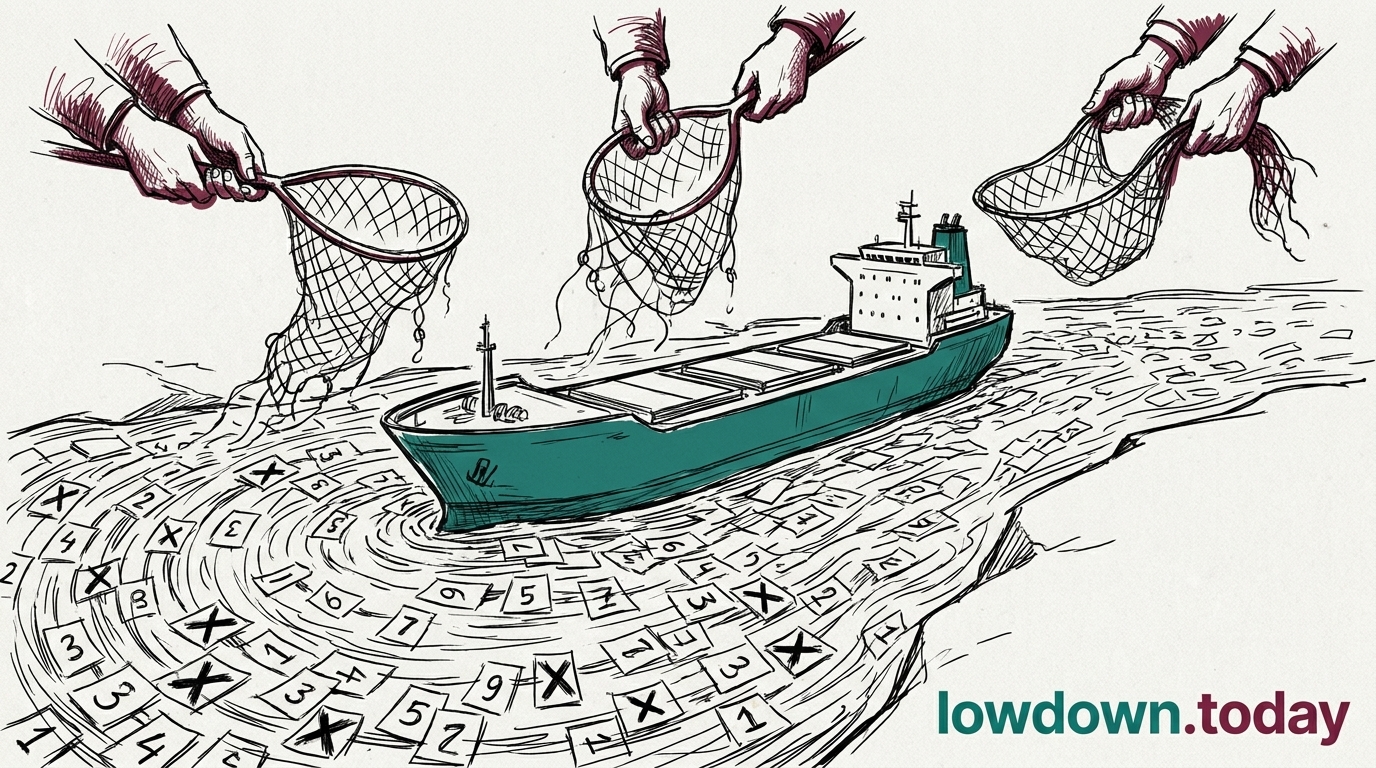
Naval escorts can currently move only three to four commercial ships a day through the Strait of Hormuz, using seven to eight escort warships for air cover against the residual mine and midget-submarine threat, Lloyd's List reports. The maritime publication frames the ratio as a fixed logistics ceiling, not a temporary bottleneck.

The corridor reopened for commercial traffic only when the first Hormuz carrier cleared to India in mid-June , and it has stayed thin since. TTF swung on each Hormuz headline over the following fortnight without settling , because the escort ratio cannot scale to normal volumes without a step-change in warships committed to the corridor. This extends the same capacity story, rather than opening a new one.

For QatarEnergy the implication is that its restart curve tracks the convoy schedule, not the communiques. Cargoes clear at the speed escorts allow, so a de-escalation headline shifts sentiment faster than it shifts throughput. A spreads desk watches the escort count as the real throttle on Qatari send-out, and treats any TTF relief on talk of normalisation as a fade candidate until the warship commitment actually rises.

Deep Analysis

In plain English

Even though Iran backed off its threats, only a handful of gas tankers can get through the Strait of Hormuz each day. That's not because of politics, it's because only seven or eight warships are escorting them, and each convoy trip takes time. Think of it like a single-lane bridge with a police escort: however many cars want to cross, only as many as the escort can handle get through. Until more warships join, three or four tankers a day is the limit, no matter how calm the diplomatic picture looks.

Deep Analysis
Root Causes

Sustaining a single escorted convoy on station requires roughly three committed warships for every one actually escorting at any given moment, the rest cycling through transit, refuelling and maintenance. Seven to eight warships is therefore close to the maximum convoy cadence a single coalition can sustain without redeploying vessels from other commitments.

Raising the ceiling means adding hulls, not paperwork, which is why Lloyd's List frames the bottleneck as logistical rather than diplomatic.

What could happen next?
  • Meaning

    QatarEnergy's restart pace is bound by convoy escort capacity rather than by diplomacy or terminal readiness, and will not lift until more warships join the corridor.

First Reported In

Update #23 · The EU's own regulator says the ban isn't biting

Lloyd's List· 3 Jul 2026
Read original
Different Perspectives
UK Maritime Trade Operations
UKMTO logged six armed men boarding a tanker 136 nautical miles east of Al Mukalla on 20 August and redirecting it toward Somalia. A vessel steered toward the Somali coast reads as an attempted seizure, a distinct hazard from the stand-off strikes the same lane has seen before.
Mohammad Bagher Ghalibaf
Iran's Majlis speaker received Iraq's Hormuz carve-out request in Baghdad on 19 August, a request that treats passage as Tehran's to grant. Ghalibaf's authority over that grant sits alongside the Revolutionary Guard's separate transit rules, which have moved independently of Iran's foreign ministry before.
Haibat al-Halbousi
Haibat al-Halbousi
Iraq's parliament speaker asked Iran for special consideration on Iraqi Hormuz oil exports during Ghalibaf's 19 August Baghdad visit. Iraq presses the request from a weak position: Iran's central bank is simultaneously demanding Baghdad release Iranian reserves parked in Iraqi accounts.
Federal Department of Economic Affairs, Education and Research
Switzerland's economics ministry updated the Article 21 forms governing lawful Iran money transfers on 19 August, with only the revised forms accepted from 26 August. Bern operates one of the few remaining legal Iran payment channels and has just set a hard cutover on its control point.
Motegi Toshimitsu
Motegi Toshimitsu
Japan's foreign minister said in Muscat on 20 August that Tokyo wants closer coordination with Oman on safe Hormuz and Bab el-Mandeb passage. Japan has no naval presence of its own in the strait, so it is routing the ask through the state negotiating with Iran instead.
Badr bin Hamad Al Busaidi
Oman's foreign minister joined Japan's in Muscat on 20 August to call for intensified coordination on Hormuz and Bab el-Mandeb navigation. Oman also runs the mediation track with Tehran, so the appeal travels through the same channel as the negotiation.