Skip to content
You can now search across every topic, entity and event.What's new
Iran Conflict 2026
10AUG

Zelenskyy sacks Fedorov after army talks

2 min read
23:27UTC

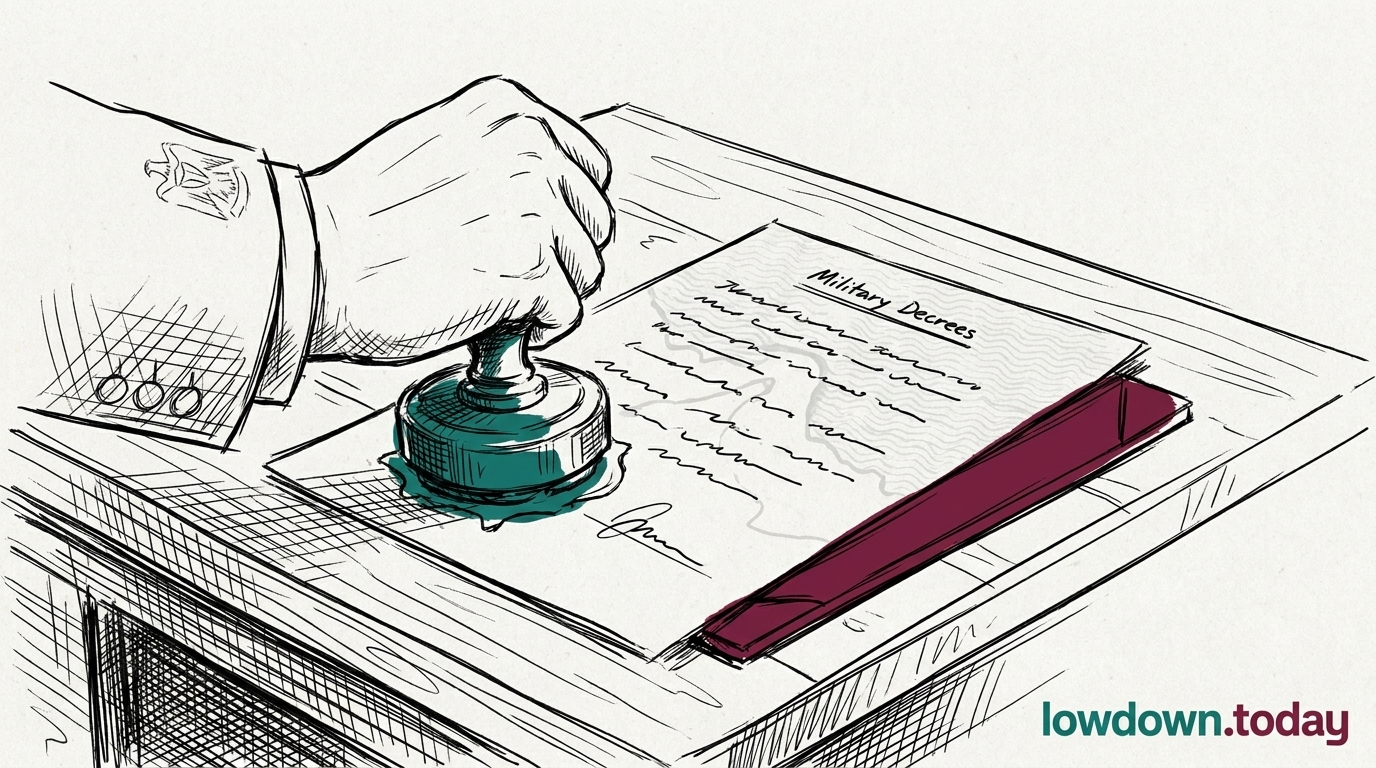
Zelenskyy dismissed Defence Minister Mykhailo Fedorov on 15 July after a meeting with military leadership. Fedorov gave a different reason: a permanent conflict with Commander-in-Chief Oleksandr Syrskyi.

ConflictDeveloping
Key takeaway

Fedorov's exit removes the minister, not the mobilisation and brigade problems Zelenskyy blamed him for.

Volodymyr Zelenskyy dismissed Defence Minister Mykhailo Fedorov on 15 July, after a meeting with military leadership, saying problems on the battlefield, in brigades and with mobilisation had not been resolved 1. Kyiv Independent and Ukrainska Pravda had reported two days earlier, citing a senior official, that the president was considering it 2. Fedorov confirmed his removal to reporters on the record and gave a narrower account of the cause: a permanent conflict with Commander-in-Chief Oleksandr Syrskyi, who he said blocked ministry initiatives.

The dismissal sat inside a government-wide reshuffle Zelenskyy announced on 12 July, in which Prime Minister Yulia Svyrydenko submitted her resignation. Parliament voted on a new prime minister and cabinet on 16 July. Fedorov had run the ministry through a stretch in which the line of contact barely moved, with Russian forces losing men at seventeen times Ukraine's daily rate for ground that did not change hands . The battlefield problems Zelenskyy named were not problems a defence minister could fix alone, and the reshuffle around him suggests the president was reorganising a cabinet rather than isolating one failure.

Fedorov leaves with two entries on his ledger: persuading Elon Musk to keep Starlink out of Russian forces' hands, and the logistics lockdown campaign against Russian supply lines that he launched on 27 May. He declined the adviser role Zelenskyy offered him.

Deep Analysis

In plain English

Ukraine's government just lost its defence minister in the middle of the war. Mykhailo Fedorov, the civilian minister who ran weapons purchasing and day-to-day ministry business, was dismissed by President Zelenskyy on 15 July. Fedorov says the real reason was an unresolvable clash with Oleksandr Syrskyi, the general who commands Ukraine's troops in the field; Zelenskyy's public reasons were unresolved battlefield, brigade and mobilisation problems. A civilian minister and a battlefield commander can disagree over how the army recruits and organises troops without either side lying about it, and when that disagreement stays unresolved for months, one of the two usually has to go. Fedorov is a well-known figure who helped set up Ukraine's wartime digital government and pushed to deny Russian forces access to Elon Musk's Starlink internet service; he turned down a lesser advisory role rather than stay on.

Deep Analysis
Root Causes

Ukraine's Defence Ministry and General Staff share overlapping authority over mobilisation policy with no legally settled division of who sets brigade manning targets. The same ambiguity surfaced in Zaluzhny's removal in 2024 and has now resurfaced at ministerial level, with Fedorov naming the conflict directly rather than leaving it implied.

The timing compounds a reshuffle Zelenskyy had already queued rather than one driven solely by Fedorov: Prime Minister Yulia Svyrydenko had submitted her resignation on 12 July, three days before Fedorov's dismissal, with Parliament voting on a new cabinet on 16 July. Fedorov's exit landed inside a government-wide reset already in motion, which is part of why Zelenskyy could remove him without an immediate permanent replacement in hand.

What could happen next?
  • Meaning

    The dismissal makes public a command-authority dispute between Ukraine's civilian defence ministry and its military General Staff that had previously stayed behind closed doors.

  • Risk

    A ministry running without a confirmed minister during an active mobilisation crisis risks delayed decision-making on brigade manning and procurement until the Rada formally confirms a successor.

First Reported In

Update #24 · Fedorov sacked as the front stands still

RFE/RL· 19 Jul 2026
Read original
Different Perspectives
Yemen's internationally recognised government and affected communities
SABA reported at least 17 soldiers killed at Saudi-backed camps in eastern Yemen as tanker use of Bab el-Mandeb fell. The fighting adds civilian and supply risks to a route ships use when Hormuz is unsafe.
Shipping and insurance market
Lloyd's List Intelligence counted 84 Hormuz transits in the week to 7 August, against more than 700 in normal conditions. Vessel operators and underwriters need verified passage rules and a lower attack risk before regular sailings return.
United States Treasury
The US Treasury designated five Iranian individuals and ten entities, including crypto exchanges and wallet addresses, on 7 August. Washington is applying financial pressure while Iran asks for sanctions relief before reopening Hormuz.
United Arab Emirates
The UAE said an Iranian missile targeted an ADNOC-owned vessel on 8 August. Abu Dhabi's claim puts its state energy fleet inside the dispute, though the incident's details remain unresolved.
Oman
Oman
Oman and Iran agreed discussions on monitoring, environmental protection, maritime services and crime, while excluding transit fees. Muscat's role is operational mediation, but it cannot settle demands directed at Washington.
Iran's Supreme National Security Council
Iran's Security Council published six conditions for reopening Hormuz, including sanctions relief and frozen assets. Tehran treats maritime access as part of a wider settlement rather than a shipping-only arrangement.