Verkhovna Rada
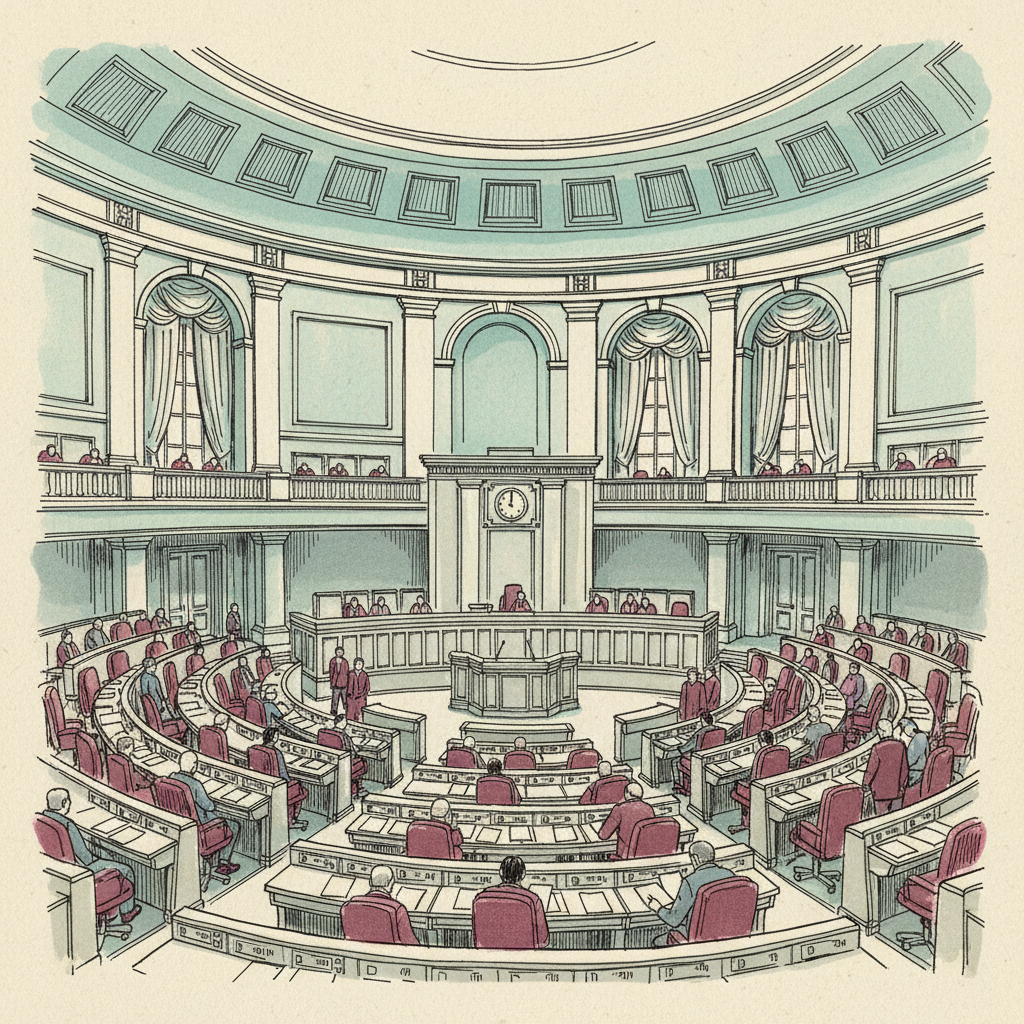
Ukraine's unicameral Parliament, based in Kyiv.
A revenue-raising law stuck in the Verkhovna Rada is one of twelve EU conditions on Ukraine's aid. On 2 October 2026 Brussels paid €2.9bn, including the first €800m of budget support from its €90bn loan, below the roughly €3.7bn Kyiv expected.
Last refreshed: 12 October 2026 · Appears in 1 active topic
Does the Rada's €90 billion loan vote give Ukraine a stronger hand at the Istanbul negotiating table?
Timeline for Verkhovna Rada
Mentioned in: EU pays Kyiv €2.9bn with first budget-loan draw
Russia-Ukraine War 2026Received the 2027 draft budget
Russia-Ukraine War 2026: Koretskyi sends the Rada a war budgetKyiv faces a $27bn gap as Brussels sets conditions
Russia-Ukraine War 2026Rada confirms Khmara as defence minister, 312 to two
Russia-Ukraine War 2026SBU officer Khmara takes defence duties
Russia-Ukraine War 2026Background
The Verkhovna Rada is Ukraine's single-chamber Parliament, sitting in Kyiv with 450 seats and members elected for five-year terms. Martial law, in force and renewed since February 2022, has suspended the normal electoral cycle.
It remains the body that approves the state's war finances and its senior appointments. In 2026 it ratified the EU's €90bn loan in May, confirmed a new government after Yulia Svyrydenko's resignation in July, with Serhii Koretskyi as prime minister from 16 July, and confirmed Yevhen Khmara as defence minister in August. In September Koretskyi sent it the 2027 draft budget.
Its significance lies in that control of money and mandates. Western lenders tie disbursements to laws the Rada must pass, so the chamber's pace shapes when Ukraine's funding arrives.
Parliament now sets the pace of aid
The Rada approved the EU's €90bn loan agreement on 28 May 2026. Since then its slower votes have become the brake. The European Commission said on 2 September that a revenue-mobilisation law still stuck in Parliament was one of twelve conditions for the next payment of about €3.7bn.
On 2 October Brussels sent €2.9bn, the eighth Ukraine Facility instalment, of which €800m was the first budget-support payment from the €90bn loan; the loan's defence side had paid out since July. the Commission has not explained the shortfall. The Rada also now holds the 2027 draft budget, which gives defence 4.885tn hryvnias, nearly 44% of economic output.
Deputies confirmed a contested defence minister
Zelenskyy handed Yevhen Khmara, then head of the SBU security service and a former commander of its Alpha unit, the defence minister's duties on 16 July 2026. Several deputies argued that the law barred a serving security officer from the post.
The Rada settled the question on 19 August, confirming Khmara by 312 votes to two with no abstentions. He told deputies he stood before them as a civilian and had left military service under Article 26 of the military service law. The margin showed a Parliament that still closes ranks behind the president's wartime appointments once their legal objections are answered.
Parliament now sets the pace of aid
How does Ukraine plan to repay the EUR 90 billion EU loan?
What did Ukraine's parliament vote on in May 2026?
Reference
How many seats does Ukraine's parliament have?
Recently resolved
Why did Ukraine reshuffle its cabinet in July 2026?
Who is Ukraine's new defence minister?
When will Ukraine receive the first payment from the EU 90 billion loan?
Is the Verkhovna Rada still functioning during the war?


Written with AI from Lowdown's published reporting. Not individually reviewed by an editor. Updated 12 October 2026. Editorial standards.