Skip to content
Welcome, thoughtbot's Giant Robots listeners!Start here
Iran Conflict 2026
10AUG

Beirut orders Hezbollah disarm; ignored

3 min read
23:27UTC

Lebanon's Justice Minister ordered arrest warrants for those who fired at Israel — the most direct challenge to Hezbollah's armed status since the civil war ended in 1989. The Lebanese army has 80,000 troops; Hezbollah has up to 50,000.

ConflictDeveloping
Key takeaway

The Salam government has demonstrated unprecedented political will, but the enforcement paradox — judicial orders the security apparatus cannot safely execute without risking civil war — is structurally identical to every prior Lebanese attempt to use state mechanisms against Hezbollah.

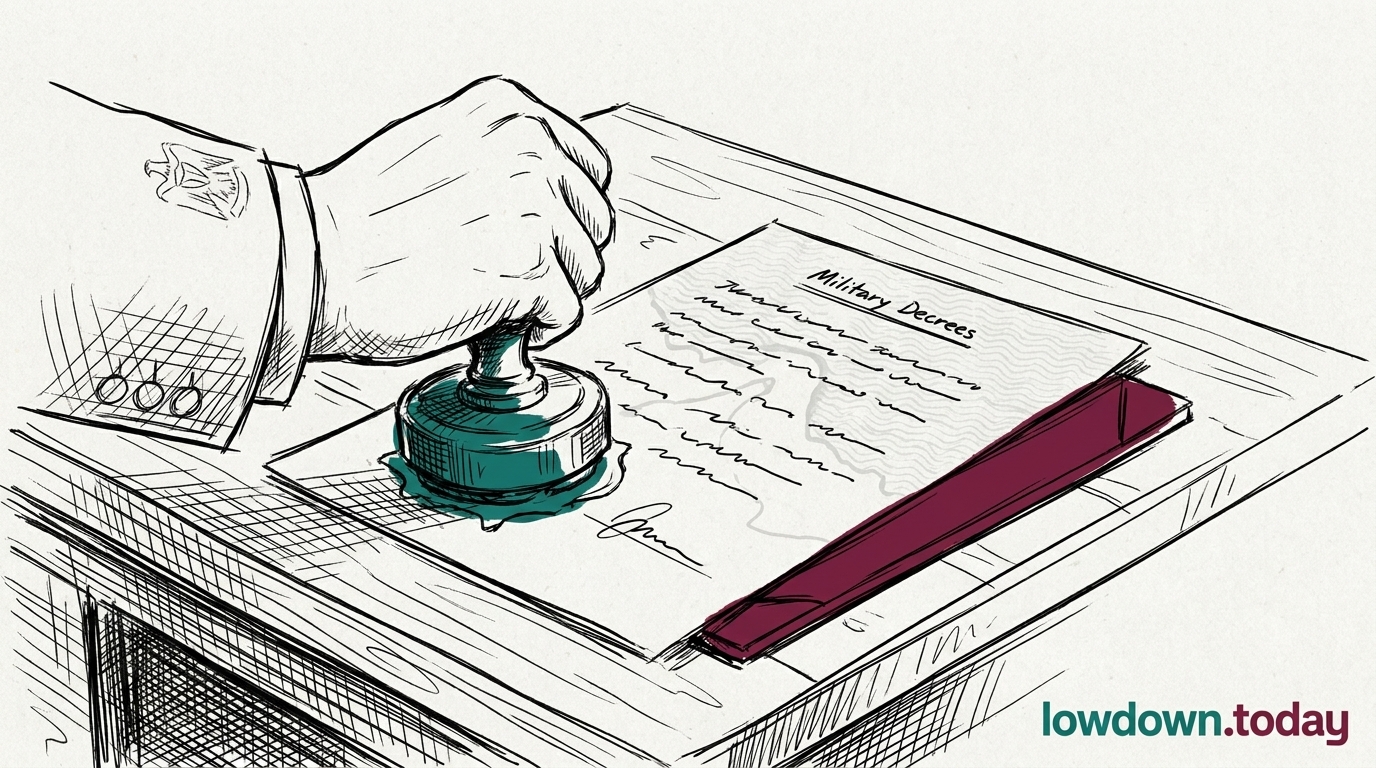
Lebanon's Justice Minister ordered the public prosecutor to arrest those who fired at Israel, extending Prime Minister Salam's earlier ban on all Hezbollah military activities. The order moves the government's confrontation with Hezbollah from political declaration — Salam called the group's attack on Israel 'irresponsible and suspicious' — to the legal system, directing prosecutors and security forces to act.

No Lebanese government has attempted this since the Taif Agreement ended the fifteen-year civil war in 1989. Taif required the dissolution of all militias, but Hezbollah was exempted under the justification of 'national resistance' against Israeli occupation — a rationale that persisted after Israel withdrew from southern Lebanon in 2000. UN Security Council Resolution 1559, adopted in 2004, called explicitly for militia disarmament. No government attempted enforcement.

The capability gap that prevented enforcement then persists now. The Lebanese Armed Forces have approximately 80,000 active personnel; Hezbollah's fighting strength is estimated at 30,000–50,000, with fighters who have recent combat experience from Syria (2012–2020) and operate from fortified positions across southern Lebanon, the Beqaa Valley, and Beirut's southern suburbs. The army's equipment — largely US-supplied M113 armoured carriers and M198 howitzers — was designed for conventional operations, not urban warfare against a dug-in force with anti-tank missiles and tunnel networks.

The arrest warrants may function as a political signal to Washington and Tel Aviv rather than an operational directive. But signals have consequences in Lebanese politics. In 2008, a far more limited challenge to Hezbollah — over its telecommunications network, not its fighters — triggered a seizure of the capital. Whether a weakened Hezbollah, its leadership under Israeli assassination campaigns and its Iranian patron's command structure fragmenting, responds with the same capacity is the question on which Lebanon's cohesion now depends.

Deep Analysis

In plain English

Lebanon's Justice Minister has ordered courts to arrest Hezbollah fighters who shot at Israel — a genuinely remarkable step, because no Lebanese government has gone this far before. But actually making those arrests would require sending Lebanese soldiers to detain heavily armed Hezbollah operatives who outnumber and outgun them. Hezbollah also has a political party sitting in Lebanon's parliament. The order demonstrates the government wants to comply with US pressure, but wanting to arrest Hezbollah and being able to are two entirely different things, and Lebanon's history suggests the warrants may be issued and never served.

Deep Analysis
Synthesis

Prime Minister Salam is attempting a politically sophisticated manoeuvre: using irresistible external compulsion as cover to accomplish domestic security restructuring — challenging Hezbollah's armed monopoly — while insulating his government from Shiite political backlash by claiming he had no choice. The manoeuvre's viability depends entirely on whether Washington accepts legal gestures as sufficient compliance. If the US demands demonstrated arrests rather than issued warrants, Lebanon faces civil conflict and Israeli strikes simultaneously, having destroyed its political cover for nothing.

Root Causes

The Taif Agreement (1989) ended Lebanon's civil war through confessional power-sharing rather than militia disarmament, and Hezbollah's armed status was subsequently codified in successive Lebanese national dialogue agreements as a legitimate 'resistance' exception — giving its military wing quasi-constitutional standing that no ministerial order can unilaterally revoke. Hezbollah's post-2006 rearmament through Syrian territory during UNIFIL's limited mandate produced a force that structurally outguns the Lebanese state on its own soil.

Escalation

Hezbollah's domestic response to the arrest order is the critical near-term escalation indicator. In 2008, Hezbollah seized West Beirut after the government merely announced it would dismantle their private communications network — an arrest order is a far more direct existential challenge. A violent Hezbollah response would simultaneously collapse the Salam government and trigger the conditions of the US ultimatum, potentially drawing Israeli strikes on Lebanese state targets at the same moment of internal armed conflict.

What could happen next?
  • Meaning

    For the first time since Taif, a Lebanese government has deployed state judicial mechanisms against Hezbollah's military operations rather than confining opposition to political condemnation — establishing a legal precedent that survives even if current enforcement fails.

    Immediate · Assessed
  • Risk

    Hezbollah may respond by collapsing the Salam government through its parliamentary bloc or through internal armed action, replicating the 2008 West Beirut seizure at a moment when Lebanon simultaneously faces Israeli military threat under the US ultimatum.

    Short term · Assessed
  • Consequence

    If warrants are issued but not executed — replicating the STL pattern — the US may treat non-arrest as non-compliance with its ultimatum, subjecting Lebanon to Israeli strikes despite demonstrated governmental political will.

    Short term · Suggested
  • Precedent

    The arrest order reactivates the constitutional question of whether Lebanon's Taif Agreement framework protects Hezbollah's armed wing — a question that could reshape Lebanese constitutional law regardless of the current conflict's outcome.

    Long term · Suggested
First Reported In

Update #11 · Qatar's LNG dark; Trump eyes ground troops

Haberler· 2 Mar 2026
Read original →
Causes and effects
This Event
Beirut orders Hezbollah disarm; ignored
The arrest orders extend the Lebanese government's challenge to Hezbollah from political declaration to legal enforcement, but the state's military inferiority to Hezbollah — demonstrated when the group seized West Beirut in 2008 over a far lesser provocation — raises the question of whether the orders can be executed without triggering the internal conflict they are meant to prevent.
Different Perspectives
Office for Budget Responsibility
The OBR's 28 October forecast assumed $82 oil for 2026 and 2027, from market prices for the ten working days to 19 August, and blamed dearer wholesale energy on the war without naming Iran. It expects CPI inflation close to 4% in early 2027 even at that price.
Hengaw, Kurdish rights group
Hengaw reported the 3 November hangings of Amirhossein Maleki and Amirhossein Ebrahimi in Isfahan, saying Ebrahimi was tortured into confessing and that nine of 12 people sentenced to death in the case have now been hanged. Iran's judiciary holds that the defendants killed members of the security forces.
FINTRAC, Canada's financial intelligence unit
FINTRAC worked with the US Treasury on the 6 November designation of eight money services businesses in British Columbia, Ontario and Quebec. Treasury says the businesses still operate, some under new names, so closing them falls to Ottawa.
Abdul Qadir al-Dakhil, Governor of Nineveh
Al-Dakhil cancelled three Mosul International Airport contracts on 7 November over alleged links to armed groups, after meeting Prime Minister Ali al-Zaidi in Baghdad. He named no group or company, and said the contracts will go to international companies.
Kuwait
Kuwait
Kuwait condemned the Houthi missile fired towards the Madinah region on 5 November and restated its support for Saudi Arabia, the Qatar News Agency reported. Its state tanker company, Kuwait Oil Tankers Company, is among the Gulf state fleets on Iran's expanded Hormuz list.
Scott Bessent, US Treasury Secretary
Treasury designated an alleged Chandigarh false-flag network on 4 November and eight Canadian exchangers on 6 November, while State sanctioned alleged MANPADS intermediaries. None of the actions touches an oil buyer; they target the paper, cash and procurement around Iran's trade.

Written with AI from Lowdown's published reporting. Not individually reviewed by an editor. Editorial standards.
