Skip to content
Briefings are running a touch slower this week while we rebuild the foundations.See roadmap
Iran Conflict 2026
2MAR

Lebanon PM condemns Hezbollah attack

3 min read
19:00UTC

Nawaf Salam called Hezbollah's strike 'irresponsible and suspicious' — breaking decades of careful silence that no Lebanese prime minister dared breach while Hezbollah's guns were still firing.

ConflictDeveloping
Key takeaway

Salam's use of 'suspicious' rather than merely 'irresponsible' signals an implicit accusation that Hezbollah acted on Iranian direction rather than Lebanese national interest — the most direct challenge to Hezbollah's resistance narrative by a Lebanese PM since the Taif Agreement.

Lebanon's Prime Minister Nawaf Salam called Hezbollah's attack on Israel "irresponsible and suspicious" and convened an emergency cabinet session with the army chief. The language broke with decades of calculated ambiguity. Previous Lebanese prime ministers — Saad Hariri, Najib Mikati, Hassan Diab — declined to condemn Hezbollah's military operations while they were under way, treating the group's armed wing as a fact of Lebanese political life rather than a policy choice.

The word "suspicious" does specific work. It implies Salam believes Hezbollah may have acted to provoke an Israeli ground intervention — intervention that would devastate Lebanese territory and civilian life rather than Hezbollah's alone. Salam, a former International Court of Justice judge appointed in January 2025 after years of political paralysis, owes nothing to the confessional establishment that accommodated Hezbollah's parallel military force.

Convening the army chief signals preparation beyond rhetoric. The Lebanese Armed Forces have historically avoided confrontation with Hezbollah, whose military capability dwarfs the national army's. UN Security Council Resolution 1701, passed after the 2006 war, required the disarmament of all armed groups south of the Litani. The 1989 Taif Agreement mandated dissolution of all militias. Neither was enforced against Hezbollah.

Israel has characterised the Haifa strike as an "official declaration of war" and expanded targeting to political figures and civilian supporters . In 2006, Israeli strikes destroyed Lebanese national infrastructure — bridges, power stations, Beirut's airport — with no distinction between state and militia. Salam's condemnation draws a line between Lebanon's government and Hezbollah. Whether Israeli military planners honour it is the question Lebanese civilians now face.

Deep Analysis

In plain English

Lebanon contains Hezbollah as a powerful armed militia operating alongside — and often superseding — the national army. Previous Lebanese leaders walked a careful line, never endorsing but never condemning Hezbollah's military actions, because doing so was politically or physically dangerous. Salam calling the attack 'suspicious' is particularly striking: it is a polite way of saying he believes Hezbollah was acting on Iranian orders, not in Lebanon's interest. That is not how Lebanese prime ministers have spoken about Hezbollah in living memory.

Deep Analysis
Synthesis

Salam's background as former president of the International Court of Justice transforms his condemnation from a political statement into a potential international legal signal. His use of 'suspicious' in the language of a jurist — rather than the language of a politician — may be a deliberate attempt to shape the legal record before any UNSC or ICC proceedings, establishing that the Lebanese state disavowed the Hezbollah action contemporaneously and on the record.

Root Causes

Salam's government was formed in early 2025 on an explicit sovereignty and reform platform following the post-Nasrallah political realignment — making this the first Lebanese government in 35 years not structurally obligated to accommodate Hezbollah's veto over security policy. This structural shift, not personal courage alone, enabled the statement. The emergency session with the army chief is the operational expression of that platform: an attempt to assert Lebanese Armed Forces primacy over military operations on Lebanese territory before an IDF ground offensive makes the question moot.

Escalation

Salam's condemnation inadvertently strengthens Israel's international legal and political case for a ground offensive by implicitly validating the distinction between the Lebanese state and Hezbollah as a non-state actor. If Israel can frame an invasion as targeting Hezbollah with implicit Lebanese government acquiescence, it faces significantly less diplomatic resistance than in 2006 — which could accelerate Israeli decision-making rather than constrain it.

What could happen next?
1 meaning1 consequence1 opportunity1 risk1 precedent
  • Meaning

    The word 'suspicious' constitutes an implicit accusation that Hezbollah acted on Iranian direction, not Lebanese national interest — a distinction that, if sustained, could delegitimise Hezbollah's armed status under the Taif Agreement's 'resistance' carve-out.

    Medium term · Suggested
  • Consequence

    Salam's condemnation strengthens Israel's international legal argument for treating a Lebanon offensive as targeting a non-state actor with implicit Lebanese government acquiescence, reducing the diplomatic resistance a ground invasion would otherwise generate.

    Immediate · Assessed
  • Opportunity

    If Salam successfully deploys the Lebanese Armed Forces to southern Lebanon under Resolution 1701 authority, it creates the only available non-military mechanism capable of forestalling an IDF ground invasion — but the LAF's willingness and capacity to act in these conditions is genuinely uncertain.

    Short term · Suggested
  • Risk

    A Lebanese PM who publicly condemns Hezbollah during an active conflict faces acute personal security risk; the precedent of Rafik Hariri's 2005 assassination occurred in a context of lesser direct confrontation with Hezbollah and Syria.

    Immediate · Suggested
  • Precedent

    The first Lebanese head of government since Taif to publicly condemn a Hezbollah military operation establishes a precedent that permanently alters the domestic political cost of accommodating Hezbollah's armed status, regardless of how this conflict ends.

    Long term · Suggested
First Reported In

Update #9 · IRGC HQ destroyed; Britain quits coalition

Al Jazeera· 2 Mar 2026
Read original
Different Perspectives
Gulf shipping and insurance markets
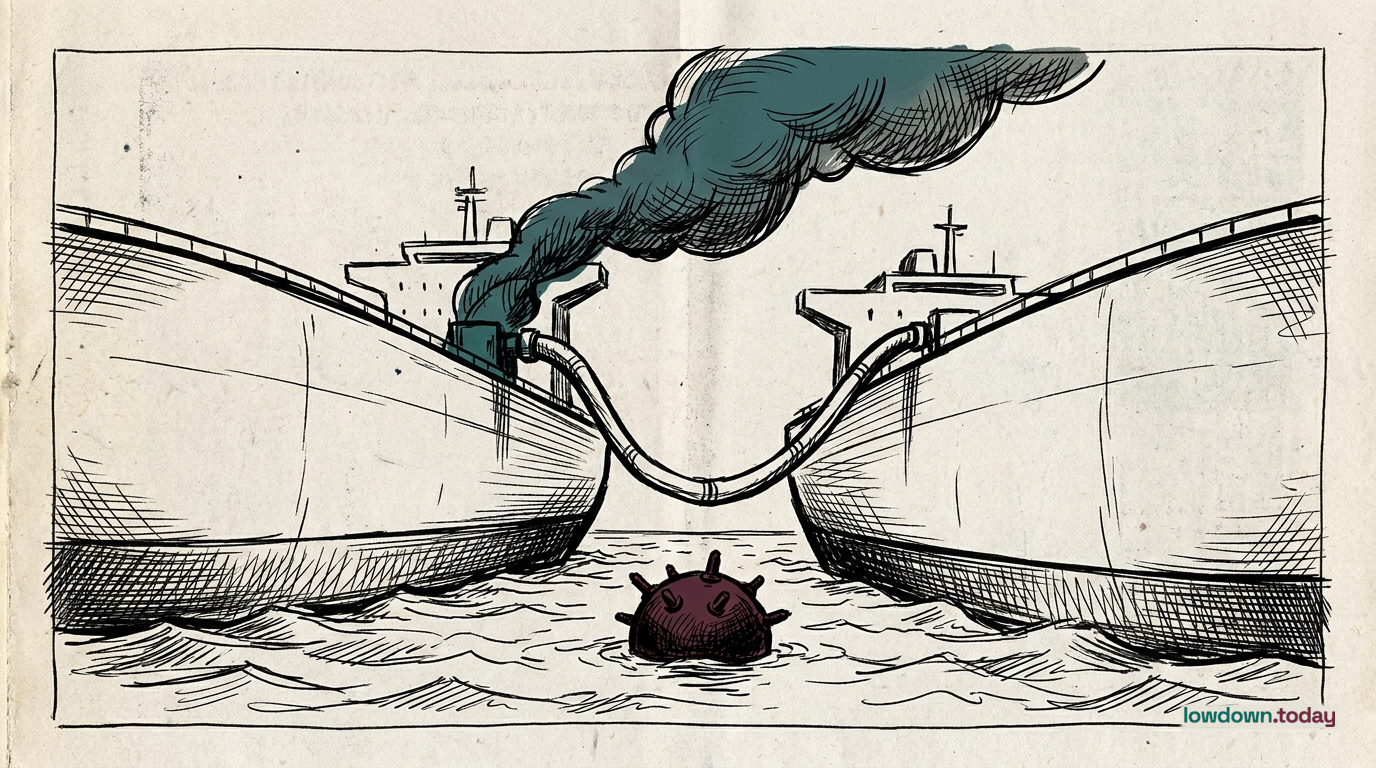
With Hormuz and Bab el-Mandeb both hostile at once, war-risk underwriters face their first dual-chokepoint pricing problem; the rerouting hedge that absorbed one closure is gone for Israeli-linked hulls. Any deal that reopens Hormuz without a Houthi stand-down clause delivers only partial shipping relief.
Russia and China
Russia and China
Russia and China met IAEA chief Grossi jointly in Geneva on 5 June to coordinate an advance blocking position against Washington's censure resolution, the first documented instance of proactive pre-session obstruction rather than reactive post-vote dissent. Beijing's move came four days after OFAC designated Shanghai Qianye Energy under Iran energy sanctions.
Saudi Arabia
Saudi Arabia
Saudi Arabia was left out of the emergency $4.01 billion Patriot waiver Qatar received on 2 May as its own PAC-3 stocks ran near-empty from intercepting Iranian salvoes over Aramco facilities. Riyadh is on a standard 18-month FMS queue behind a production line booked through 2030, with no equivalent priority to Qatar's Al Udeid basing role.
Houthis (Ansar Allah)
The Houthis declared a complete ban on Israeli Red Sea navigation on 8 June and struck Jaffa, their first attack on Israeli territory since April, seven days after the Tasnim authorisation to activate other fronts including Bab el-Mandeb. The declaration put both chokepoints under hostile authority simultaneously.
Iran
Iran
Iran agreed the 9 June mutual halt after the Mahshahr exchange and coordinated with Russia and China to block Washington's IAEA censure resolution, using the Board as a second front while the bilateral pause held on the military one. Tehran's acceptance of the Lebanon carve-out contradicts the linkage position it stated on 1 June.
Benjamin Netanyahu and the IDF
Israel struck the Karun Petrochemical plant at Mahshahr on 8 June over Trump's explicit objection, then agreed a halt with Iran the following day scoped on Israeli terms with Lebanon carved out. Netanyahu's posture is that the IDF will not accept Iranian missile factories as off-limits regardless of US diplomatic timelines.