Skip to content
Welcome, thoughtbot's Giant Robots listeners!Start here
Iran Conflict 2026
7AUG

Qatar reopens its waters on Monday

1 min read
12:08UTC

Doha will admit all maritime traffic from Monday 27 July, the first Gulf state to formally reverse a wartime shipping restriction.

ConflictDeveloping
Key takeaway

Qatar lifts its wartime shipping restriction on Monday, the first Gulf state to do so.

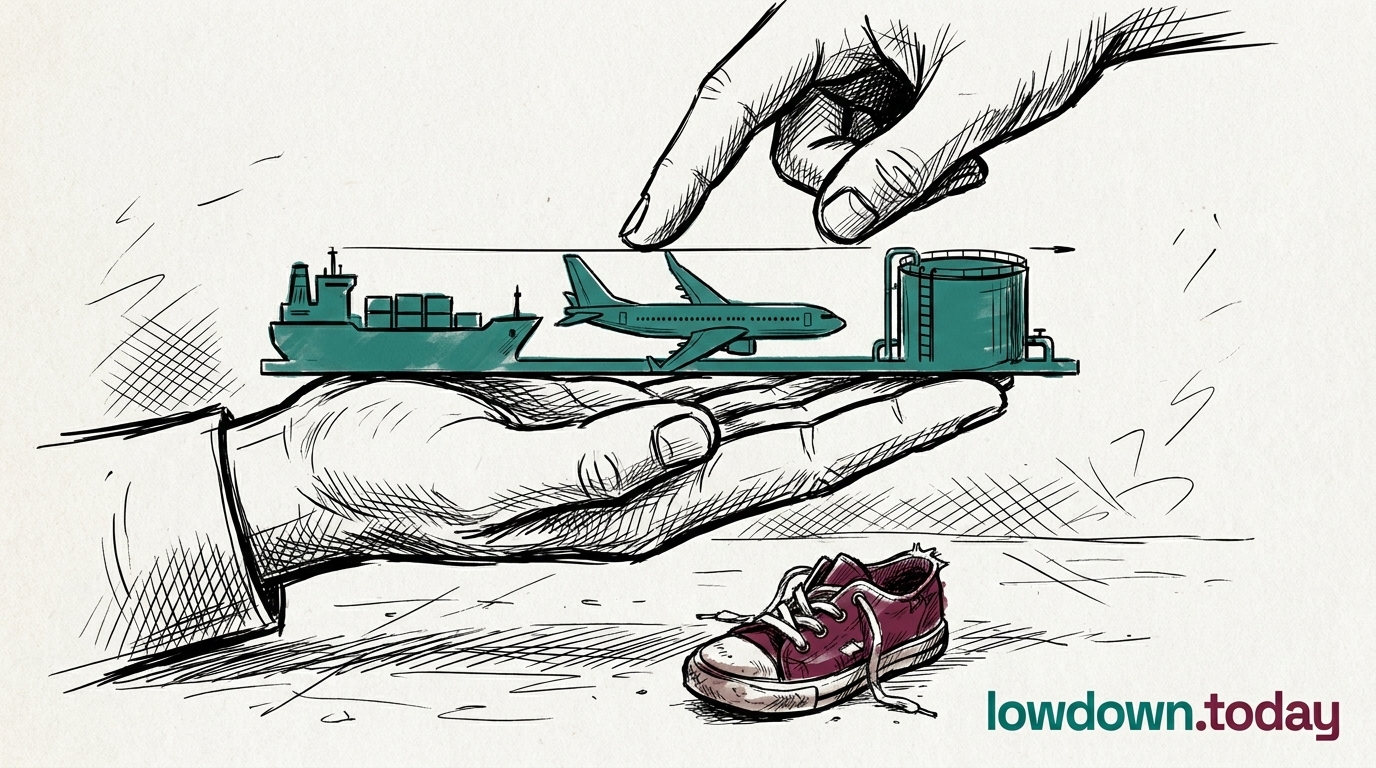
Qatar will reopen its waters to all maritime traffic from Monday 27 July, CNN reported, reversing the wartime restriction Doha imposed as strikes and interdictions spread through the Gulf⁠1. No other Gulf state has yet lifted one.

Qatar has more reason than most to try. It exports liquefied natural gas through the strait of Hormuz and nothing else, with no pipeline alternative to the sea, so every week of suppressed traffic bills directly to the Qatari state. It also hosts CENTCOM's forward headquarters at Al Udeid and has mediated between Washington and Tehran throughout, which makes a reopening an assertion of confidence as much as a commercial decision.

Whether traffic follows the permission is a separate question, and the answer will arrive within days. Volker Turk, the UN High Commissioner for Human Rights, was urging action on 6,000 seafarers stranded in the strait as recently as 24 July, which is what happens when charterers and underwriters, rather than governments, are setting the sailing schedule. Doha can open its own waters; it cannot open the corridor beyond them.

Deep Analysis

In plain English

Qatar will reopen its coastal waters to all ships from Monday 27 July, becoming the first Gulf country to formally cancel a wartime shipping restriction. This might sound like a sign the war is calming down, but the timing is odd: it comes just as the nearby Strait of Hormuz, the main channel connecting the Gulf to the open ocean, is recording some of its lowest ship-traffic numbers of the entire war. Qatar appears to be judging that its own waters are safe enough to reopen even though the wider region is not.

Deep Analysis
Root Causes

Qatar's incentive to reopen is structural: it is the world's second-largest exporter of liquefied natural gas, shipped almost entirely through Ras Laffan, and a prolonged shipping freeze costs it export revenue that oil-exporting neighbours can partially offset through pipeline routes Qatar does not have.

Reopening now, even as the wider strait records some of its lowest transit counts of the war, signals Doha judging the risk to its own waters as separable from the risk in the strait itself, a distinction other Gulf states with less LNG-specific exposure have not yet been willing to make.

What could happen next?
  • Opportunity

    If Qatar's reopening holds without incident, it could pressure other Gulf states to reconsider their own restrictions.

  • Meaning

    The mismatch between Qatar's reopening and the strait's near-record-low transit counts shows individual Gulf states are now making separate risk calculations rather than acting as a bloc.

First Reported In

Update #162 · Munitions, not Iran, halted US bombing

CNN· 26 Jul 2026
Read original →
Causes and effects
This Event
Qatar reopens its waters on Monday
A declared reopening tests whether official permission can pull commercial traffic back while the shooting continues.
Different Perspectives
Office for Budget Responsibility
The OBR's 28 October forecast assumed $82 oil for 2026 and 2027, from market prices for the ten working days to 19 August, and blamed dearer wholesale energy on the war without naming Iran. It expects CPI inflation close to 4% in early 2027 even at that price.
Hengaw, Kurdish rights group
Hengaw reported the 3 November hangings of Amirhossein Maleki and Amirhossein Ebrahimi in Isfahan, saying Ebrahimi was tortured into confessing and that nine of 12 people sentenced to death in the case have now been hanged. Iran's judiciary holds that the defendants killed members of the security forces.
FINTRAC, Canada's financial intelligence unit
FINTRAC worked with the US Treasury on the 6 November designation of eight money services businesses in British Columbia, Ontario and Quebec. Treasury says the businesses still operate, some under new names, so closing them falls to Ottawa.
Abdul Qadir al-Dakhil, Governor of Nineveh
Al-Dakhil cancelled three Mosul International Airport contracts on 7 November over alleged links to armed groups, after meeting Prime Minister Ali al-Zaidi in Baghdad. He named no group or company, and said the contracts will go to international companies.
Kuwait
Kuwait
Kuwait condemned the Houthi missile fired towards the Madinah region on 5 November and restated its support for Saudi Arabia, the Qatar News Agency reported. Its state tanker company, Kuwait Oil Tankers Company, is among the Gulf state fleets on Iran's expanded Hormuz list.
Scott Bessent, US Treasury Secretary
Treasury designated an alleged Chandigarh false-flag network on 4 November and eight Canadian exchangers on 6 November, while State sanctioned alleged MANPADS intermediaries. None of the actions touches an oil buyer; they target the paper, cash and procurement around Iran's trade.

Written with AI from Lowdown's published reporting. Not individually reviewed by an editor. Editorial standards.
