Skip to content
You can now search across every topic, entity and event.What's new
Iran Conflict 2026
7AUG

Iran bills the world for Hormuz oil

2 min read
12:08UTC

Esmaeil Baqaei said any future administration of the Strait of Hormuz must include payment for environmental damage to Iran's coastline, which he put in the trillions of dollars.

ConflictDeveloping
Key takeaway

Tehran reframed its Hormuz demand as environmental damages, which no maritime rule blocks.

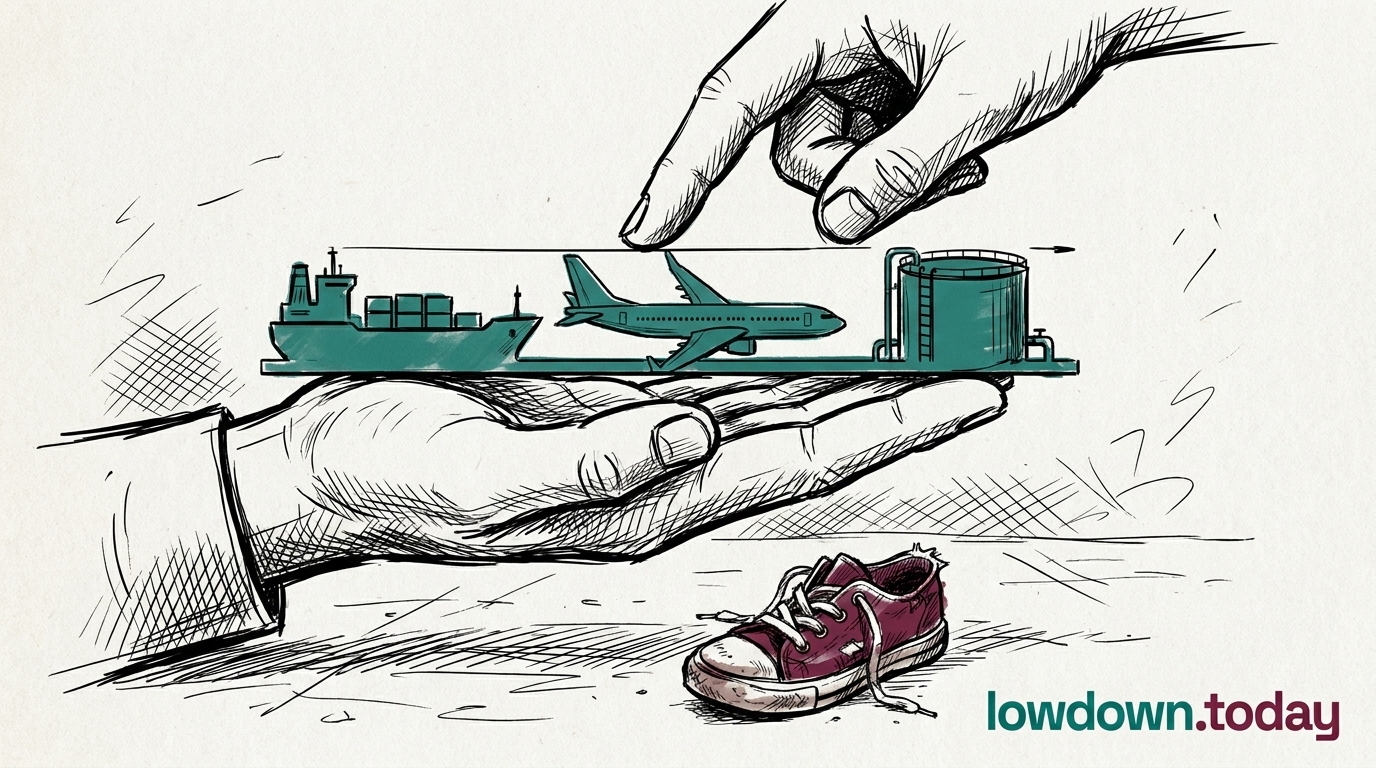
Iran's foreign ministry spokesman Esmaeil Baqaei said on Thursday 13 August that any future administration of the strait of Hormuz must include payment for environmental damage, putting the cumulative harm to Iran's coastal areas in the trillions of dollars 1. Oil had washed onto Qeshm Island, off Iran's southern coast, the day before. "Every party that benefits from commercial shipping through the strait of Hormuz carries both a legal and a moral obligation to remediate the environmental harm inflicted upon The Persian Gulf and the Sea of Oman," he said. He named no ship, no flag and no government.

Three days earlier the same spokesman ruled transit fees out of the Oman talks and named four working areas, one of them environmental protection . That sequence matters because a charge for passage runs straight into the transit-passage right that every maritime state cites against Iran, the objection that has sunk each fee proposal since the spring.

A remediation claim carries no such problem. Framed as damage owed rather than a price paid, it needs no ceasefire, no counterparty signature and no naval success to stay alive, and it can be tabled at any point a waterway arrangement is drafted. The trillions figure is Baqaei's own characterisation, offered without a party to bill or a period to bill for, and it is worth nothing as a valuation. The shape of the claim will outlive the war that produced it.


Deep Analysis

In plain English

Oil washed up on Iran's Qeshm Island in mid-August, and Iran's foreign ministry spokesman, Esmaeil Baqaei, responded by saying any future arrangement over who controls the Strait of Hormuz must include payment for environmental damage running into trillions of dollars. He did not say who should pay. Separately, the oil causing the pollution has been traced to a tanker called the Caroline Bezengi, which was carrying Russian crude and is under international sanctions for helping Russia dodge them. Iran has not publicly named Russia or that tanker's owners as responsible, even though the evidence points there, likely because Russia has been supplying Iran through the war and Tehran has reasons not to embarrass an ally in public.

Deep Analysis
Root Causes

Iran's reluctance to name a payer sits against a wartime dependency it cannot easily set aside: Russia's Caspian shipping corridor into Bandar Anzali has supplied Iran throughout the conflict, a route Israel and Ukraine have each struck this year.

That dependency gives Tehran a live strategic reason not to publicly blame a Sovcomflot-linked vessel for polluting its own coastline.

What could happen next?
  • Consequence

    Framing environmental compensation as a precondition for any future Hormuz administration arrangement adds a new, uncosted demand layered onto Iran's existing six political conditions (ID:5645) for reopening the strait.

  • Meaning

    Naming no payer lets Iran raise the political cost of any Hormuz settlement without committing to a legal claim against any specific state or company, including its own wartime supplier.

First Reported In

Update #170 · The ships Iran does not control are leaving Hormuz

Press TV· 14 Aug 2026
Read original
Different Perspectives
Shipping and insurance industry
UKMTO counted about 20 US-facilitated Hormuz transits a day to 11 September against only 6 visible on AIS, with traffic still around 90% below the 138-a-day pre-war baseline. War-risk underwriters cannot price hulls they cannot see, or resolve whether the tanker El Gaia hit a mine, as Iran claims, or a missile and drone, as CENTCOM says.
European refiners
European refiners
European refiners, including Poland's Orlen, absorbed a roughly $26 gap between Dated Brent at $130.80 on 15 September and ICE Brent futures settling at $103.87 on 18 September, a spread that widened from $13.45 on 9 September rather than newly opening. Their futures hedges no longer cover what they now pay for physical barrels.
Saudi Arabia
Saudi Arabia
Saudi Aramco zeroed European term customers' October allocations and rerouted roughly 60 million barrels to Asia through Ras Tanura and Sohar, using Red Sea and Gulf terminal capacity built years ago to cut Hormuz exposure. Riyadh reallocated existing supply rather than negotiating a shortfall with Europe.
Qatar
Qatar
Qatar's energy minister Saad al-Kaabi told Bloomberg at the Qatar Economic Forum on 20 September that Bessent's two-year Hormuz-obsolescence forecast is wrong, and that Doha has deliberately built no bypass pipeline. Qatar's gas exports run through one waterway by choice, not oversight.
Iran (foreign ministry and Majlis)
Iran's foreign ministry and 130 Majlis deputies moved toward NPT withdrawal this week, with lawmaker Hossein-Ali Haji Deligani filing a triple-urgency bill on 20 September that Speaker Qalibaf has not yet scheduled. Tehran treats treaty membership as leverage still on the table, not yet spent.
Russia and China
Russia and China
Moscow and Beijing vetoed the Panel of Experts' renewal, maintaining Resolution 2231 lapsed in October 2025 and the 2025 snapback was never validly triggered, so the sanctions architecture the Panel enforces has no current legal standing. Both governments frame the veto as upholding law, not shielding Tehran.



