Skip to content
You can now search across every topic, entity and event.What's new
Iran Conflict 2026
7AUG

Baltic Terminals Stay Offline; Russia Reroutes Through Arctic

2 min read
12:08UTC

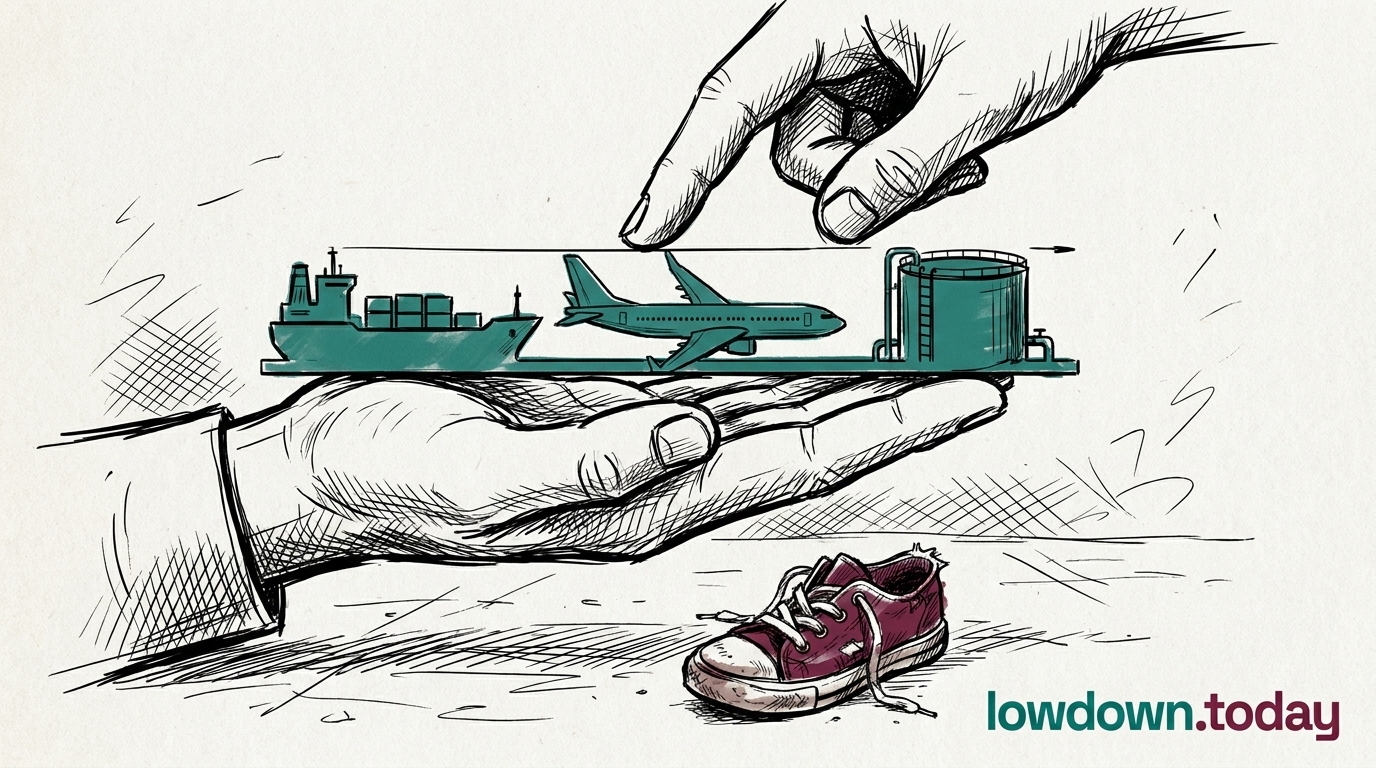
Both Ust-Luga and Primorsk remained closed for petroleum products into a second week, with Primorsk's 40% storage loss confirming lasting physical damage as Russia attempts Arctic rerouting.

ConflictDeveloping
Key takeaway

Ust-Luga's crude terminal is intact, pointing to faster crude recovery; Primorsk's 40% storage loss constrains product exports for weeks.

Planet Labs satellite imagery from 1 April confirmed Ust-Luga's crude terminal is physically intact, while fuel and product terminals bear fire traces from Ukraine's four-strike Baltic campaign . Primorsk suffered more lasting damage: eight 50,000 cubic metre reservoir losses represent permanent storage reduction until repairs complete.

Transneft CEO Nikolai Tokarev publicly acknowledged that rerouting volumes to Murmansk at short notice is difficult. Ice-class vessels are not abundant and Arctic transit times nearly double those from the Baltic (15 to 20 days versus 8 to 10). Russia's earlier refinery strikes at Promsintez and YANOS compounded the logistics challenge by reducing inland processing capacity.

Eighty-five sanctioned shadow tankers have sailed along Norwegian coastal waters since October 2025. Norwegian security officials describe a monitoring gap in their territorial waters. The Arctic logistics infrastructure was not built to absorb Baltic volumes at short notice, and each week of delay brings Russia closer to the storage saturation threshold that would force production cuts.


Deep Analysis

In plain English

Russia's main oil export terminals on the Baltic Sea are still shut down for fuel products two weeks after Ukrainian drone strikes. Russia is trying to redirect oil shipments through Arctic routes near Murmansk, but those routes are slower and require specialist ice-capable ships that are in short supply.

Deep Analysis
Root Causes

Russia built its seaborne export infrastructure around Baltic terminals — Ust-Luga and Primorsk handle roughly 60% of seaborne crude — with no equivalent Arctic alternative at scale. The shadow fleet expansion since 2022 added volume capacity but not port infrastructure.

Arctic ice-class vessel supply is a structural constraint: Russia commissioned fewer than 30 vessels capable of sustained Arctic routing, against demand requiring 50+. Primorsk's eight damaged reservoirs represent a storage bottleneck that rerouting cannot bypass — crude must still pass through terminal storage before loading.

What could happen next?
  • Consequence

    Crude terminal structural integrity at Ust-Luga suggests faster recovery for crude exports than for petroleum products.

  • Risk

    Norway faces a monitoring gap as 85+ sanctioned shadow tankers transit its coastal waters en route to Arctic export routes.

First Reported In

Update #11 · Russia Sells Less Oil but Earns More

Reuters via US News· 5 Apr 2026
Read original
Causes and effects
This Event
Baltic Terminals Stay Offline; Russia Reroutes Through Arctic
Partial physical recovery is underway but Arctic rerouting constraints mean full restoration will take weeks, creating a window for Ukraine to sustain the production squeeze if strike tempo continues.
Different Perspectives
Turkiye
Turkiye
Erdogan followed the Pakistani delegation to Jeddah for an instrument that has not been signed. Ankara's entry widens Saudi Arabia's defence architecture beyond the existing Pakistan pact, adding a second non-Gulf military partner mid-conflict.
Oman
Oman
Muscat is the corridor's broker but has published nothing about the arrangement Fars describes on its behalf. The account leaves Oman administering outbound traffic only, a narrower role than the shared route its mediation has rested on since 1979.
Pakistan
Pakistan
Islamabad sent Sharif, Munir and Dar to Jeddah to widen a defence commitment it has honoured in cheaper registers since March, when Dar invoked the Saudi mutual defence pact. Jeddah tests whether that hedge becomes a binding trilateral instrument with Turkiye.
United States
United States
Washington rejected the Majlis Hormuz bill outright while CENTCOM's own tally kept climbing to 49 vessels redirected since 14 July. Both instruments tightened in the same week Trump promised the strait would reopen soon.
Iran
Iran
Iran's foreign ministry is selling a phased Hormuz corridor through Oman and denying any percentage cargo tariff, while its own Majlis is legislating fines to 20% and a bar on Israeli-linked cargo. The two accounts, from the same government, do not agree with each other.
Saudi Arabia
Saudi Arabia
Riyadh published a target forecast, not an attribution, for the campaign it says the Najran strike previewed. That keeps an Article 51 case available while it formalises a trilateral defence architecture with Pakistan and Turkiye.



