Skip to content
You can now search across every topic, entity and event.What's new
Iran Conflict 2026
31JUL

Ukraine hits Siberia, 2,000 km deep

3 min read
09:24UTC

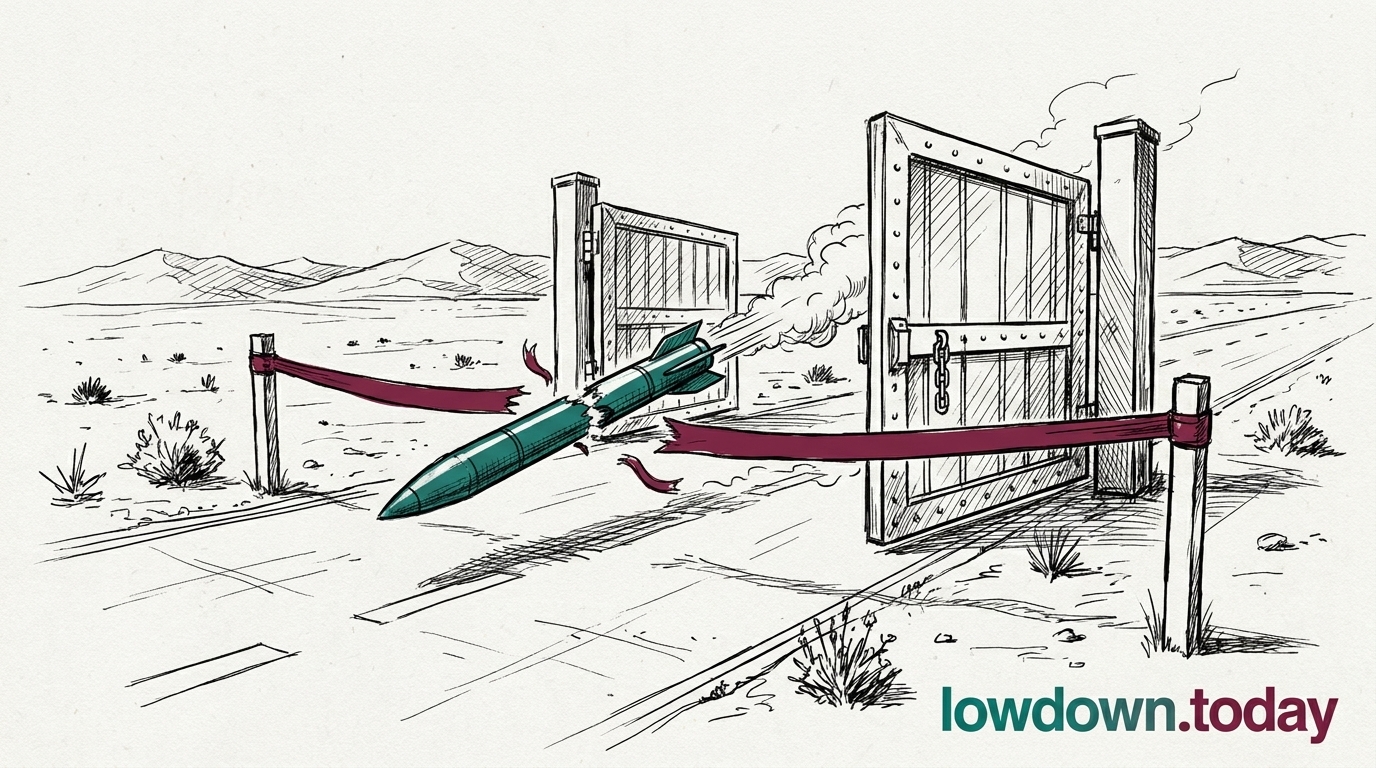
The 20 June strike on the Tyumen refinery in western Siberia became the deepest Ukrainian attack of the war, putting a plant 2,000 km from the border within reach.

ConflictDeveloping
Key takeaway

Hitting Tyumen 2,000 km away ends the sanctuary that protected Siberian refineries.

A Ukrainian drone raid hit the Tyumen refinery in western Siberia on 20 June, at roughly 2,000 km from the border the deepest attack of the war 1. The plant processes about 9 million tonnes of crude a year, and its location had until now placed it beyond the range Ukraine could credibly threaten. Tyumen's governor said the attack was repelled while residents reported explosions, so the damage is not independently verified.

For three years Russia ran its Siberian refining heartland on the assumption that 2,000 km of distance did the defending, dispersing sensitive capacity far from a front it expected to stay in the east. The Tyumen hit removes that assumption. A plant 2,000 km from Ukraine is no longer a safe plant, which forces air-defence planners to thin already-stretched coverage across a far larger map.

The strike fits a campaign that has steadily extended its reach since the Baltic-port phase and the Crimean fuel squeeze , and it ran alongside the same sanctions arc tracked by the oil-market desk . One refinery loss in Siberia does not collapse Russian output. It signals that no refinery is now off the targeting map, and that is the development Moscow's defenders have to absorb.


Deep Analysis

In plain English

Ukraine hit an oil refinery in western Siberia on 20 June. The distance is the striking thing: this plant sits roughly 2,000 km from Ukraine, about the same as London to Moscow. Before this strike, Russia's Siberian refineries were considered safe because Ukrainian drones could not reach them. The Tyumen plant converts roughly 9 million tonnes of crude oil into petrol, diesel, and other products every year. Repairing a refinery takes months, not days: the distillation towers and processing units that were damaged cannot be quickly replaced. If Tyumen is out of action for an extended period, that product has to come from somewhere else, at a time when many of Russia's other refineries have also been attacked.

Deep Analysis
Root Causes

Tyumen's vulnerability rests on a structural gap in Russia's air-defence architecture. Soviet-era doctrine positioned intercept belts around Moscow and St Petersburg, leaving the zone east of the Urals uncovered because no western threat was expected to reach there. The 3,000 km range Zelenskyy confirmed on 21 June directly addresses that coverage gap.

Russian refineries built in the Soviet period were designed around throughput optimisation: the fixed processing towers, distillation columns, and catalyst units that define a refinery's capacity cannot be relocated or buried when they become targets. No civil-defence dispersal of refining capacity followed the 2014 Crimea annexation or the 2022 invasion.

Escalation

Qualitative escalation: the 2,000 km strike extends the conflict's physical geography to Siberia, previously outside any realistic threat envelope. It validates the 3,000 km range claim Zelenskyy made the following day.

What could happen next?
  • Precedent

    Ukraine's first confirmed strike in Siberia establishes a new geographic envelope that places Russian energy infrastructure across the entire European and western Siberian territory within operational reach.

    Long term · Assessed
  • Risk

    Russia will face increased pressure on its refining capacity at the same time as domestic rationing from the Kapotnya shutdown, raising the risk of a compounded fuel supply crisis.

    Short term · Reported
  • Consequence

    Russian operators of major industrial installations east of the Urals will need to reassess their emergency planning assumptions, which were built on the premise of geographic sanctuary.

    Medium term · Reported
First Reported In

Update #21 · Ukraine's drones reach Russia's petrol pumps

bne IntelliNews· 24 Jun 2026
Read original
Different Perspectives
Shipping and insurance underwriters
Underwriters can price Houthi strikes because the group announces its targets, but an unclaimed drone at Damietta and a mandatory Iranian insurance scheme both deny them a pattern to price against. War-risk premiums are increasingly being set by the absence of a claimant, not the scale of the damage.
Jordan
Jordan
Azraq absorbed its fourth Iranian strike in seven weeks, again drawing no direct Jordanian retaliation, only an American one. Amman's exposure, hosting US basing without the Patriot density of Gulf allies, has not changed even as the war around it widens.
Houthi movement
Houthi movement
The Houthis' 20 July blockade of Saudi-linked shipping is the injury Riyadh's new 43-nation coalition directly answers, yet the group itself was never asked to join and remains outside every proposal on the table. Sanaa-aligned commentators call the coalition a paper reassurance for insurers rather than a deployable force.
Egypt's Cabinet
Egypt's Cabinet
Egypt confirmed the Damietta blaze was an attack, not an accident, on soil the war had never touched before. Cairo now faces an unclaimed threat to a facility supplying roughly 7% of its domestic gas, with no author to hold accountable and no pattern yet to defend against.
Oman
Oman
Muscat is running the only channel Iran will use, a voluntary Hormuz fee modelled on Malacca, but stayed out of Saudi Arabia's new naval coalition entirely. Oman's mediating leverage depends on treating Hormuz as shared and non-exclusive, the opposite of what Tehran is now demanding of it.
Iraq's Prime Minister
Al-Zaidi cancelled his first official Riyadh visit and convened the Coordination Framework, the coalition that keeps him in power and whose factions sit inside the PMF that Saudi jets just struck. He is caught between a five-year Saudi investment relationship and armed groups inside his own state he does not fully control.



