Skip to content
You can now search across every topic, entity and event.What's new
Iran Conflict 2026
31JUL

Iran reaches CIA via back channel

3 min read
09:24UTC

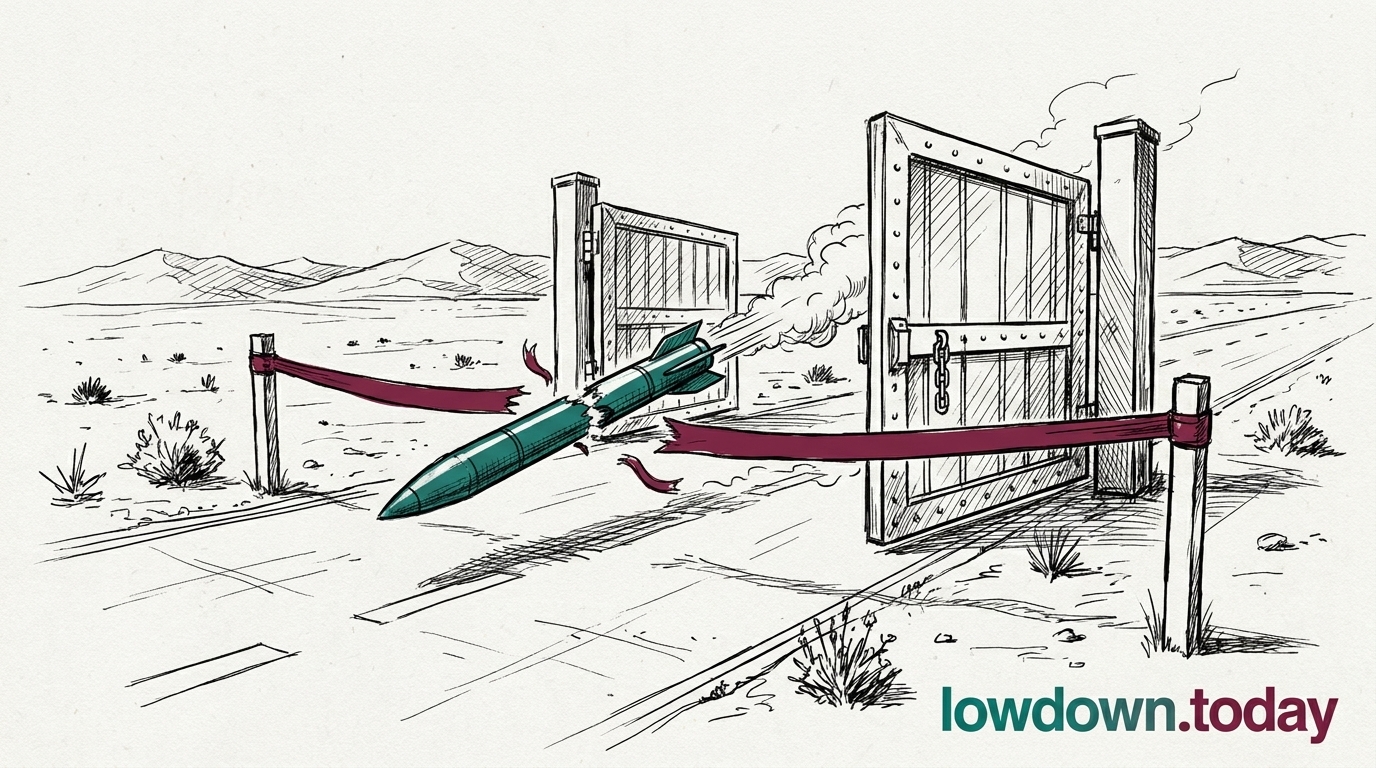
Iranian intelligence operatives contacted the CIA through a third country's service to discuss ending the conflict — the first documented Iranian approach to Washington since strikes began, made through spy channels to bypass Tehran's own public refusal to negotiate.

ConflictDeveloping
Key takeaway

The use of MOIS rather than the Foreign Ministry or IRGC to initiate contact signals a specific pragmatist-adjacent Iranian faction attempting de-escalation before the hardliner succession consolidates power.

Iranian Ministry of Intelligence operatives reached out to the CIA via a third country's intelligence service to discuss terms for ending the conflict, The New York Times reported on 5 March. The approach is the first documented Iranian initiative to contact Washington directly since US and Israeli strikes began on 28 February.

The channel's architecture tells the story. Acting President Mokhber told ILNA that Iran has "no intention" of negotiating with the United States . Ali Larijani, described as Iran's national security chief, publicly stated "We will not negotiate with the United States" . Iranian officials told NBC News and Al Jazeera that Tehran formally rejected Trump's ceasefire outreach, arguing the June 2025 ceasefire had been a strategic error that gave Washington eight months to rearm . Three separate public doors were bolted shut. The intelligence channel was an attempt to open a fourth — one invisible to domestic audiences, to hardliners within the IRGC, and to the Iranian public enduring a sixth day of internet blackout.

Iran has used this technique before. The backchannel that eventually produced the 2015 Joint Comprehensive Plan of Action began with secret contacts facilitated by Oman's Sultan Qaboos in 2012, conducted through intelligence and national security channels rather than foreign ministries. Those talks ran for over a year before becoming public. The method allows both sides to explore positions without the political cost of formal negotiation — particularly useful for Iran, where The Supreme Leader's office has historically maintained final authority over whether to engage with Washington while permitting deniable exploratory contacts.

The critical difference this time is that the channel was exposed within hours. Whether the leak came from the third country's service, from within the US intelligence community, or was deliberately placed by officials who wanted the approach killed is unknown. But the effect is the same: an approach designed to operate in shadow was dragged into daylight, where it became subject to the political dynamics of both capitals. For Tehran, the exposure confirms to hardliners that Washington cannot be trusted with sensitive communications. For any future intermediary — Oman, which facilitated the JCPOA backchannel, or whichever service carried this message — the lesson is that discretion cannot be guaranteed. The infrastructure for quiet diplomacy has been damaged along with the specific channel.


Deep Analysis

In plain English

Iran's Ministry of Intelligence — its main civilian spy agency — quietly asked a friendly country's intelligence service to pass a message to the CIA asking to talk about ending the conflict. This was done in secret, through a middleman, so that Iranian leaders could deny it publicly. What makes this significant is which part of the Iranian government did it: the intelligence ministry, not the foreign ministry or the powerful Revolutionary Guards, suggesting this was driven by a faction within the Iranian state that wants to end the war, not the whole government.

Deep Analysis
Synthesis

The timing — MOIS reaching out while the succession is being accelerated and the IRGC is restructuring for autonomous decentralised operations — is consistent with two competing tracks within the Iranian state: a military-IRGC track accelerating war-fighting capacity, and an intelligence-pragmatist track attempting to secure a political exit before that consolidation is irreversible. The CIA channel may represent the pragmatist faction's last viable window before Mojtaba's confirmation and IRGC operational autonomy close off the institutional space for negotiated exits.

Root Causes

MOIS is institutionally associated with Iran's pragmatist-technocrat faction — linked historically to Rouhani and Rafsanjani networks — and has operated with greater autonomy from IRGC than the Foreign Ministry. Initiating contact through MOIS rather than the MFA (nominally controlled by Araghchi, a hardliner-adjacent figure) suggests this may reflect internal factional manoeuvring rather than a unified state decision. If the IRGC's concurrent 31-province restructuring represents a hardliner consolidation of military power, a simultaneous MOIS peace feeler indicates two competing institutional tracks within the Iranian state running in parallel.

What could happen next?
  • Meaning

    The MOIS contact reveals a live internal Iranian power struggle over war termination, with pragmatist-adjacent institutions pursuing de-escalation tracks that may not be sanctioned by IRGC or the incoming Supreme Leader.

    Immediate · Assessed
  • Risk

    If the outreach was unauthorised by IRGC or Mojtaba's circle, its public exposure may accelerate internal purges of MOIS pragmatists, eliminating a potential future negotiating interlocutor.

    Short term · Suggested
  • Precedent

    Iran has reconfirmed that its preferred modality for initiating de-escalation is MOIS via third-country intelligence services, establishing the operational template for any future channel if conditions change.

    Medium term · Assessed
First Reported In

Update #22 · IRGC drones hit Azerbaijan; CIA link cut

New York Times· 5 Mar 2026
Read original
Causes and effects
This Event
Iran reaches CIA via back channel
The back-channel attempt reveals a gap between Iran's public posture of defiance and its private recognition that the military situation requires a negotiated exit. The use of intelligence rather than diplomatic channels was designed to preserve deniability for officials who had publicly rejected talks — a standard Iranian statecraft technique that the channel's exposure has now neutralised.
Different Perspectives
Shipping and insurance underwriters
Underwriters can price Houthi strikes because the group announces its targets, but an unclaimed drone at Damietta and a mandatory Iranian insurance scheme both deny them a pattern to price against. War-risk premiums are increasingly being set by the absence of a claimant, not the scale of the damage.
Jordan
Jordan
Azraq absorbed its fourth Iranian strike in seven weeks, again drawing no direct Jordanian retaliation, only an American one. Amman's exposure, hosting US basing without the Patriot density of Gulf allies, has not changed even as the war around it widens.
Houthi movement
Houthi movement
The Houthis' 20 July blockade of Saudi-linked shipping is the injury Riyadh's new 43-nation coalition directly answers, yet the group itself was never asked to join and remains outside every proposal on the table. Sanaa-aligned commentators call the coalition a paper reassurance for insurers rather than a deployable force.
Egypt's Cabinet
Egypt's Cabinet
Egypt confirmed the Damietta blaze was an attack, not an accident, on soil the war had never touched before. Cairo now faces an unclaimed threat to a facility supplying roughly 7% of its domestic gas, with no author to hold accountable and no pattern yet to defend against.
Oman
Oman
Muscat is running the only channel Iran will use, a voluntary Hormuz fee modelled on Malacca, but stayed out of Saudi Arabia's new naval coalition entirely. Oman's mediating leverage depends on treating Hormuz as shared and non-exclusive, the opposite of what Tehran is now demanding of it.
Iraq's Prime Minister
Al-Zaidi cancelled his first official Riyadh visit and convened the Coordination Framework, the coalition that keeps him in power and whose factions sit inside the PMF that Saudi jets just struck. He is caught between a five-year Saudi investment relationship and armed groups inside his own state he does not fully control.



