Skip to content
You can now search across every topic, entity and event.What's new
Iran Conflict 2026
31JUL

Beirut orders Hezbollah disarm; ignored

3 min read
09:24UTC

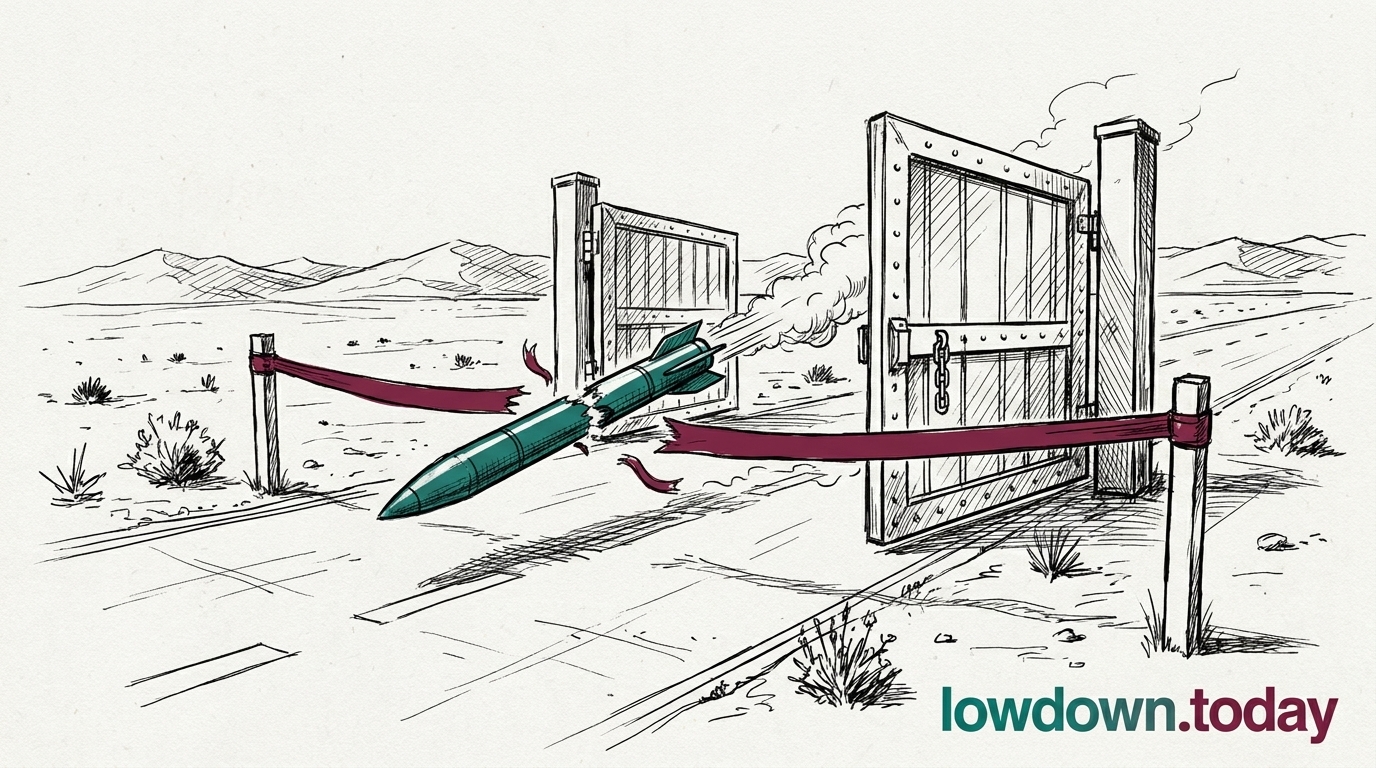
Lebanon's Justice Minister ordered arrest warrants for those who fired at Israel — the most direct challenge to Hezbollah's armed status since the civil war ended in 1989. The Lebanese army has 80,000 troops; Hezbollah has up to 50,000.

ConflictDeveloping
Key takeaway

The Salam government has demonstrated unprecedented political will, but the enforcement paradox — judicial orders the security apparatus cannot safely execute without risking civil war — is structurally identical to every prior Lebanese attempt to use state mechanisms against Hezbollah.

Lebanon's Justice Minister ordered the public prosecutor to arrest those who fired at Israel, extending Prime Minister Salam's earlier ban on all Hezbollah military activities . The order moves the government's confrontation with Hezbollah from political declaration — Salam called the group's attack on Israel 'irresponsible and suspicious' — to the legal system, directing prosecutors and security forces to act.

No Lebanese government has attempted this since the Taif Agreement ended the fifteen-year civil war in 1989. Taif required the dissolution of all militias, but Hezbollah was exempted under the justification of 'national resistance' against Israeli occupation — a rationale that persisted after Israel withdrew from southern Lebanon in 2000. UN Security Council Resolution 1559, adopted in 2004, called explicitly for militia disarmament. No government attempted enforcement.

The capability gap that prevented enforcement then persists now. The Lebanese Armed Forces have approximately 80,000 active personnel; Hezbollah's fighting strength is estimated at 30,000–50,000, with fighters who have recent combat experience from Syria (2012–2020) and operate from fortified positions across southern Lebanon, the Beqaa Valley, and Beirut's southern suburbs. The army's equipment — largely US-supplied M113 armoured carriers and M198 howitzers — was designed for conventional operations, not urban warfare against a dug-in force with anti-tank missiles and tunnel networks.

The arrest warrants may function as a political signal to Washington and Tel Aviv rather than an operational directive. But signals have consequences in Lebanese politics. In 2008, a far more limited challenge to Hezbollah — over its telecommunications network, not its fighters — triggered a seizure of the capital. Whether a weakened Hezbollah, its leadership under Israeli assassination campaigns and its Iranian patron's command structure fragmenting , responds with the same capacity is the question on which Lebanon's cohesion now depends.


Deep Analysis

In plain English

Lebanon's Justice Minister has ordered courts to arrest Hezbollah fighters who shot at Israel — a genuinely remarkable step, because no Lebanese government has gone this far before. But actually making those arrests would require sending Lebanese soldiers to detain heavily armed Hezbollah operatives who outnumber and outgun them. Hezbollah also has a political party sitting in Lebanon's parliament. The order demonstrates the government wants to comply with US pressure, but wanting to arrest Hezbollah and being able to are two entirely different things, and Lebanon's history suggests the warrants may be issued and never served.

Deep Analysis
Synthesis

Prime Minister Salam is attempting a politically sophisticated manoeuvre: using irresistible external compulsion as cover to accomplish domestic security restructuring — challenging Hezbollah's armed monopoly — while insulating his government from Shiite political backlash by claiming he had no choice. The manoeuvre's viability depends entirely on whether Washington accepts legal gestures as sufficient compliance. If the US demands demonstrated arrests rather than issued warrants, Lebanon faces civil conflict and Israeli strikes simultaneously, having destroyed its political cover for nothing.

Root Causes

The Taif Agreement (1989) ended Lebanon's civil war through confessional power-sharing rather than militia disarmament, and Hezbollah's armed status was subsequently codified in successive Lebanese national dialogue agreements as a legitimate 'resistance' exception — giving its military wing quasi-constitutional standing that no ministerial order can unilaterally revoke. Hezbollah's post-2006 rearmament through Syrian territory during UNIFIL's limited mandate produced a force that structurally outguns the Lebanese state on its own soil.

Escalation

Hezbollah's domestic response to the arrest order is the critical near-term escalation indicator. In 2008, Hezbollah seized West Beirut after the government merely announced it would dismantle their private communications network — an arrest order is a far more direct existential challenge. A violent Hezbollah response would simultaneously collapse the Salam government and trigger the conditions of the US ultimatum, potentially drawing Israeli strikes on Lebanese state targets at the same moment of internal armed conflict.

What could happen next?
  • Meaning

    For the first time since Taif, a Lebanese government has deployed state judicial mechanisms against Hezbollah's military operations rather than confining opposition to political condemnation — establishing a legal precedent that survives even if current enforcement fails.

    Immediate · Assessed
  • Risk

    Hezbollah may respond by collapsing the Salam government through its parliamentary bloc or through internal armed action, replicating the 2008 West Beirut seizure at a moment when Lebanon simultaneously faces Israeli military threat under the US ultimatum.

    Short term · Assessed
  • Consequence

    If warrants are issued but not executed — replicating the STL pattern — the US may treat non-arrest as non-compliance with its ultimatum, subjecting Lebanon to Israeli strikes despite demonstrated governmental political will.

    Short term · Suggested
  • Precedent

    The arrest order reactivates the constitutional question of whether Lebanon's Taif Agreement framework protects Hezbollah's armed wing — a question that could reshape Lebanese constitutional law regardless of the current conflict's outcome.

    Long term · Suggested
First Reported In

Update #11 · Qatar's LNG dark; Trump eyes ground troops

Haberler· 2 Mar 2026
Read original
Causes and effects
This Event
Beirut orders Hezbollah disarm; ignored
The arrest orders extend the Lebanese government's challenge to Hezbollah from political declaration to legal enforcement, but the state's military inferiority to Hezbollah — demonstrated when the group seized West Beirut in 2008 over a far lesser provocation — raises the question of whether the orders can be executed without triggering the internal conflict they are meant to prevent.
Different Perspectives
Shipping and insurance underwriters
Underwriters can price Houthi strikes because the group announces its targets, but an unclaimed drone at Damietta and a mandatory Iranian insurance scheme both deny them a pattern to price against. War-risk premiums are increasingly being set by the absence of a claimant, not the scale of the damage.
Jordan
Jordan
Azraq absorbed its fourth Iranian strike in seven weeks, again drawing no direct Jordanian retaliation, only an American one. Amman's exposure, hosting US basing without the Patriot density of Gulf allies, has not changed even as the war around it widens.
Houthi movement
Houthi movement
The Houthis' 20 July blockade of Saudi-linked shipping is the injury Riyadh's new 43-nation coalition directly answers, yet the group itself was never asked to join and remains outside every proposal on the table. Sanaa-aligned commentators call the coalition a paper reassurance for insurers rather than a deployable force.
Egypt's Cabinet
Egypt's Cabinet
Egypt confirmed the Damietta blaze was an attack, not an accident, on soil the war had never touched before. Cairo now faces an unclaimed threat to a facility supplying roughly 7% of its domestic gas, with no author to hold accountable and no pattern yet to defend against.
Oman
Oman
Muscat is running the only channel Iran will use, a voluntary Hormuz fee modelled on Malacca, but stayed out of Saudi Arabia's new naval coalition entirely. Oman's mediating leverage depends on treating Hormuz as shared and non-exclusive, the opposite of what Tehran is now demanding of it.
Iraq's Prime Minister
Al-Zaidi cancelled his first official Riyadh visit and convened the Coordination Framework, the coalition that keeps him in power and whose factions sit inside the PMF that Saudi jets just struck. He is caught between a five-year Saudi investment relationship and armed groups inside his own state he does not fully control.



