Skip to content
You can now search across every topic, entity and event.What's new
Iran Conflict 2026
31JUL

IRGC fires hours after halt order

2 min read
09:24UTC

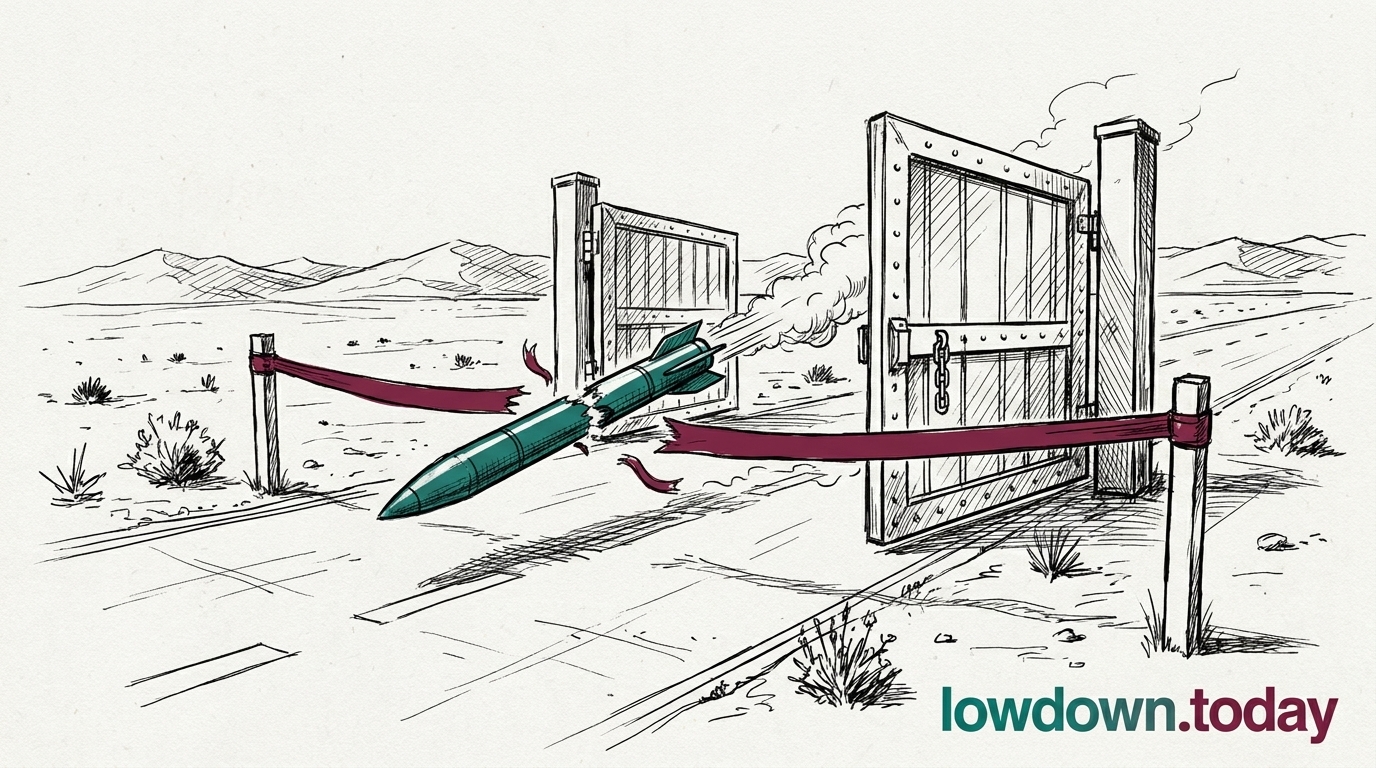
Hours after Pezeshkian's broadcast, Iranian missiles hit Dubai, Saudi oil facilities, and Bahrain. The 31 autonomous IRGC provincial commands — built to survive decapitation — cannot be halted by a president who never commanded them.

ConflictDeveloping

Within hours of Pezeshkian's address, Iranian missiles and drones struck Dubai, Saudi oil facilities, and Bahrain. The Interim Leadership Council's ceasefire directive was ignored before its broadcast had finished circulating across state media. Pezeshkian attributed the defiance to "miscommunication within the ranks" following Khamenei's death — a characterisation that treats institutional insubordination as a communications error.

The IRGC's 31 autonomous provincial commands were designed for exactly this kind of operational independence. The Decentralised Mosaic Defence structure that sustained 109 drones and 9 ballistic missiles against UAE targets in a single day — days after CENTCOM claimed a 90% reduction in Iran's ballistic missile capacity — does not require orders from Tehran to function. It was built not to. The provincial commands' continued strikes on Gulf targets are not a malfunction; they are the system operating as engineered, with one consequence its designers did not anticipate: the system cannot be switched off by anyone except The Supreme Leader, and The Supreme Leader is dead.

"Miscommunication within the ranks" does not describe what happened. The IRGC does not report to the civilian president. It has never reported to the civilian president. The chain of command from The Supreme Leader to the IRGC was personal and religious, grounded in the doctrine of velayat-e faqih — the guardianship of the Islamic jurist. No interim council composed of political figures can replicate that authority, particularly when the council's own legitimacy is contested and the IRGC's operational culture was specifically hardened against dependence on any single node of authority. The IRGC fought a war against Iraq for eight years under conditions of institutional autonomy that were formalised, not improvised. The current situation differs only in that no Supreme Leader exists to reimpose direction if he chose to.

The strike on Saudi Arabia's Shaybah oilfield — approximately one million barrels per day of production — followed the same escalation pattern visible since Day 4: military infrastructure first, then diplomatic targets, then energy infrastructure, reprising the September 2019 Abqaiq-Khurais playbook. Whether the Shaybah strike was ordered before or after Pezeshkian's address is unknown, but operationally irrelevant. The IRGC provincial commands hold pre-delegated targeting authority. The missiles that hit Shaybah did not need a phone call from Tehran.


First Reported In

Update #26 · President orders halt; IRGC ignores him

NPR· 7 Mar 2026
Read original
Causes and effects
This Event
IRGC fires hours after halt order
The IRGC's defiance within hours of the presidential halt order confirms that Iran's decentralised military architecture, built to survive external decapitation, has made the civilian government unable to control its own offensive operations. The system that kept Iran fighting after the loss of central command cannot be switched off from above.
Different Perspectives
Shipping and insurance underwriters
Underwriters can price Houthi strikes because the group announces its targets, but an unclaimed drone at Damietta and a mandatory Iranian insurance scheme both deny them a pattern to price against. War-risk premiums are increasingly being set by the absence of a claimant, not the scale of the damage.
Jordan
Jordan
Azraq absorbed its fourth Iranian strike in seven weeks, again drawing no direct Jordanian retaliation, only an American one. Amman's exposure, hosting US basing without the Patriot density of Gulf allies, has not changed even as the war around it widens.
Houthi movement
Houthi movement
The Houthis' 20 July blockade of Saudi-linked shipping is the injury Riyadh's new 43-nation coalition directly answers, yet the group itself was never asked to join and remains outside every proposal on the table. Sanaa-aligned commentators call the coalition a paper reassurance for insurers rather than a deployable force.
Egypt's Cabinet
Egypt's Cabinet
Egypt confirmed the Damietta blaze was an attack, not an accident, on soil the war had never touched before. Cairo now faces an unclaimed threat to a facility supplying roughly 7% of its domestic gas, with no author to hold accountable and no pattern yet to defend against.
Oman
Oman
Muscat is running the only channel Iran will use, a voluntary Hormuz fee modelled on Malacca, but stayed out of Saudi Arabia's new naval coalition entirely. Oman's mediating leverage depends on treating Hormuz as shared and non-exclusive, the opposite of what Tehran is now demanding of it.
Iraq's Prime Minister
Al-Zaidi cancelled his first official Riyadh visit and convened the Coordination Framework, the coalition that keeps him in power and whose factions sit inside the PMF that Saudi jets just struck. He is caught between a five-year Saudi investment relationship and armed groups inside his own state he does not fully control.



