Skip to content
Welcome, thoughtbot's Giant Robots listeners!Start here
Iran Conflict 2026
31JUL

Iran deal signed, no register entry

3 min read
09:24UTC

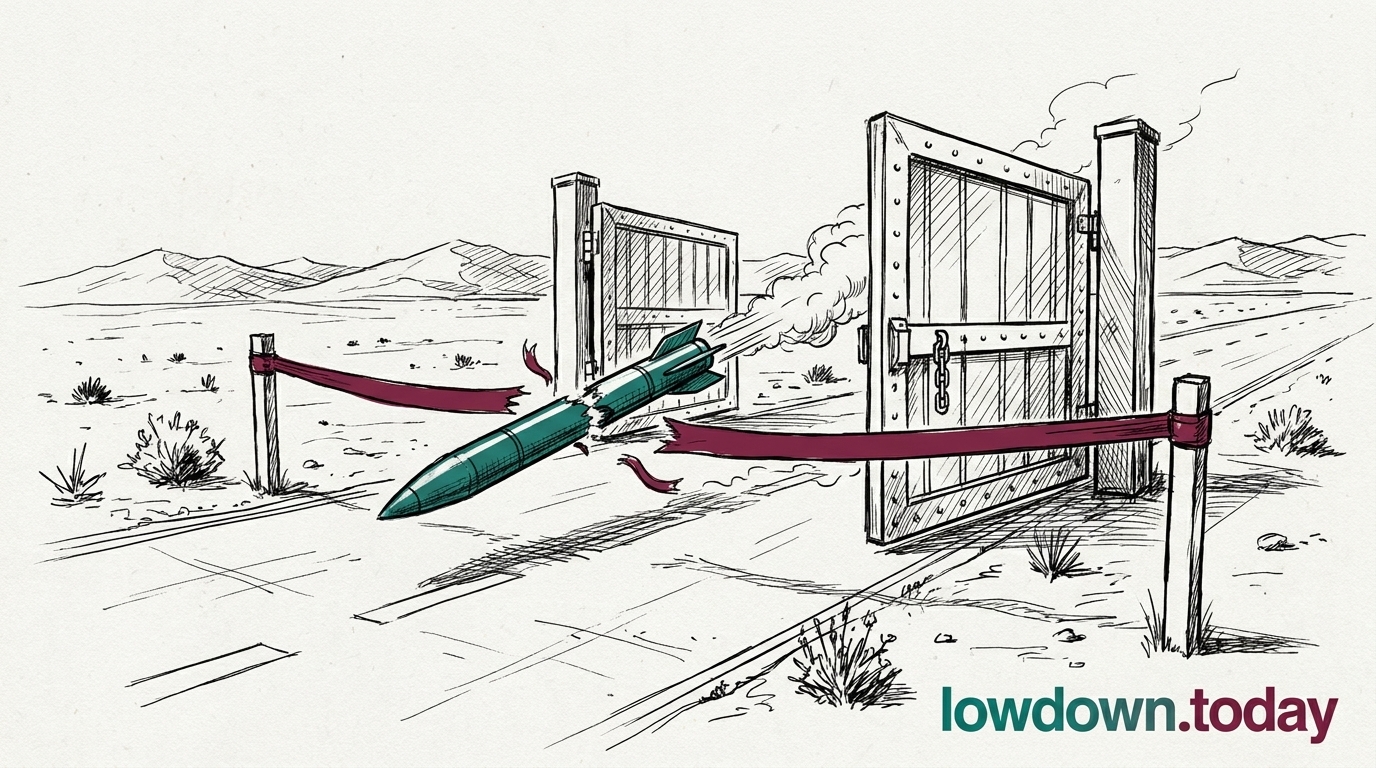
Vance and Ghalibaf digitally signed the Islamabad Memorandum on Monday 15 June, the first Iran instrument either side has put a signature to in 108 days of war. A day later the White House actions index, OFAC and the Federal Register still carried nothing on Iran.

ConflictDeveloping
Key takeaway

Vance and Ghalibaf signed the memorandum, but no US register carries the paperwork that would lift sanctions.

JD Vance and Iranian parliament speaker Mohammad Bagher Ghalibaf executed a digital signature on Monday 15 June, formally naming the document the Islamabad Memorandum of Understanding.⁠1 It is the first Iran instrument either side has signed in 108 days of war. The two had been publicly named as signatories the day before, so the signature itself was expected; what followed was not.

Twenty-four hours later the White House Presidential Actions index listed a cyber-security memo, a Flag Day proclamation and a batch of nominations, and nothing on Iran.⁠2 OFAC, the US Treasury's sanctions-enforcement office, had logged no new Iran designation, and the Federal Register, the government's daily journal of executive orders and rules, carried no Iran entry either. Trump had declared the deal done on Truth Social the day before the signing; the digital signature is the act that declaration described.

US law does not treat a Memorandum of Understanding as self-executing. Sanctions relief runs through OFAC general licences and, for anything statutory, through waivers the President must sign and publish. None of that machinery has moved, which leaves the instrument doing far less than the announcement that preceded it. The document runs to roughly a page and a half, stays secret until a formal ceremony in Geneva on Friday 19 June, and parks the nuclear question for 60 days while leaving sanctions, missiles and Iran's regional proxies out of the text entirely.


Deep Analysis

In plain English

The United States and Iran announced a deal, and two senior officials digitally signed a document named the Islamabad Memorandum of Understanding on 15 June. But in the US government, a deal only becomes real law when it appears in official publications like the Federal Register or when the president signs a formal order. None of that happened in the 24 hours after the signing. Think of it like a tenant and landlord verbally agreeing on rent, but neither has signed the actual lease. The handshake exists; the binding paperwork does not. Until the US publishes the formal orders, Iran's bank accounts stay frozen, oil sanctions stay in place, and the strait of Hormuz stays blocked in legal terms, whatever the leaders said in public.

Deep Analysis
Root Causes

Three structural conditions produced the blank-register outcome. First, the Trump administration has conducted 108 days of war-time Iran policy without a single signed presidential instrument, relying on verbal orders and social media posts; publishing a Federal Register notice for the MOU would break that pattern and create a reviewable legal record subject to congressional challenge under the War Powers Resolution.

Second, under Iran's constitution (Article 110), major foreign policy instruments require Supreme Leader endorsement; Mojtaba Khamenei has communicated by sealed courier only since 8 March, meaning no high-speed ratification process exists on the Iranian side. Ghalibaf signed without confirmed Khamenei authorisation.

Third, the MOU defers nuclear, sanctions, missile and proxy issues to a 60-day window. Publishing a sanctions waiver before those issues are resolved would give Congress and US courts a concrete target to challenge before the Geneva ceremony.

What could happen next?
  • Risk

    Without a published sanctions waiver, US banks and firms face criminal liability for acting on the MOU, meaning no practical relief flows until Washington publishes the instrument.

    Immediate · Assessed
  • Consequence

    The Geneva ceremony on 19 June becomes the first real test of whether the US intends to publish implementing instruments; its outcome will determine whether the MOU was a declaration or the opening of a legal process.

    Short term · Assessed
  • Precedent

    If the MOU is accepted internationally without US domestic publication, it establishes that presidential social media posts can substitute for Federal Register instruments, removing a key accountability check on executive war-time diplomacy.

    Long term · Suggested
First Reported In

Update #129 · Iran deal signed, but no paper to show

NBC News· 16 Jun 2026
Read original →
Different Perspectives
United States (Joint Maritime Information Center)
The JMIC, the US-led naval reporting cell, rated the Hormuz threat "severe" in its 25 October advisory, as reported by gCaptain, and warned of possible renewed mining. Eight days earlier it found no substantiation for the Guards' mine claims, while US-facilitated transits ran at about 34 a day.
United Kingdom (CPS and Counter Terrorism Policing)
The CPS charged two men under the National Security Act 2023 over the RAF Fairford incident, and Counter Terrorism Policing said it believes the foreign intelligence service involved is Iran's, LBC reported. The case now runs through the courts; both men are charged, not convicted.
Aden and Yemen's recognised government
The Houthis told people to leave Aden airport, in the government-held south, before a missile fell there on 28 October, AFP reported, and police reported a second attack that afternoon. The fight between Riyadh and the Houthis is landing on the south's main civilian airport.
Qatar (mediators)
Qatar (mediators)
Qatar-led mediators put new terms to Iran this week, which an Iranian official called "ideas, not a proposal". Riyadh framed the Tehran meeting as support for Qatari and Pakistani mediation, keeping Doha at the centre of the indirect channel.
Korea Shipowners' Association
The association said the ships Iran listed were sub-chartered to an overseas oil company, not owned by Sinokor, carried no South Korean crew, and that Sinokor was unaware of the warning. South Korea's shipowners are contesting whose vessels the notice covers before it takes effect.
Kuwait (foreign ministry)
Kuwait summoned Iran's ambassador, Mohammad Toutounji, and handed him a protest note over the embassy's denial that its citizen took part in the alleged plot against Interior Minister Fahad Al-Yousef. Kuwait is answering through its courts and a diplomatic protest, citing international law and the UN Charter.

Written with AI from Lowdown's published reporting. Not individually reviewed by an editor. Editorial standards.