Skip to content
Welcome, thoughtbot's Giant Robots listeners!Start here
Iran Conflict 2026
31JUL

France and Japan file flag-state protests

2 min read
09:24UTC

France and Japan lodged formal flag-state protests after CMA CGM Kribi and Mitsui OSK Sohar LNG appeared on Trump's 12 April toll-interdiction list, a provision CENTCOM left out of its operational order.

ConflictDeveloping
Key takeaway

Two G7 allies are formally protesting a presidential post CENTCOM has already chosen not to enforce.

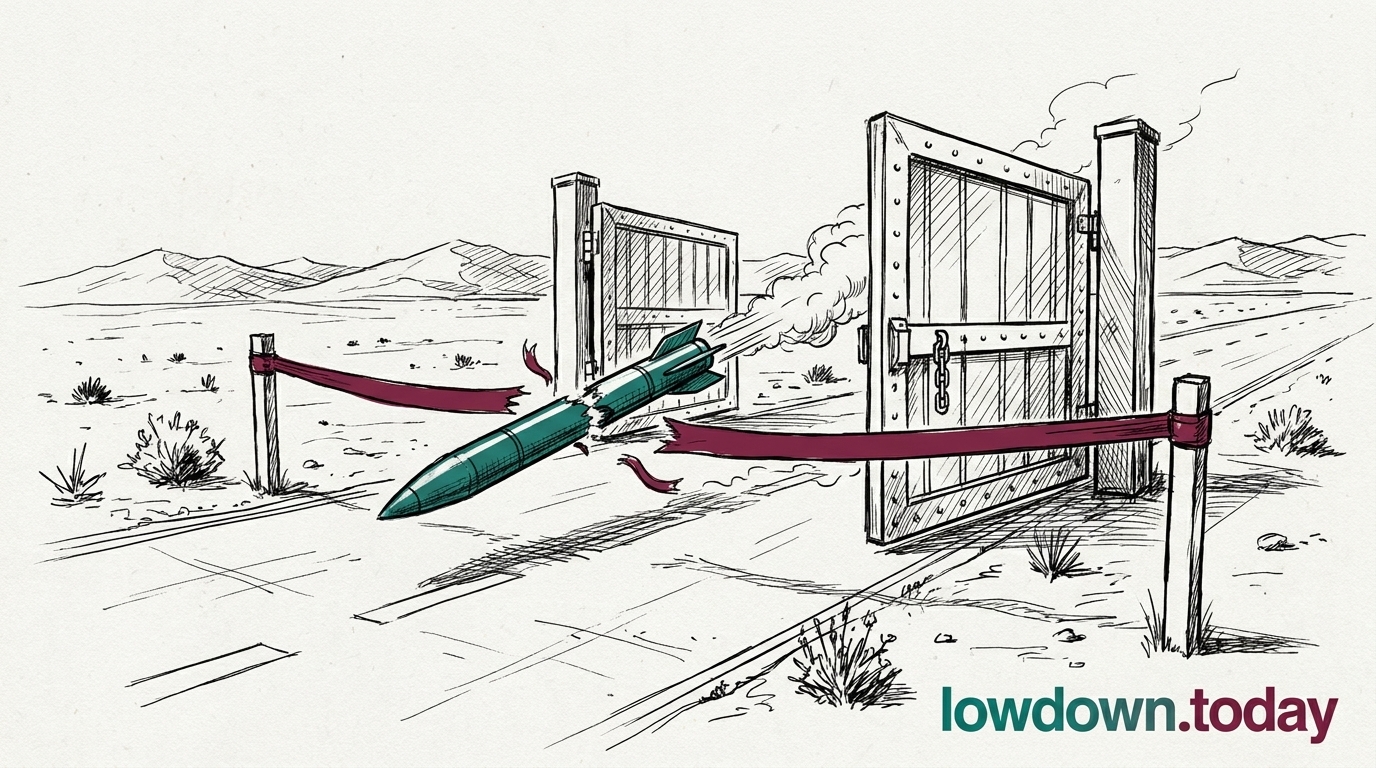
France and Japan lodged formal flag-state protests after the French-flagged CMA CGM Kribi and the Japanese-flagged Mitsui OSK Sohar LNG appeared on Donald Trump's 12 April toll-interdiction list. Both vessels had previously paid Iran's Hormuz toll in yuan, which was the trigger for their inclusion on the list. CENTCOM's operational order for the 13 April blockade omitted the toll-interdiction provision entirely, leaving both vessels off the US Navy's target list despite their appearance on the president's.

That is the gap the protests sit in. France and Japan are treating a Truth Social post naming specific G7-flagged merchant vessels as a formal US position requiring a formal reply, because UNCLOS (United Nations Convention on the Law of the Sea) obliges the flag state to defend its registered ships against threats of boarding. The protests invoke the convention implicitly: the president has named their vessels for interdiction, the named vessels' flag states have an obligation to protest, and the formal protest goes onto the bilateral record regardless of whether CENTCOM is acting on the posted order.

The practical asymmetry is that Paris and Tokyo are responding to a document, the presidential post, that has no corresponding signed instrument and no implementing order from the commanding combatant command. French and Japanese diplomats are negotiating against a text the US executive branch has not formally produced. For the flag states, that is still the text they must answer. For CENTCOM, the operational order it self-generated continues to exclude toll-paying vessels from interdiction, and the diplomatic protests have no effect on the operational mandate because the mandate already omits the action being protested.

The instrument gap that defines the whole operation surfaces here with unusual clarity. Two G7 allies are in formal protest against an executive order that both exists (on Truth Social) and does not exist (as a signed presidential instrument), enforced by a command that has chosen not to implement its most aggressive provision. Each party is reading a different authoritative text. The protests are now on the bilateral record; the interdictions they protest have not happened; the social-media post that triggered them remains the only American document any party can cite.


Deep Analysis

In plain English

France and Japan have filed formal diplomatic complaints with the United States after two of their ships appeared on a list of vessels President Trump threatened to intercept. The two ships, the CMA CGM Kribi (French-flagged) and the Mitsui OSK Sohar LNG (Japanese-flagged), had previously paid Iran's transit toll to pass through the strait of Hormuz. Trump posted on social media that all ships that had paid Iran's toll would be stopped by the US Navy. France and Japan, as the countries whose flags the ships fly, are legally required to defend their vessels under international maritime law, so they lodged formal protests. Here is the strange part: the US Navy never actually received orders to stop those ships. CENTCOM, the US military command running the blockade, left the toll-paying provision out of its orders entirely. So France and Japan are officially protesting against a presidential social-media post that the US military has already decided not to enforce. This shows, in the most concrete possible way, how the absence of a signed presidential order is creating confusion: two close US allies are in formal diplomatic dispute with America over an order that exists only as a post, enforced by a military that has chosen to ignore that particular part of it.

First Reported In

Update #68 · Sanctioned tankers slip the blockade

Reuters / Free Malaysia Today· 14 Apr 2026
Read original →
Different Perspectives
United States (Joint Maritime Information Center)
The JMIC, the US-led naval reporting cell, rated the Hormuz threat "severe" in its 25 October advisory, as reported by gCaptain, and warned of possible renewed mining. Eight days earlier it found no substantiation for the Guards' mine claims, while US-facilitated transits ran at about 34 a day.
United Kingdom (CPS and Counter Terrorism Policing)
The CPS charged two men under the National Security Act 2023 over the RAF Fairford incident, and Counter Terrorism Policing said it believes the foreign intelligence service involved is Iran's, LBC reported. The case now runs through the courts; both men are charged, not convicted.
Aden and Yemen's recognised government
The Houthis told people to leave Aden airport, in the government-held south, before a missile fell there on 28 October, AFP reported, and police reported a second attack that afternoon. The fight between Riyadh and the Houthis is landing on the south's main civilian airport.
Qatar (mediators)
Qatar (mediators)
Qatar-led mediators put new terms to Iran this week, which an Iranian official called "ideas, not a proposal". Riyadh framed the Tehran meeting as support for Qatari and Pakistani mediation, keeping Doha at the centre of the indirect channel.
Korea Shipowners' Association
The association said the ships Iran listed were sub-chartered to an overseas oil company, not owned by Sinokor, carried no South Korean crew, and that Sinokor was unaware of the warning. South Korea's shipowners are contesting whose vessels the notice covers before it takes effect.
Kuwait (foreign ministry)
Kuwait summoned Iran's ambassador, Mohammad Toutounji, and handed him a protest note over the embassy's denial that its citizen took part in the alleged plot against Interior Minister Fahad Al-Yousef. Kuwait is answering through its courts and a diplomatic protest, citing international law and the UN Charter.

Written with AI from Lowdown's published reporting. Not individually reviewed by an editor. Editorial standards.