Skip to content
You can now search across every topic, entity and event.What's new
Iran Conflict 2026
31JUL

Druzhba south restart hands MOL $40 edge

4 min read
09:24UTC

The Druzhba pipeline's southern leg restarted in late April 2026, restoring roughly 175,000 to 200,000 barrels per day of sanctions-exempt crude to MOL and Slovak refiners.

ConflictDeveloping
Key takeaway

Druzhba's pipeline exemption widens MOL's feedstock edge as seaborne compliance pressure tightens elsewhere.

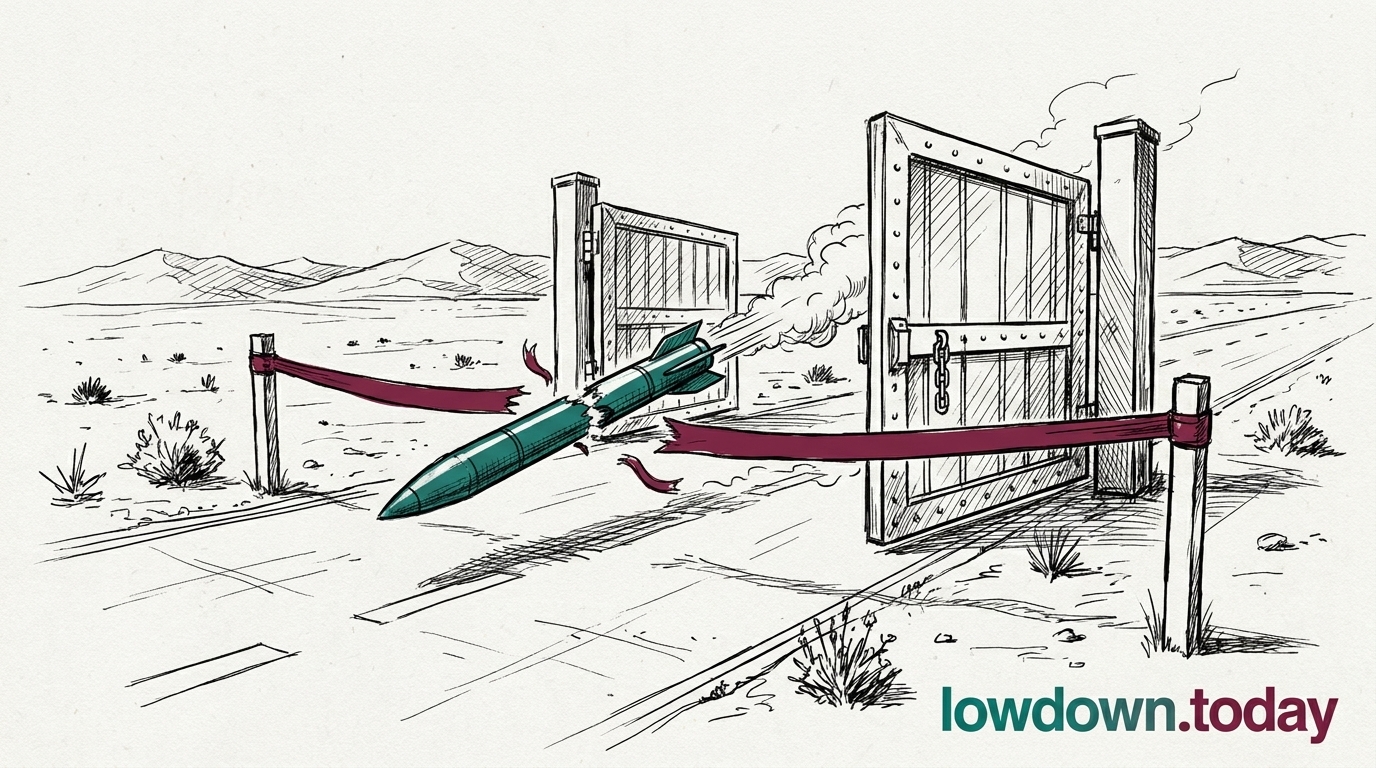
The Druzhba pipeline's southern leg restarted in late April 2026, restoring approximately 175,000 to 200,000 barrels per day of sanctions-exempt pipeline crude to MOL and Slovak refiners 1. With Urals FOB at roughly $76 per barrel and Brent above $100 per barrel through early May, the pipeline-delivered feedstock cost advantage versus Northwest European seaborne peers reached roughly $40 per barrel, the widest divergence between landlocked Central European refiners and their NWE competitors on record in the sanctions era.

The legal architecture matters. Druzhba is an explicit carve-out from the EU's Russian crude embargo, granted in 2022 to Hungary and Slovakia on infrastructure grounds. Pipeline crude is exempt from the G7 price cap, exempt from the maritime services restrictions, and unaffected by the GL 134B lapse because no third-country completion or vessel-services chain is involved. The IEA flagged Russian pipeline export volumes up 36 per cent in the period as the parallel refinery-strike campaign cut domestic consumption. MOL now processes pipeline crude at a feedstock cost European peers cannot match and pockets the spread.

Druzhba southern flows resumed at full tilt the same week OFAC let GL 134B expire to tighten compliance pressure on seaborne Russian flows. The carve-out, designed in 2022 as a transition allowance for Hungary and Slovakia, has become a permanent competitive moat as the cap framework has degraded around it. Both governments have repeatedly used the carve-out as leverage in Brussels, and the May print gives them a fresh $40-per-barrel reason to keep doing so.

For the intra-European refining margin map, the consequence is that MOL sells refined product into a Continental market priced off ARA gasoil at multi-year-low stocks while running on a crude feedstock 40 per cent cheaper than its peers. The divergence between landlocked and seaborne refiners has stopped being a transition artefact and started behaving like a structural feature.


Deep Analysis

In plain English

Every month, the US Energy Information Administration (EIA) publishes a Short-Term Energy Outlook, effectively an official US government forecast for oil prices and supply. The May 2026 version says crude oil should cost around $106 per barrel now but fall to $89 per barrel by the end of the year. That $17 fall is based on the assumption that the Strait of Hormuz will reopen fully in the coming months. If it does, more oil flows and prices fall. If it does not, prices stay higher. The IEA (International Energy Agency) separately confirmed that the world has been burning through its oil storage reserves at near-record speed over the past two months, which is what happens when supply is disrupted but demand continues.

Deep Analysis
Root Causes

The $17/bbl Q2-Q4 negative carry embedded in both the EIA STEO and the Goldman Sachs $90 Q4 forecast reflects the market's consensus model of Hormuz normalisation. The structural inputs are: physical mine clearance completing in 8-12 weeks from ceasefire; OPEC+ unwinds adding 800+ kbd total through June; demand destruction in Asia from the freight-cost shock reducing import volumes; and the IEA's 4.5mb/d Q2 throughput decline recovering as refinery runs resume.

The IEA's 246mb two-month draw across March and April confirms that the acute phase of the supply shock is real and large. A draw of that scale in two months compares to the most extreme periods in the 2020 COVID supply-demand imbalance, but with the opposite sign. The historical Q2-Q4 reversion analogy from 2020 (when a demand collapse inverted) now applies to a supply-disruption inversion.

What could happen next?
  • Opportunity

    The Q2-to-Q4 $17/bbl negative carry creates a structural calendar-spread short opportunity in Brent M2-M7 for any desk confident in the Hormuz normalisation timeline.

    Short term · 0.7
  • Risk

    The EIA's 8.5mb/d Q2 draw rate (the highest in STEO history) implies that any Hormuz-reopening delay beyond July risks further stock depletion that pushes the Q4 reversion forecast above $95/bbl.

    Medium term · 0.65
  • Consequence

    Russian crude export volumes rising as domestic refinery attacks free barrels for export (per IEA) creates unquantified downward pressure on the Q4 forecast if those volumes exceed model assumptions.

    Medium term · 0.6
First Reported In

Update #1 · GL 134B out, Rotterdam dark, OPEC+ pending

IEA· 18 May 2026
Read original
Different Perspectives
Shipping and insurance underwriters
Underwriters can price Houthi strikes because the group announces its targets, but an unclaimed drone at Damietta and a mandatory Iranian insurance scheme both deny them a pattern to price against. War-risk premiums are increasingly being set by the absence of a claimant, not the scale of the damage.
Jordan
Jordan
Azraq absorbed its fourth Iranian strike in seven weeks, again drawing no direct Jordanian retaliation, only an American one. Amman's exposure, hosting US basing without the Patriot density of Gulf allies, has not changed even as the war around it widens.
Houthi movement
Houthi movement
The Houthis' 20 July blockade of Saudi-linked shipping is the injury Riyadh's new 43-nation coalition directly answers, yet the group itself was never asked to join and remains outside every proposal on the table. Sanaa-aligned commentators call the coalition a paper reassurance for insurers rather than a deployable force.
Egypt's Cabinet
Egypt's Cabinet
Egypt confirmed the Damietta blaze was an attack, not an accident, on soil the war had never touched before. Cairo now faces an unclaimed threat to a facility supplying roughly 7% of its domestic gas, with no author to hold accountable and no pattern yet to defend against.
Oman
Oman
Muscat is running the only channel Iran will use, a voluntary Hormuz fee modelled on Malacca, but stayed out of Saudi Arabia's new naval coalition entirely. Oman's mediating leverage depends on treating Hormuz as shared and non-exclusive, the opposite of what Tehran is now demanding of it.
Iraq's Prime Minister
Al-Zaidi cancelled his first official Riyadh visit and convened the Coordination Framework, the coalition that keeps him in power and whose factions sit inside the PMF that Saudi jets just struck. He is caught between a five-year Saudi investment relationship and armed groups inside his own state he does not fully control.



