Skip to content
You can now search across every topic, entity and event.What's new
Iran Conflict 2026
31JUL

Brent touches $100 on expiry, closes at $97.91

3 min read
09:24UTC

Lowdown Wire

ConflictDeveloping
Key takeaway

Brent closed 45 per cent above the pre-war baseline after a 21 April round trip through the $100 handle.

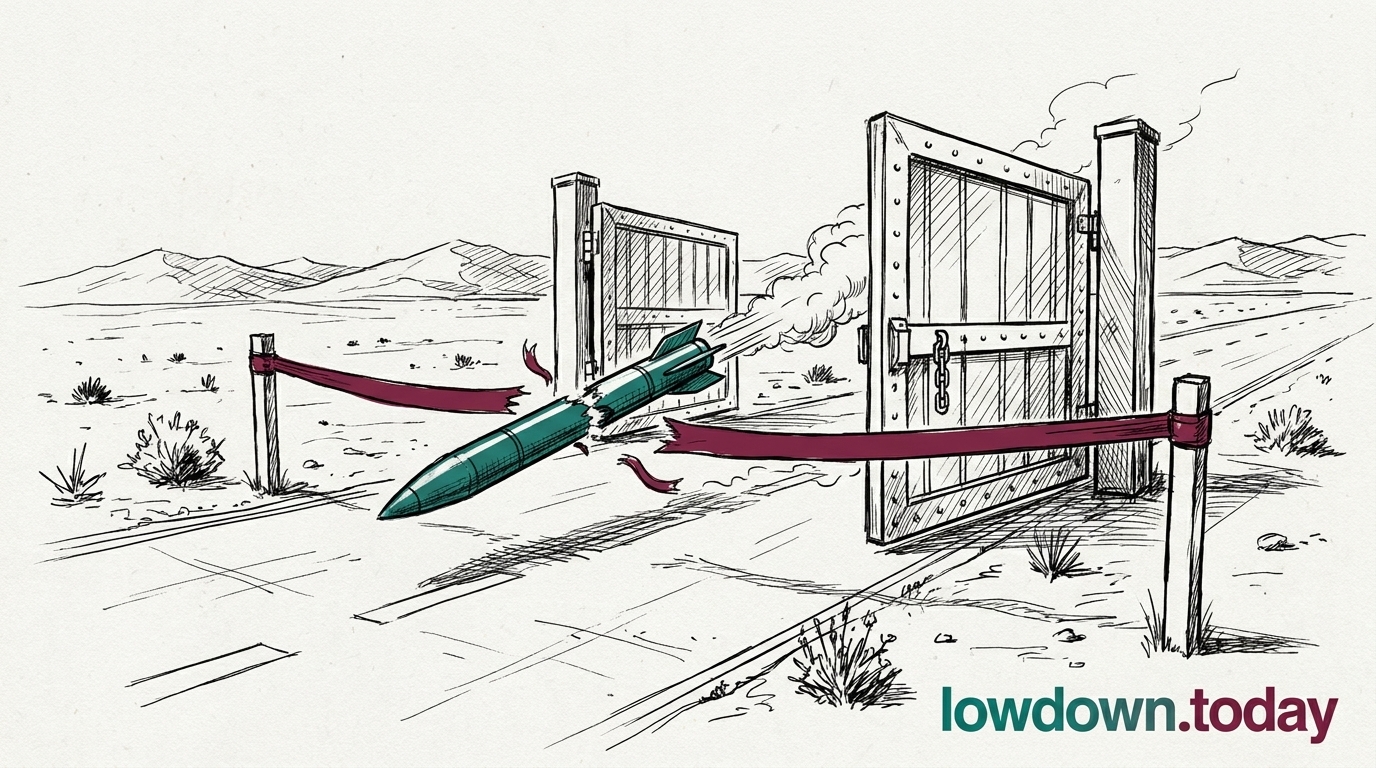
Brent Crude briefly crossed $100 per barrel on expiry morning on 21 April before retreating to $97.91 by close after Trump's extension post landed 1. The close sits 45 per cent above the $67.41 pre-war baseline. Goldman Sachs's $120 Q3 severe scenario remains the operative forecast frame across sell-side desks.

Monday's 7 per cent surge to $96.88 on early extension hope gave Tuesday's market the exit-trigger test, and the trigger was identified as unreachable faster than the futures curve could reprice. The four-dollar round-trip through the $100 handle tracked the moment the market parsed the Truth Social text: blockade continues, unified-proposal condition unmet, tanker risk at the Hormuz gate unchanged. Dated Brent's refusal to settle below $96 across five sessions now is what a blockade-continues price looks like once traders stop pricing a near-term diplomatic resolution.


Deep Analysis

In plain English

Oil is priced in US dollars per barrel on global markets. Before Iran's conflict with the US began, a barrel of Brent crude (the international benchmark) cost $67.41. On 21 April it briefly crossed $100 before settling at $97.91 , a 45% increase. The jump to $100 and rapid retreat happened because markets were testing whether Trump's social media post meant the war was genuinely winding down. When traders read the post carefully and saw the blockade was still in place, the price pulled back. But it did not fall far, because the underlying blockade risk had not changed. Higher oil prices feed through to petrol and diesel costs within weeks, and also raise the price of goods that are transported or manufactured using energy.

What could happen next?
  • Risk

    Goldman Sachs's $120 Q3 severe scenario remains live if OFAC designations follow the GL-U lapse and target specific Chinese buyers, which would remove China's demand cushion and drive a supply withdrawal.

  • Consequence

    Brent settling above $96 for five consecutive sessions shifts institutional hedging benchmarks, locking fuel cost inflation into airline, shipping, and manufacturing forward contracts for Q3.

First Reported In

Update #76 · Trump posts an exit Iran can't reach

Windward· 22 Apr 2026
Read original
Causes and effects
This Event
Brent touches $100 on expiry, closes at $97.91
Market pricing reads the extension as marginal de-escalation inside a continuing blockade, not as a ceasefire price; Goldman's severe scenario remains the operative frame.
Different Perspectives
Shipping and insurance underwriters
Underwriters can price Houthi strikes because the group announces its targets, but an unclaimed drone at Damietta and a mandatory Iranian insurance scheme both deny them a pattern to price against. War-risk premiums are increasingly being set by the absence of a claimant, not the scale of the damage.
Jordan
Jordan
Azraq absorbed its fourth Iranian strike in seven weeks, again drawing no direct Jordanian retaliation, only an American one. Amman's exposure, hosting US basing without the Patriot density of Gulf allies, has not changed even as the war around it widens.
Houthi movement
Houthi movement
The Houthis' 20 July blockade of Saudi-linked shipping is the injury Riyadh's new 43-nation coalition directly answers, yet the group itself was never asked to join and remains outside every proposal on the table. Sanaa-aligned commentators call the coalition a paper reassurance for insurers rather than a deployable force.
Egypt's Cabinet
Egypt's Cabinet
Egypt confirmed the Damietta blaze was an attack, not an accident, on soil the war had never touched before. Cairo now faces an unclaimed threat to a facility supplying roughly 7% of its domestic gas, with no author to hold accountable and no pattern yet to defend against.
Oman
Oman
Muscat is running the only channel Iran will use, a voluntary Hormuz fee modelled on Malacca, but stayed out of Saudi Arabia's new naval coalition entirely. Oman's mediating leverage depends on treating Hormuz as shared and non-exclusive, the opposite of what Tehran is now demanding of it.
Iraq's Prime Minister
Al-Zaidi cancelled his first official Riyadh visit and convened the Coordination Framework, the coalition that keeps him in power and whose factions sit inside the PMF that Saudi jets just struck. He is caught between a five-year Saudi investment relationship and armed groups inside his own state he does not fully control.



