Skip to content
Welcome, thoughtbot's Giant Robots listeners!Start here
Iran Conflict 2026
31JUL

140 US sorties, zero signed paper

3 min read
09:24UTC

CENTCOM flew its third strike wave in a week, hitting roughly 140 targets and taking the total past 300, then declared the Strait of Hormuz open even as Washington signed no new Iran instrument.

ConflictDeveloping
Key takeaway

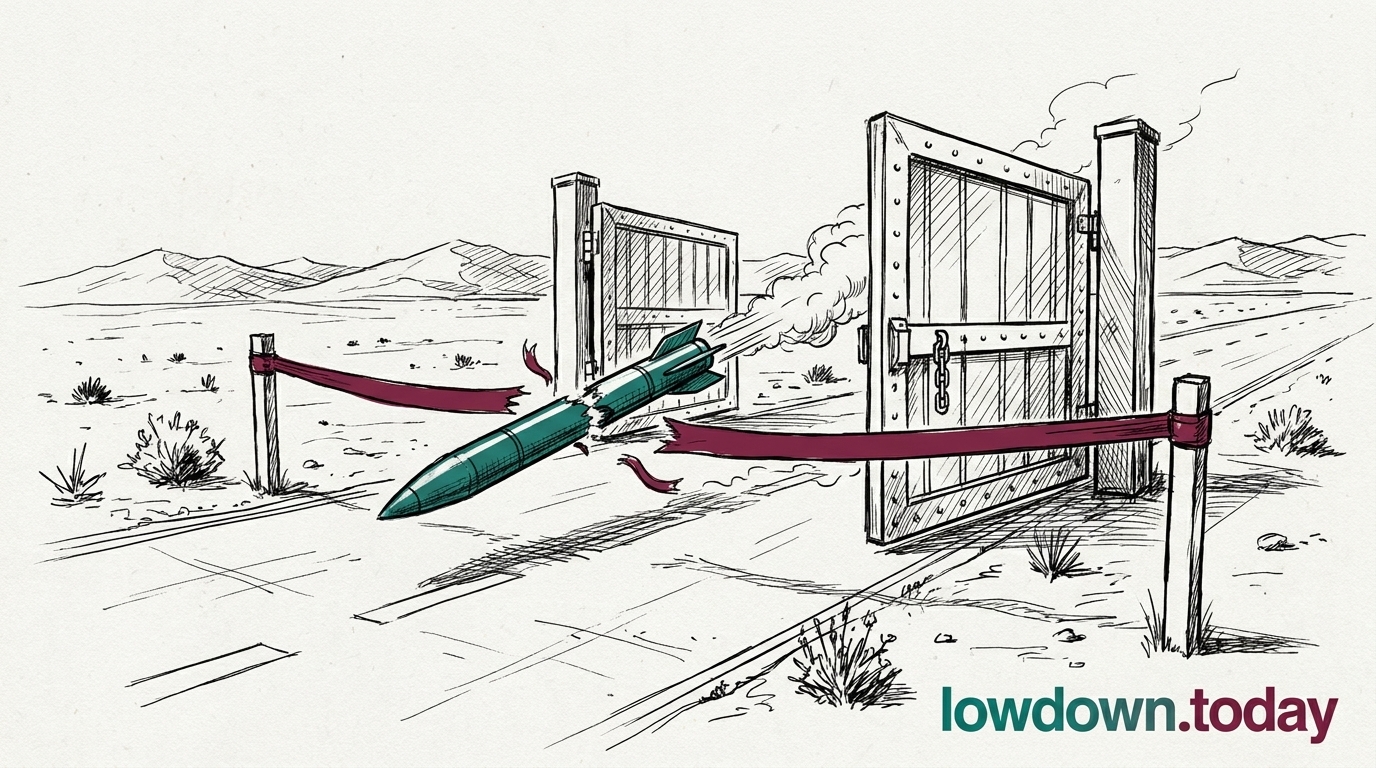
Washington's Iran week ran to 140 sorties and zero signatures, its open-strait claim resting on statements.

CENTCOM (US Central Command), the US military command responsible for the Middle East, launched its third strike wave of the week within hours of Iran's closure declaration, hitting roughly 140 targets: missile batteries, air-defence sites, IRGC fast-attack boats and positions on Qeshm Island⁠1. The wave took the week's running total past 300, and CENTCOM called the strait open to all vessels seeking to lawfully transit the international waterway⁠2. Iranian Navy Lieutenant Hamidreza Dehghani was reported killed at Jask port, per Iranian state media⁠3.

Those figures and the open-strait line reached us through Al Jazeera and Iran International secondary readouts; CENTCOM's own release was unreachable⁠4. President Donald Trump, who days earlier had called the interim US-Iran agreement over, told Meet the Press the strait was open as far as he was concerned. Iran, firing missiles and posting a formal notice, calls the water shut; Washington, flying sorties and issuing a sentence, calls it open.

CENTCOM's third wave extends a cadence already run twice this week, 90 targets on 8 July and more than 80 on 7 July. The only signed US instrument on Iran across that whole sequence remains the Treasury's 7 July revocation of the oil waiver General License X, replaced by a wind-down-only General License X1. A revocation withdraws relief; it does not create a new authority, so no War Powers Resolution clock attaches to this week's strikes and Congress gains no fresh signed record to grip.

Between 11 and 13 July Washington flew about 140 sorties and signed no new Iran instrument⁠5. The Federal Register carries no fresh Iran document, the Office of Foreign Assets Control (OFAC), Treasury's sanctions bureau, logged its last Iran action on 10 July, and The White House presidential-actions register stops at a 9 July aircraft-tariff proclamation⁠6⁠7⁠8. Allies and insurers reading for a durable US position on Hormuz have statements to plan against, not a signed framework.


Deep Analysis

In plain English

CENTCOM (US Central Command, the American military headquarters for the Middle East) launched its third major bombing run of the week, hitting about 140 targets just hours after Iran said it had shut the strait of Hormuz, the narrow waterway ships use to move Gulf oil to the rest of the world. The targets included missile launchers and small attack boats belonging to the IRGC (Islamic Revolutionary Guard Corps, an elite branch of Iran's military). One Iranian naval officer, Lieutenant Hamidreza Dehghani, was reported killed in Jask, a town on Iran's south-east coast near the mouth of the strait. The US military says the strait remains open for ships that follow international law, directly contradicting Iran's closure claim. For now neither side can prove the other wrong, because commercial ships are staying away regardless of who is technically right.

Deep Analysis
Root Causes

Sustaining three strike waves in a single week depends on munitions already forward-positioned at Gulf and Indian Ocean bases such as Al Udeid and Diego Garcia; standoff missile stocks are not manufactured at wartime tempo, so a campaign at this pace draws down a finite pre-positioned inventory rather than an open production line.

Congress supplies a second, separate constraint only if it chooses to invoke one: because the campaign has proceeded without a formal war authorisation, there is no legislative mechanism forcing a pause, so the practical ceiling on strike tempo is munitions supply, not Congress.

First Reported In

Update #153 · Iran declares Hormuz closed; US says open

Gulf News· 13 Jul 2026
Read original →
Different Perspectives
United States (Joint Maritime Information Center)
The JMIC, the US-led naval reporting cell, rated the Hormuz threat "severe" in its 25 October advisory, as reported by gCaptain, and warned of possible renewed mining. Eight days earlier it found no substantiation for the Guards' mine claims, while US-facilitated transits ran at about 34 a day.
United Kingdom (CPS and Counter Terrorism Policing)
The CPS charged two men under the National Security Act 2023 over the RAF Fairford incident, and Counter Terrorism Policing said it believes the foreign intelligence service involved is Iran's, LBC reported. The case now runs through the courts; both men are charged, not convicted.
Aden and Yemen's recognised government
The Houthis told people to leave Aden airport, in the government-held south, before a missile fell there on 28 October, AFP reported, and police reported a second attack that afternoon. The fight between Riyadh and the Houthis is landing on the south's main civilian airport.
Qatar (mediators)
Qatar (mediators)
Qatar-led mediators put new terms to Iran this week, which an Iranian official called "ideas, not a proposal". Riyadh framed the Tehran meeting as support for Qatari and Pakistani mediation, keeping Doha at the centre of the indirect channel.
Korea Shipowners' Association
The association said the ships Iran listed were sub-chartered to an overseas oil company, not owned by Sinokor, carried no South Korean crew, and that Sinokor was unaware of the warning. South Korea's shipowners are contesting whose vessels the notice covers before it takes effect.
Kuwait (foreign ministry)
Kuwait summoned Iran's ambassador, Mohammad Toutounji, and handed him a protest note over the embassy's denial that its citizen took part in the alleged plot against Interior Minister Fahad Al-Yousef. Kuwait is answering through its courts and a diplomatic protest, citing international law and the UN Charter.

Written with AI from Lowdown's published reporting. Not individually reviewed by an editor. Editorial standards.