Skip to content
You can now search across every topic, entity and event.What's new
Iran Conflict 2026
23JUL

Tisza leads Fidesz by 25 in final poll

2 min read
19:27UTC

The widest independent margin of the cycle arrived one day before Hungary votes, with Orbán's sixteen-year run suddenly testable.

ConflictDeveloping
Key takeaway

A Tisza win changes Hungarian politics faster than it changes Ukraine's disbursement calendar.

Independent Hungarian pollster Medián published a final pre-election poll on 11 April placing Tisza at 58% against Fidesz at 33%, the widest independent margin of the cycle 1. AtlasIntel had Tisza at 52.1% the same week. The Fidesz-aligned pollster Nézőpont still put Orbán's party ahead at 46% to 40%, the only major survey to do so. Péter Magyar leads Orbán on prime ministerial suitability by 48.7 points.

A Tisza win is necessary but not sufficient to unlock the €90 billion EU loan package for Ukraine that Tisza MEPs themselves voted against in the European Parliament . Magyar has committed to a national referendum on Ukraine's EU accession; neither the referendum nor any change in MEP voting delivers funds on a calendar Kyiv can use. Even an optimistic legislative scenario places first disbursement in June, after Kyiv's interceptor supply crunch bites.

Orbán has run on the premise that "our sons will not die for Ukraine." Putin's Easter ceasefire window closes at midnight on polling day, giving the incumbent an image of Russian restraint no Fidesz campaign flyer can buy. Whether that closes the independent-poll gap is the open question as ballots are cast. Whether any result hands Kyiv a materially different funding calendar is a longer six-week question.

Deep Analysis

In plain English

Hungary's ruling party, Fidesz, has been blocking a major European Union loan package of €90 billion for Ukraine. The country held elections on 12 April, and polling in the days before showed the opposition Tisza party leading by 25 percentage points. A Tisza win would not automatically unlock the loan. Hungary's opposition leader Peter Magyar has said he would hold a national referendum on Ukraine joining the EU. That process takes time. Even an optimistic estimate puts the first loan payment arriving in June, weeks after Ukraine faces its tightest funding crunch.

Deep Analysis
Root Causes

Orbán's EU veto power on Ukraine funding stems from two structural features of EU decision-making: the Council of the EU requires unanimity on specific Ukraine assistance mechanisms, and Hungary has exploited that unanimity requirement consistently since 2022.

The secondary root cause is that the EU's SAFE programme, which would provide €90 billion in loans and grants, was designed after the 2022 invasion with a unanimity requirement that Hungary's size would normally make manageable. The Ukraine war's duration extended Hungary's leverage window far beyond what the programme's designers anticipated.

What could happen next?
  • Consequence

    Even under an optimistic scenario, the EU's 'within a few days' disbursement pledge requires a new Hungarian government to be formed and ministers confirmed before any Council vote, placing first disbursement in June at earliest.

  • Risk

    If TurkStream's operational status becomes an election issue following the explosives discovery (ID:2018), Tisza's lead may narrow, extending the political transition timeline further.

First Reported In

Update #12 · Three narrowings of US support for Kyiv

Carnegie Endowment for International Peace· 11 Apr 2026
Read original
Different Perspectives
India
India
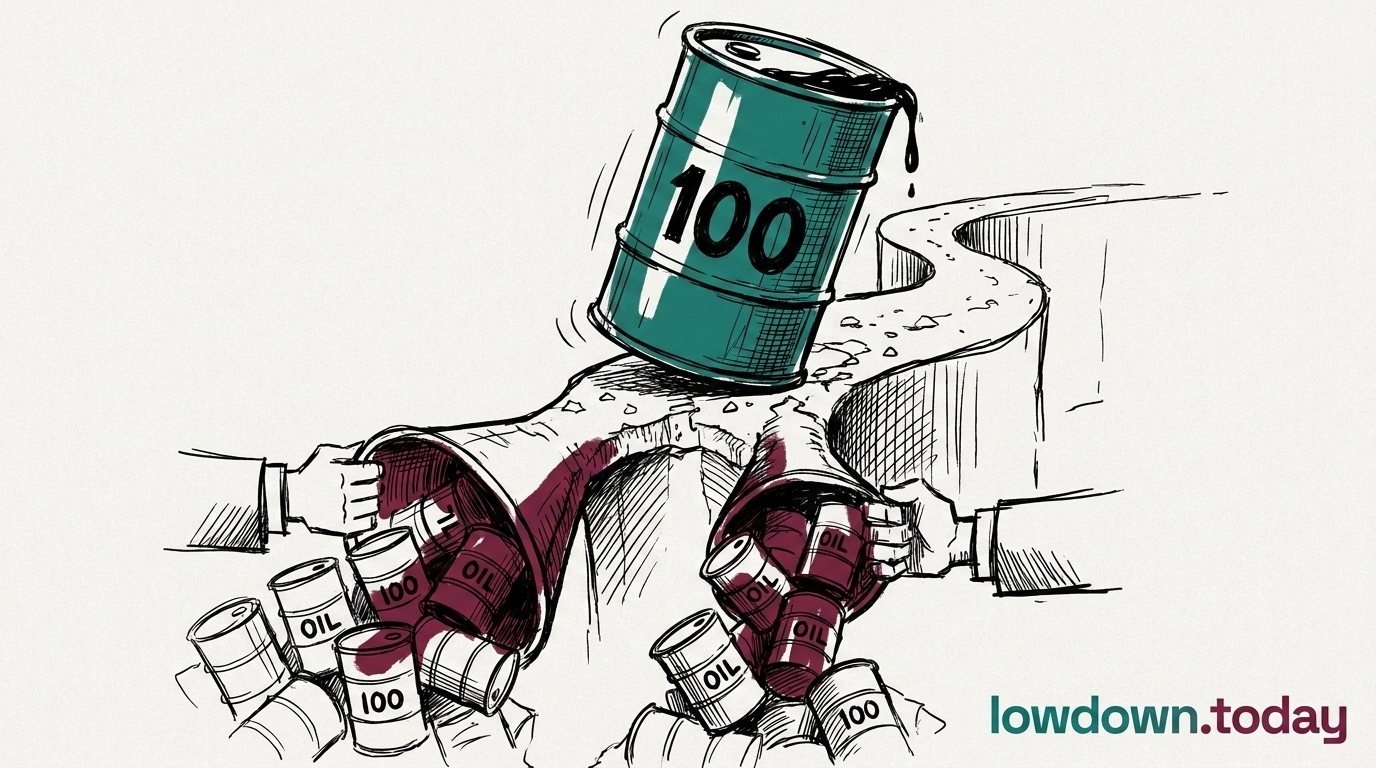
India buys more Saudi crude than any other country and has 2.5 million nationals working in the kingdom, so a $100 Brent and a live strike on Saudi tankers reach New Delhi through both fuel bills and remittance risk. Neither channel has an alternative route the way Saudi Arabia's own pipeline does.
Qatar
Qatar
Qatar co-authored the four-mediator ten-day ceasefire proposal alongside Egypt, Pakistan and Oman, centred on resuming Hormuz navigation, while separately pursuing its dated compensation claim against Iran at the UN Security Council filed on 21 July. Doha is mediating and litigating in the same week.
Israel
Israel
Israeli intelligence, reported by the Wall Street Journal, assesses Iran moved thousands of centrifuges and part of its roughly 440kg enriched-uranium stock into Pickaxe Mountain after the June 2025 strikes on its three main nuclear sites. Some of the US refuelling aircraft now deploying to the region are bound for Israeli bases and Ramon Airport.
Houthis
Houthis
Yahya Saree announced the missile and drone strikes on the Encelia and Layla on 22 July as enforcement of the embargo his forces had declared by radio warning alone two days earlier. Six vessels already turned back on the broadcast; the strike shows Houthi forces will use weapons once warnings stop working.
Saudi Arabia
Saudi Arabia
Saudi Arabia's state news agency confirmed only a fire on the Encelia's bow, with the crew safe; the Layla strike remains unconfirmed by Riyadh. The kingdom built its Petroline pipeline specifically to bypass Hormuz through the Red Sea, so the tanker fire lands on the route Riyadh had already spent billions escaping.
United States
United States
Washington is weighing both ten-day proposals but wants a longer truce than either offers, and moved F-16 and F-35 jets plus refuelling aircraft into the region while it decides. That deployment, not Trump's Pickaxe Mountain remarks, is the measurable US action, buying options for the day talks fail rather than betting on them.