Skip to content
You can now search across every topic, entity and event.What's new
Iran Conflict 2026
23JUL

Khademi killed and the IRGC's gatekeeper falls

2 min read
19:27UTC

The IRGC intelligence chief who kept Iran's elected president away from the Supreme Leader was reported killed in the same 6 April Israeli strike that hit South Pars.

ConflictDeveloping
Key takeaway

If confirmed, Khademi's death briefly removes the man whose job was to keep Pezeshkian away from Khamenei.

Maj. Gen. Majid Khademi, head of IRGC intelligence since 2024 and described by regional reporting as "effectively the No. 2 within the IRGC", was reported killed in the 6 April Israeli strike wave on Asaluyeh, alongside Asghar Bakeri, named as the commander of Quds Force Unit 840 1. Wire-service confirmation on both kills is still pending; the sourcing is regional reporting and the casualties should be read with that caveat.

If they hold up, they are the most senior IRGC losses since the conflict began. Khademi was one of several senior IRGC losses across the past two days, yet Iran's outbound missile rate fell to its lowest of the war rather than spiking in retaliation, an asymmetry that itself suggests command disruption rather than restraint.

Khademi's portfolio is what makes his death matter beyond the casualty list. His apparatus runs the internal surveillance apparatus that has, through six weeks of war, kept President Masoud Pezeshkian physically and procedurally away from Supreme Leader Mojtaba Khamenei and again on 5 April . Replacing the head of IRGC counterintelligence is not a desk reshuffle; it is a consolidation that takes weeks under peacetime conditions. For a brief and uncertain window, the architecture blocking Iran's civilian government from its own decision-maker has lost its principal architect. Whether Pezeshkian can use that gap, or whether the military council closes around him faster, will be visible within days.

Deep Analysis

In plain English

Iran's elected president, Masoud Pezeshkian, has not been running Iran's war strategy. The IRGC's intelligence chief , Maj. Gen. Majid Khademi , ran a surveillance apparatus that kept Pezeshkian physically and procedurally away from the Supreme Leader throughout the conflict, ensuring that any ceasefire signal had to be approved by the IRGC military council, not just the civilian government. Reports say Khademi was killed in the same Israeli strike that hit South Pars. If confirmed, Iran's civilian government may have a brief window to reach Khamenei directly before the IRGC installs a replacement and closes the gap. Whether Pezeshkian can act in that window, or whether the military council moves faster, is the most consequential unknown of the coming days.

Deep Analysis
Root Causes

Khademi's role was architecturally significant because the IRGC's hold over Iran's civilian government is enforced procedurally, not merely politically.

The surveillance apparatus he ran determined which communications Pezeshkian could receive, which officials he could meet, and which negotiating signals he could authorise.

That apparatus does not automatically transfer to a successor; it must be rebuilt around a new commander's authority, creating a genuine but time-limited gap in the enforcement mechanism.

What could happen next?
  • Risk

    If confirmed, Khademi's death opens a brief and uncertain window in which Iran's civilian government might alter the IRGC-controlled negotiating mandate , a window likely measured in days before institutional replacement closes it.

  • Consequence

    Iran's outbound missile rate fell to its war low in the same period as the reported senior command losses, suggesting command disruption rather than deliberate restraint , a pattern that could reverse sharply once a successor structure consolidates.

First Reported In

Update #61 · Carriers retreat; Iran codifies Hormuz

Reuters· 7 Apr 2026
Read original
Different Perspectives
India
India
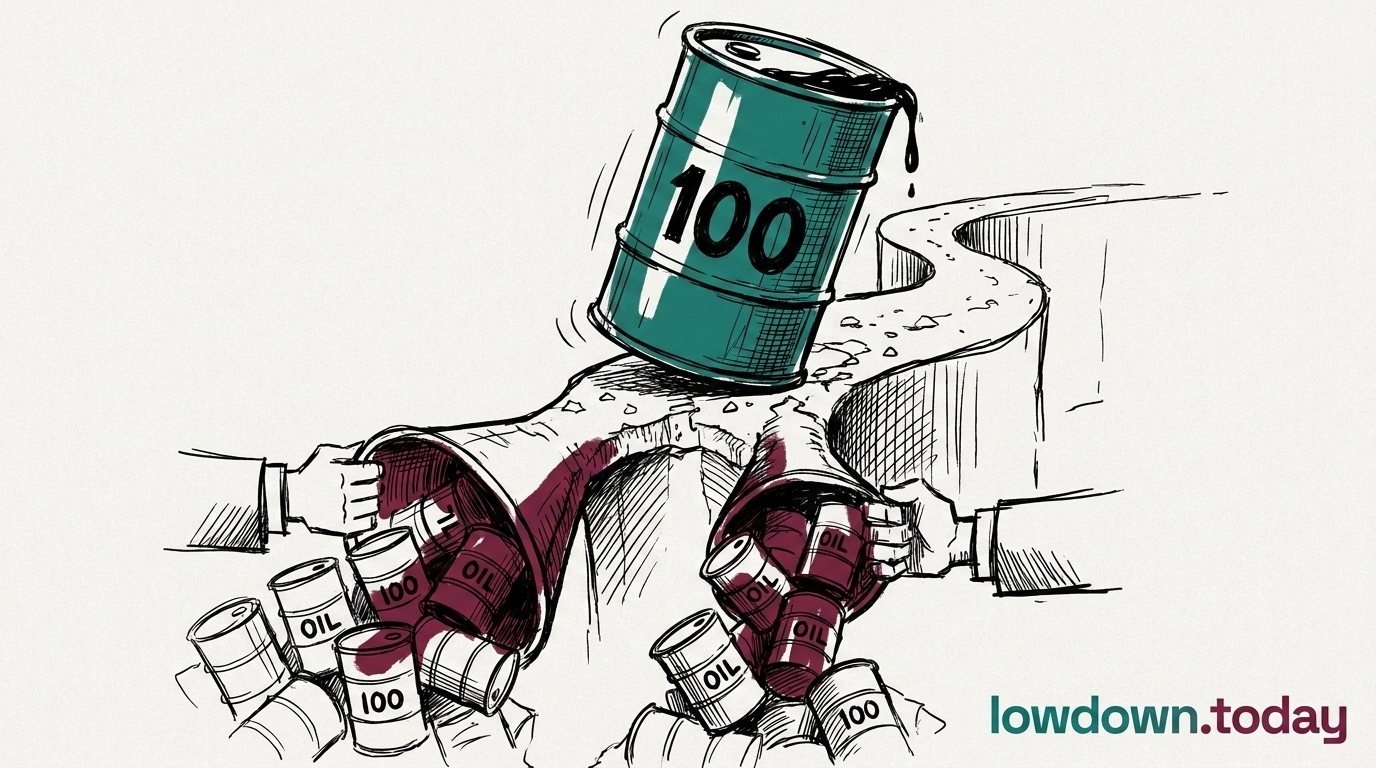
India buys more Saudi crude than any other country and has 2.5 million nationals working in the kingdom, so a $100 Brent and a live strike on Saudi tankers reach New Delhi through both fuel bills and remittance risk. Neither channel has an alternative route the way Saudi Arabia's own pipeline does.
Qatar
Qatar
Qatar co-authored the four-mediator ten-day ceasefire proposal alongside Egypt, Pakistan and Oman, centred on resuming Hormuz navigation, while separately pursuing its dated compensation claim against Iran at the UN Security Council filed on 21 July. Doha is mediating and litigating in the same week.
Israel
Israel
Israeli intelligence, reported by the Wall Street Journal, assesses Iran moved thousands of centrifuges and part of its roughly 440kg enriched-uranium stock into Pickaxe Mountain after the June 2025 strikes on its three main nuclear sites. Some of the US refuelling aircraft now deploying to the region are bound for Israeli bases and Ramon Airport.
Houthis
Houthis
Yahya Saree announced the missile and drone strikes on the Encelia and Layla on 22 July as enforcement of the embargo his forces had declared by radio warning alone two days earlier. Six vessels already turned back on the broadcast; the strike shows Houthi forces will use weapons once warnings stop working.
Saudi Arabia
Saudi Arabia
Saudi Arabia's state news agency confirmed only a fire on the Encelia's bow, with the crew safe; the Layla strike remains unconfirmed by Riyadh. The kingdom built its Petroline pipeline specifically to bypass Hormuz through the Red Sea, so the tanker fire lands on the route Riyadh had already spent billions escaping.
United States
United States
Washington is weighing both ten-day proposals but wants a longer truce than either offers, and moved F-16 and F-35 jets plus refuelling aircraft into the region while it decides. That deployment, not Trump's Pickaxe Mountain remarks, is the measurable US action, buying options for the day talks fail rather than betting on them.