Skip to content
You can now search across every topic, entity and event.What's new
Iran Conflict 2026
23JUL

Brent at $112 as Houthis join the war

2 min read
19:27UTC

The IEA's largest-ever emergency oil release has not stabilised prices; a Dow executive warned supply chains will take nine months to recover after the strait reopens.

ConflictDeveloping
Key takeaway

Nine months of supply chain damage is locked in regardless of when the war ends.

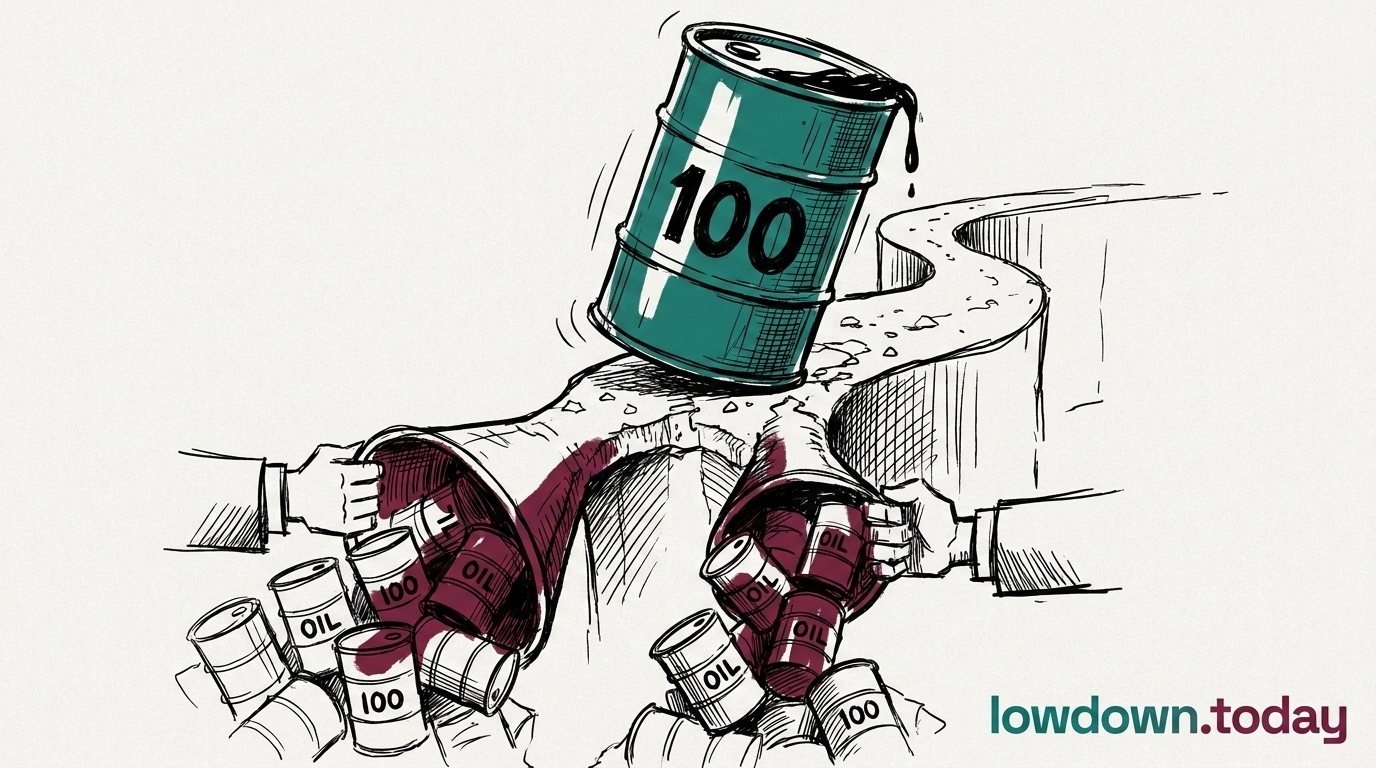
Brent Crude closed at $112.57 on 28 March, up 4.22% on the day. Pre-war Brent was $67.41; the current price represents a 67% increase in 29 days. The Houthi entry and Iran's firm rejection of negotiations drove the reversal. 1

The IEA's record 400 million barrel emergency release, the largest in the agency's 50-year history, has not stabilised prices. The IEA itself said why: "The most important factor is resumption of regular transit through the strait of Hormuz." 2 European reserves are predominantly industry-held: 74.8 million barrels from industry versus 32.7 million from government, giving European governments less direct control than the headline figure implies.

DoW CEO Jim Fitterling stated the damage is already locked in: even if Hormuz reopens tomorrow, petrochemical supply chains will take 250-275 days to unwind. The US-Asia petrochemical pricing gap has surged from under $500 to over $1,200 per metric tonne. 3 US farmers face a 2 million tonne urea shortfall during spring planting, with urea prices up 49% to $720 per tonne. Corn and wheat yields on affected fields could fall 10-20%, with downstream effects on global grain prices by autumn.

Deep Analysis

In plain English

Oil prices closed at $112.57 per barrel on 28 March, up about 4% on the day. Before the war started, a barrel cost $67.41. The 67% rise in 29 days is one of the fastest sustained oil price increases in modern history. The IEA, a group of oil-consuming countries, released the largest emergency oil reserve in its history: 400 million barrels. It has not reduced prices. The IEA itself said why: reserves cover a temporary supply disruption; they cannot substitute for a closed shipping route. For a British driver, $112 oil means roughly £1.80 per litre at the pump. For farmers, fertiliser is the bigger problem. Urea, the chemical used to grow corn and wheat, has risen 49% in price and the US faces a 2 million tonne shortage this spring planting season. Crop yields could fall 10-20%, and those effects will reach food prices by autumn.

What could happen next?
  • Consequence

    A ceasefire today does not end the economic damage: Dow's 250-275 day supply chain unwind means petrochemical-driven inflation persists into Q1 2027 regardless of conflict resolution.

  • Risk

    The 2 million tonne urea shortfall is not substitutable within a planting season; US crop yields in autumn 2026 are already compromised regardless of war outcome.

First Reported In

Update #50 · Houthis join; Iran holds two chokepoints

Fortune· 28 Mar 2026
Read original
Different Perspectives
India
India
India buys more Saudi crude than any other country and has 2.5 million nationals working in the kingdom, so a $100 Brent and a live strike on Saudi tankers reach New Delhi through both fuel bills and remittance risk. Neither channel has an alternative route the way Saudi Arabia's own pipeline does.
Qatar
Qatar
Qatar co-authored the four-mediator ten-day ceasefire proposal alongside Egypt, Pakistan and Oman, centred on resuming Hormuz navigation, while separately pursuing its dated compensation claim against Iran at the UN Security Council filed on 21 July. Doha is mediating and litigating in the same week.
Israel
Israel
Israeli intelligence, reported by the Wall Street Journal, assesses Iran moved thousands of centrifuges and part of its roughly 440kg enriched-uranium stock into Pickaxe Mountain after the June 2025 strikes on its three main nuclear sites. Some of the US refuelling aircraft now deploying to the region are bound for Israeli bases and Ramon Airport.
Houthis
Houthis
Yahya Saree announced the missile and drone strikes on the Encelia and Layla on 22 July as enforcement of the embargo his forces had declared by radio warning alone two days earlier. Six vessels already turned back on the broadcast; the strike shows Houthi forces will use weapons once warnings stop working.
Saudi Arabia
Saudi Arabia
Saudi Arabia's state news agency confirmed only a fire on the Encelia's bow, with the crew safe; the Layla strike remains unconfirmed by Riyadh. The kingdom built its Petroline pipeline specifically to bypass Hormuz through the Red Sea, so the tanker fire lands on the route Riyadh had already spent billions escaping.
United States
United States
Washington is weighing both ten-day proposals but wants a longer truce than either offers, and moved F-16 and F-35 jets plus refuelling aircraft into the region while it decides. That deployment, not Trump's Pickaxe Mountain remarks, is the measurable US action, buying options for the day talks fail rather than betting on them.