Skip to content
You can now search across every topic, entity and event.What's new
Iran Conflict 2026
22JUL

Hormuz open to friends, shut to enemies

3 min read
12:09UTC

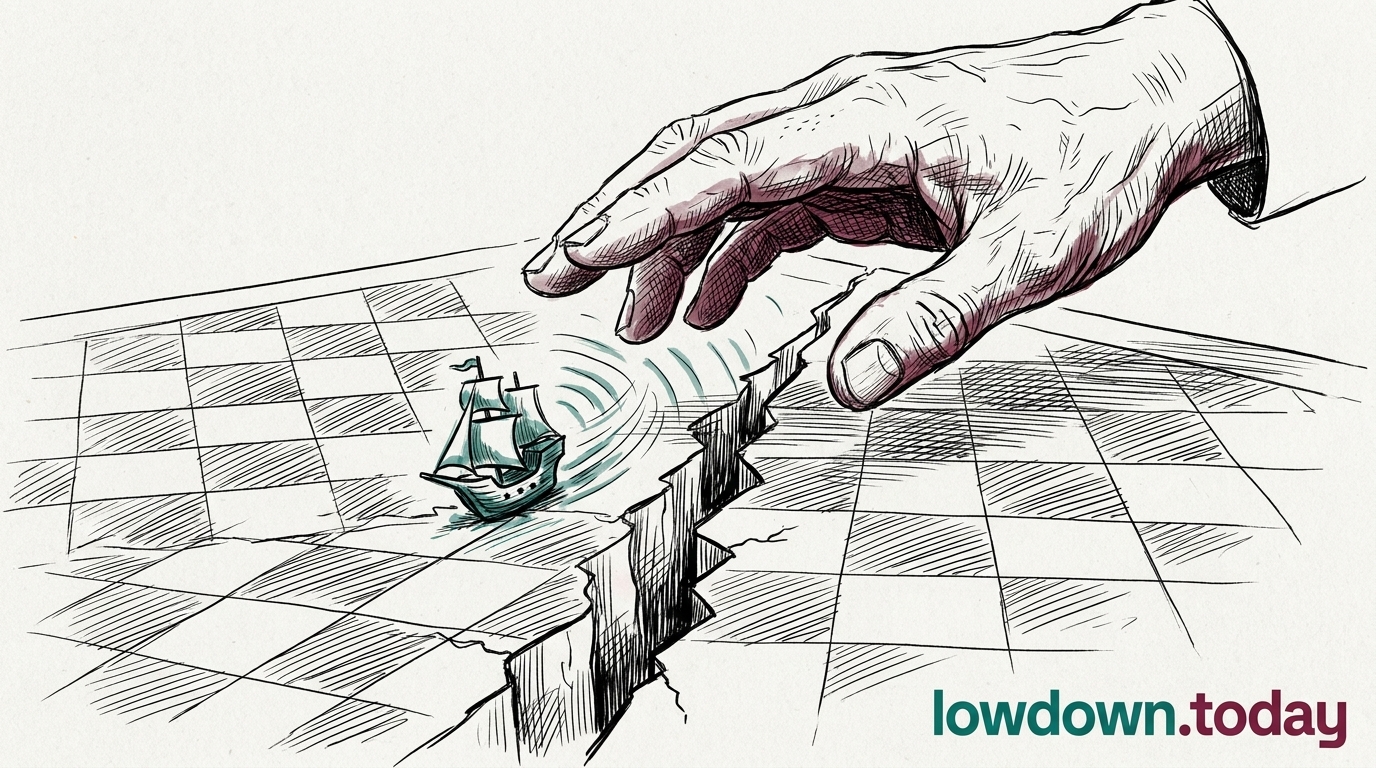
Iran's foreign minister told Japanese media the strait is blocked only for hostile nations — the first official articulation of a selective blockade doctrine designed to fracture the coalition arrayed against Tehran.

ConflictDeveloping
Key takeaway

Selective passage weaponises transit rights as diplomatic currency while denying opponents a unified casus belli.

Iranian Foreign Minister Abbas Araghchi told Japan's Kyodo News: "the strait is closed only to ships belonging to our enemies, countries that attack us. For other countries, ships can pass through the strait." The audience was deliberate. Japan depends on Hormuz for more than 90% of its Middle Eastern crude imports and was granted passage the same week. Araghchi's statement codifies what the IRGC toll system had already established in practice — a selective blockade distinguishing between hostile and non-hostile nations.

Under international maritime law, all vessels hold transit passage rights through straits used for international navigation. A blanket Hormuz closure would unite maritime powers against Tehran and provide clear legal grounds for military enforcement. A selective closure divides them. Nations that joined the 22-country demand for reopening but pledged no warships NOW have a route to continued energy access — provided they keep their commitments rhetorical. Iran's doctrine rewards the gap between words and action that has characterised the international response. The seven-nation statement from 19 March produced no vessels; the expanded 22-nation version tripled the signatories and still produced none .

Araghchi's framing is consistent with Iran's broader negotiating posture. Days earlier, he told The National that Iran does not "believe in a ceasefire" and set conditions including removal of all US bases from the region and reparations . The selective blockade is not a de-escalation offer. Tehran maintains the military closure against US-aligned shipping while building bilateral dependencies with non-aligned states — dependencies that give each country an individual reason to resist joining any enforcement Coalition. For Washington, the structural problem is plain: every nation that secures bilateral passage from Iran has less incentive to challenge Iran's control of the strait.

Deep Analysis

In plain English

International law normally guarantees all ships the right to pass through major straits like Hormuz. Iran is claiming that, because it is at war, it can decide who gets through based on whether their country is an enemy. It has told Japan it may pass; US-allied countries cannot. This is legally contested — UNCLOS does not permit this discrimination — and it is deliberately designed to split potential opponents by giving some of them a reason not to enforce the rules.

Deep Analysis
Synthesis

By communicating the policy to a Japanese outlet rather than through formal diplomatic channels, Iran simultaneously sends three distinct messages: to Tokyo (passage is available), to non-aligned states (apply for your own exemption), and to the US (the closure has third-party legitimacy). The choice of venue is itself a diplomatic instrument.

Root Causes

Iran's selective blockade doctrine exploits a structural gap in UNCLOS enforcement: no automatic mechanism exists for enforcing transit passage rights, and enforcement depends entirely on state initiative and collective political will. A selective closure — which gives major powers a financial reason not to enforce — is specifically calibrated to paralyse that will.

Escalation

The public articulation of the doctrine locks Iran in. Araghchi's statement to Kyodo News — a deliberate choice of non-Western media venue — makes selective closure official Iranian policy. Iran cannot quietly reopen the strait to all shipping without a visible public concession, raising the political cost of de-escalation for Tehran regardless of military outcome.

What could happen next?
  • Precedent

    If Iran's selective blockade doctrine is tolerated, it establishes that belligerent states may discriminate among shipping by flag-state political alignment, rewriting the legal architecture of international straits passage.

    Long term · Assessed
  • Consequence

    Non-aligned states granted passage acquire a covert dependency on Tehran: passage can be revoked if their political alignment shifts, creating permanent ongoing Iranian leverage over their energy security.

    Medium term · Suggested
  • Risk

    The explicit public statement forecloses quiet diplomatic resolution — Iran cannot reopen the strait to all shipping without a public concession that signals domestic weakness.

    Short term · Assessed
First Reported In

Update #45 · Ultimatum expires; Iran tolls Hormuz at $2m

Al Jazeera· 23 Mar 2026
Read original
Causes and effects
This Event
Hormuz open to friends, shut to enemies
By drawing an explicit distinction between hostile and non-hostile nations, Iran converts a military closure into a diplomatic instrument that penalises coalition membership and rewards strategic ambiguity.
Different Perspectives
Jordan
Jordan
Jordan's armed forces downed three Iranian missiles on Tuesday with no casualties, a second successful interception since the 19 July strike on Muwaffaq Salti that killed three US service members. Amman has neither confirmed nor denied ISW's assessment that its intelligence sharing is a Russia-China cover story.
Operation Aspides
Operation Aspides
Operation Aspides has not needed to intervene against the Houthi Bab al-Mandab embargo: six vessels, including the Chinese VLCC Xin Long Yang, reversed course after radio hailing alone, with no vessel boarded, fired on or stopped by force.
Pete Hegseth, US Secretary of War
Hegseth told the Senate Appropriations Committee the campaign has cost $37.5 billion so far, without saying whether the figure is obligated, appropriated or incremental. It is the first cost Washington has put on the war, arriving as OMB seeks $87.6 billion for the wider supplemental.
Iran's IRGC and Artesh
Iran's IRGC and Artesh reported destroying radar and Patriot installations at four Gulf bases on Tuesday night, the fifth dated iteration of the same claim against the same sites since 13 July. Neither Kuwait nor Bahrain has named or confirmed a single base as destroyed.
Saudi Arabia
Saudi Arabia
Riyadh has pressed Washington to end the Hormuz blockade specifically to remove Tehran's incentive for the Houthis to escalate Bab al-Mandab beyond radio warnings. It treats the embargo as coordinated pressure on Saudi shipping tied to the Hormuz campaign, not an independent Yemeni action.
Kuwait's Ministry of Electricity, Water and Renewable Energy and defence ministry
Kuwait reported power and desalination stations struck for a fourth consecutive day and four cruise missiles plus 21 drones intercepted since dawn Wednesday, while its defence ministry statement used only the word interception, never destruction. Kuwait has confirmed no Iranian claim of a destroyed base.