Skip to content
You can now search across every topic, entity and event.What's new
Iran Conflict 2026
19JUL

Qatar reopens its waters on Monday

1 min read
14:05UTC

Doha will admit all maritime traffic from Monday 27 July, the first Gulf state to formally reverse a wartime shipping restriction.

ConflictDeveloping
Key takeaway

Qatar lifts its wartime shipping restriction on Monday, the first Gulf state to do so.

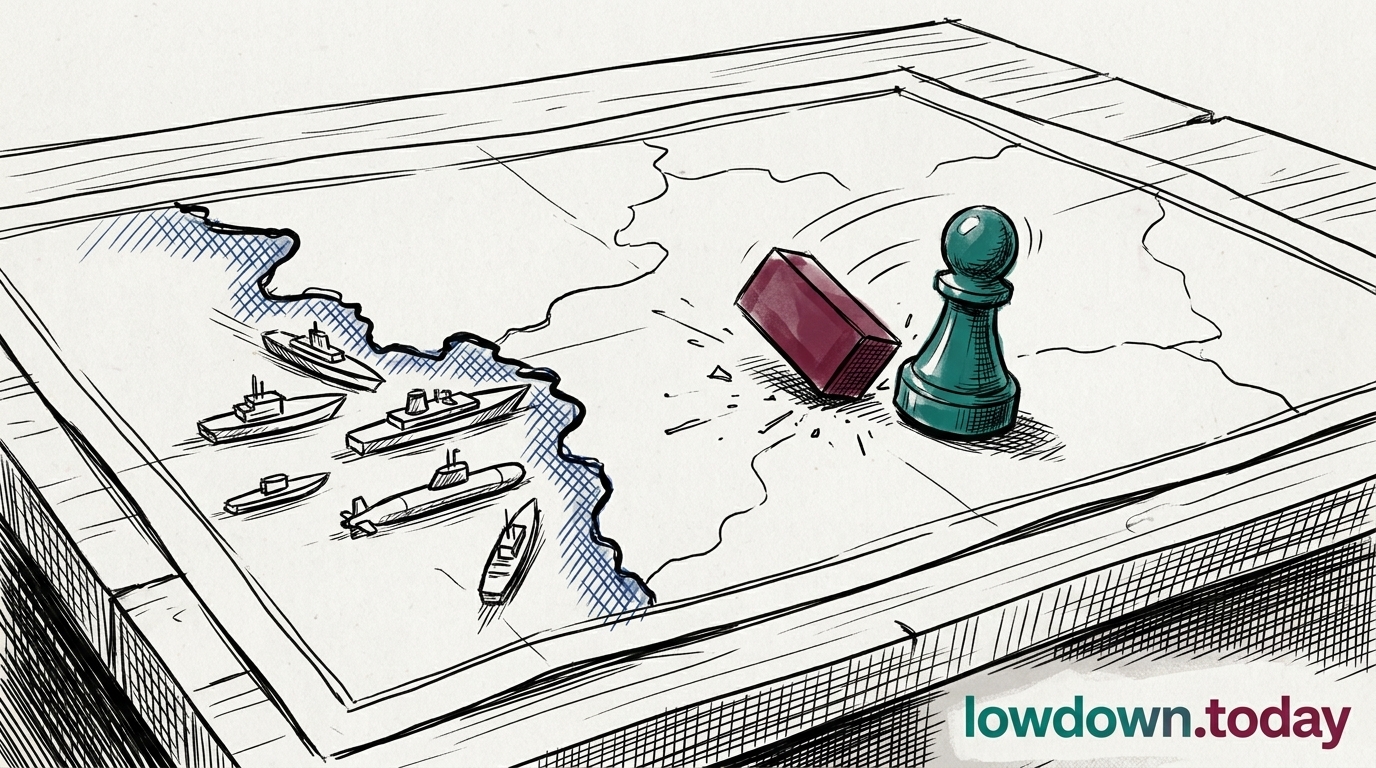
Qatar will reopen its waters to all maritime traffic from Monday 27 July, CNN reported, reversing the wartime restriction Doha imposed as strikes and interdictions spread through the Gulf 1. No other Gulf state has yet lifted one.

Qatar has more reason than most to try. It exports liquefied natural gas through the strait of Hormuz and nothing else, with no pipeline alternative to the sea, so every week of suppressed traffic bills directly to the Qatari state. It also hosts CENTCOM's forward headquarters at Al Udeid and has mediated between Washington and Tehran throughout, which makes a reopening an assertion of confidence as much as a commercial decision.

Whether traffic follows the permission is a separate question, and the answer will arrive within days. Volker Turk, the UN High Commissioner for Human Rights, was urging action on 6,000 seafarers stranded in the strait as recently as 24 July , which is what happens when charterers and underwriters, rather than governments, are setting the sailing schedule. Doha can open its own waters; it cannot open the corridor beyond them.

Deep Analysis

In plain English

Qatar will reopen its coastal waters to all ships from Monday 27 July, becoming the first Gulf country to formally cancel a wartime shipping restriction. This might sound like a sign the war is calming down, but the timing is odd: it comes just as the nearby Strait of Hormuz, the main channel connecting the Gulf to the open ocean, is recording some of its lowest ship-traffic numbers of the entire war. Qatar appears to be judging that its own waters are safe enough to reopen even though the wider region is not.

Deep Analysis
Root Causes

Qatar's incentive to reopen is structural: it is the world's second-largest exporter of liquefied natural gas, shipped almost entirely through Ras Laffan, and a prolonged shipping freeze costs it export revenue that oil-exporting neighbours can partially offset through pipeline routes Qatar does not have.

Reopening now, even as the wider strait records some of its lowest transit counts of the war, signals Doha judging the risk to its own waters as separable from the risk in the strait itself, a distinction other Gulf states with less LNG-specific exposure have not yet been willing to make.

What could happen next?
  • Opportunity

    If Qatar's reopening holds without incident, it could pressure other Gulf states to reconsider their own restrictions.

  • Meaning

    The mismatch between Qatar's reopening and the strait's near-record-low transit counts shows individual Gulf states are now making separate risk calculations rather than acting as a bloc.

First Reported In

Update #162 · Munitions, not Iran, halted US bombing

CNN· 26 Jul 2026
Read original
Causes and effects
This Event
Qatar reopens its waters on Monday
A declared reopening tests whether official permission can pull commercial traffic back while the shooting continues.
Different Perspectives
China's foreign ministry
Spokesman Lin Jian rejected Treasury Secretary Scott Bessent's 25 August warning that Iranian oil buyers face an "economic D-Day", saying sanctions do not help and that Beijing would safeguard its own rights and interests. China's Iranian crude imports had already halved for unrelated reasons.
Iraq's government and Erbil authorities
Erbil authorities said 10 explosive-laden drones were shot down over the city on 1-2 September with no casualties. Iraq's government condemned the attacks without naming Iran as their source, and neither Washington nor Baghdad confirmed the IRGC's claim to have hit US bases there.
Bahrain Defence Force
The General Command said air defences intercepted several Iranian missiles and drones on 1-2 September and called the use of such weapons against civilians and private property a flagrant violation of international humanitarian law.
Kuwait's Fire Force and foreign ministry
KUNA reported a hostile Iranian drone struck a residential complex in Kuwait City on 2 September; Fire Force spokesman Brigadier General Mohammad Al-Gharib said losses were confined to property. Kuwait's foreign ministry called the attack a clear breach of its sovereignty.
Jordan's Armed Forces
Petra carried a statement that air defences intercepted eight missiles violating Jordanian airspace early on 31 August and 10 of 13 fired on 1 September. The statement named no target and did not address the IRGC's claim to have struck Camp Titin and killed US personnel.
CENTCOM
CENTCOM
CENTCOM's 1 September target list named IRGC air defence, radar, maritime and mine-laying sites in Iran but no tanker, after Axios reported anonymous officials describing a Trump-approved "tanker for tanker" drone policy. A CENTCOM spokesman declined to confirm the policy and referred questions to policymakers.