Skip to content
You can now search across every topic, entity and event.What's new
Iran Conflict 2026
19JUL

Escort capacity caps Hormuz LNG throughput

2 min read
14:05UTC

Lloyd's List reports naval escorts can clear only three to four tankers a day through Hormuz on seven to eight warships, a ceiling that caps the restart regardless of diplomacy.

ConflictDeveloping
Key takeaway

Escorts clear only three to four ships a day, so throughput scales with warships, not diplomacy.

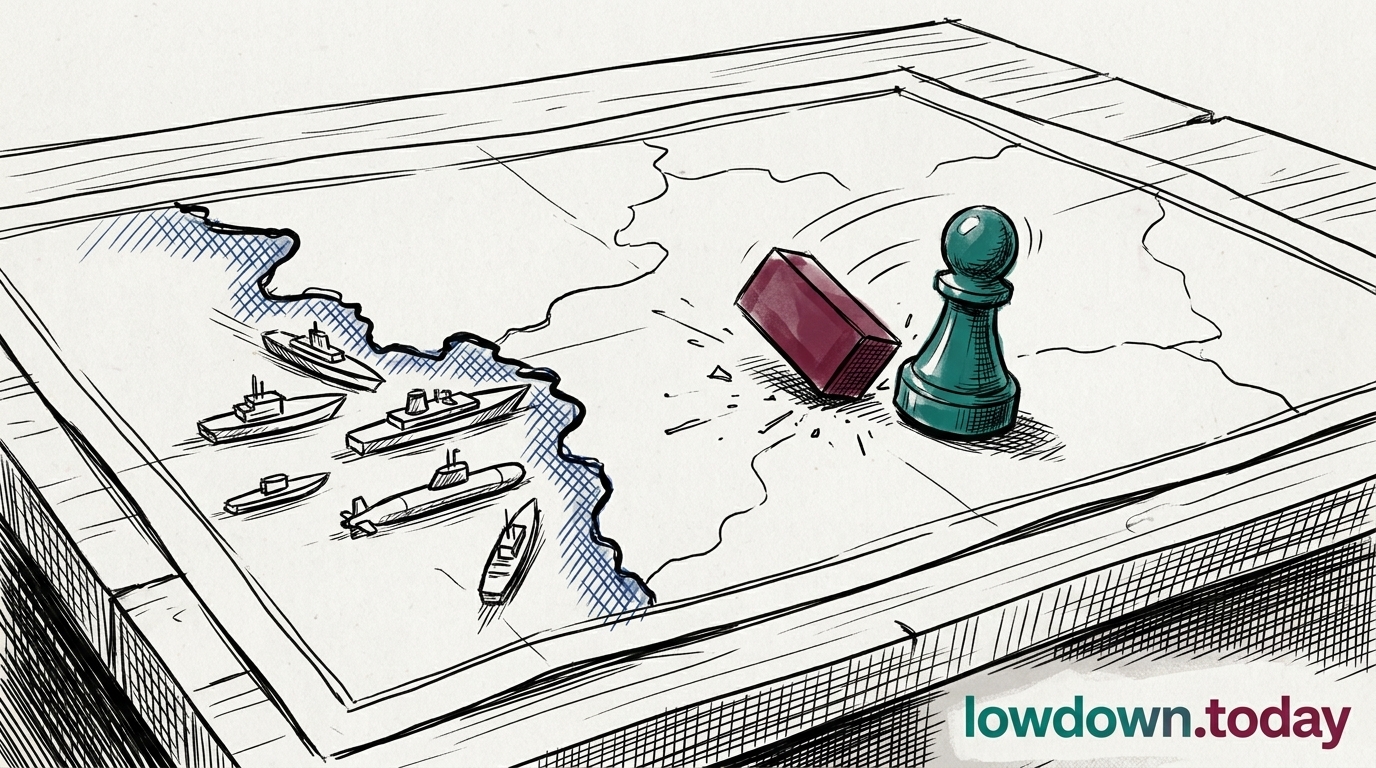
Naval escorts can currently move only three to four commercial ships a day through the Strait of Hormuz, using seven to eight escort warships for air cover against the residual mine and midget-submarine threat, Lloyd's List reports. The maritime publication frames the ratio as a fixed logistics ceiling, not a temporary bottleneck.

The corridor reopened for commercial traffic only when the first Hormuz carrier cleared to India in mid-June , and it has stayed thin since. TTF swung on each Hormuz headline over the following fortnight without settling , because the escort ratio cannot scale to normal volumes without a step-change in warships committed to the corridor. This extends the same capacity story, rather than opening a new one.

For QatarEnergy the implication is that its restart curve tracks the convoy schedule, not the communiques. Cargoes clear at the speed escorts allow, so a de-escalation headline shifts sentiment faster than it shifts throughput. A spreads desk watches the escort count as the real throttle on Qatari send-out, and treats any TTF relief on talk of normalisation as a fade candidate until the warship commitment actually rises.

Deep Analysis

In plain English

Even though Iran backed off its threats, only a handful of gas tankers can get through the Strait of Hormuz each day. That's not because of politics, it's because only seven or eight warships are escorting them, and each convoy trip takes time. Think of it like a single-lane bridge with a police escort: however many cars want to cross, only as many as the escort can handle get through. Until more warships join, three or four tankers a day is the limit, no matter how calm the diplomatic picture looks.

Deep Analysis
Root Causes

Sustaining a single escorted convoy on station requires roughly three committed warships for every one actually escorting at any given moment, the rest cycling through transit, refuelling and maintenance. Seven to eight warships is therefore close to the maximum convoy cadence a single coalition can sustain without redeploying vessels from other commitments.

Raising the ceiling means adding hulls, not paperwork, which is why Lloyd's List frames the bottleneck as logistical rather than diplomatic.

What could happen next?
  • Meaning

    QatarEnergy's restart pace is bound by convoy escort capacity rather than by diplomacy or terminal readiness, and will not lift until more warships join the corridor.

First Reported In

Update #23 · The EU's own regulator says the ban isn't biting

Lloyd's List· 3 Jul 2026
Read original
Different Perspectives
China's foreign ministry
Spokesman Lin Jian rejected Treasury Secretary Scott Bessent's 25 August warning that Iranian oil buyers face an "economic D-Day", saying sanctions do not help and that Beijing would safeguard its own rights and interests. China's Iranian crude imports had already halved for unrelated reasons.
Iraq's government and Erbil authorities
Erbil authorities said 10 explosive-laden drones were shot down over the city on 1-2 September with no casualties. Iraq's government condemned the attacks without naming Iran as their source, and neither Washington nor Baghdad confirmed the IRGC's claim to have hit US bases there.
Bahrain Defence Force
The General Command said air defences intercepted several Iranian missiles and drones on 1-2 September and called the use of such weapons against civilians and private property a flagrant violation of international humanitarian law.
Kuwait's Fire Force and foreign ministry
KUNA reported a hostile Iranian drone struck a residential complex in Kuwait City on 2 September; Fire Force spokesman Brigadier General Mohammad Al-Gharib said losses were confined to property. Kuwait's foreign ministry called the attack a clear breach of its sovereignty.
Jordan's Armed Forces
Petra carried a statement that air defences intercepted eight missiles violating Jordanian airspace early on 31 August and 10 of 13 fired on 1 September. The statement named no target and did not address the IRGC's claim to have struck Camp Titin and killed US personnel.
CENTCOM
CENTCOM
CENTCOM's 1 September target list named IRGC air defence, radar, maritime and mine-laying sites in Iran but no tanker, after Axios reported anonymous officials describing a Trump-approved "tanker for tanker" drone policy. A CENTCOM spokesman declined to confirm the policy and referred questions to policymakers.