Skip to content
Welcome, thoughtbot's Giant Robots listeners!Start here
Iran Conflict 2026
25JUN

First sailors die in the tanker war

2 min read
14:30UTC

The IRGC disabled two supertankers in Omani waters on 14 July, killing one seafarer by UAE count and two by the International Maritime Agency's, the first crew deaths of the shipping war.

ConflictDeveloping
Key takeaway

The first crew deaths give war-risk insurers a body count to cite, freezing even legally shippable Gulf cargoes.

The Islamic Revolutionary Guard Corps (IRGC) disabled two supertankers in Omani waters on 14 July, saying it acted after "repeated warnings"⁠1. United Arab Emirates (UAE) reporting put the crew toll at one killed; the International Maritime Agency counted two seafarers dead⁠2. Every prior tanker strike had produced damage without confirmed fatalities, from the Qatari carrier Al Rekayyat on 7 July to the container ship GFS Galaxy on 12 July, both of which left crews shaken but alive.

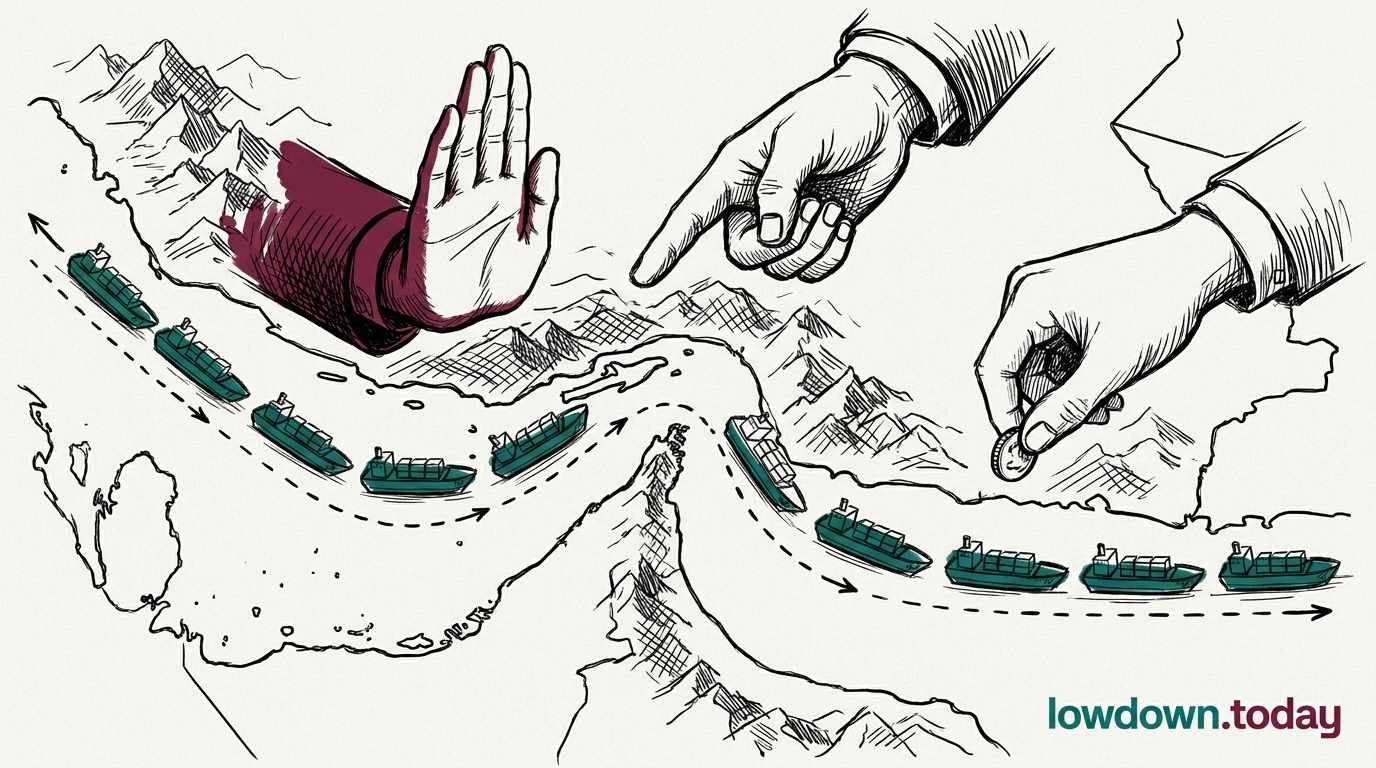
Those deaths sharpen the insurance squeeze that has strangled the strait since the first strike. London's Protection and Indemnity (P&I) clubs have held their Hormuz war-risk exclusion in force since Al Rekayyat, and a confirmed fatality gives underwriters a harder reason to keep it there. Licensed cargoes cannot sail while the exclusion stands, whatever a sanctions licence permits, so the human cost feeds straight back into the freight that is not moving.

One caution on the count itself. Neither the one-death nor the two-death figure has been independently corroborated, and the discrepancy between the UAE and the International Maritime Agency is unresolved⁠3.

Deep Analysis

In plain English

Ships have been damaged in the strait for months without anyone dying. This is different because sailors were actually killed, which raises the moral and legal stakes and makes any future strike harder to treat as an acceptable risk of doing business.

Deep Analysis
Root Causes

The competing casualty counts stem from parallel, uncoordinated reporting chains: UAE authorities report through their own maritime rescue apparatus while the International Maritime Agency compiles figures from vessel operators and insurers, with no shared methodology for confirming a death at sea.

A deeper cause is the absence of a sanctioned exit route: the IMO evacuation corridor has been suspended since the Ever Lovely strike in late June, leaving crews with no safe passage and raising the odds that any strike produces a confirmed fatality rather than a near-miss.

What could happen next?
  • Consequence

    Confirmed deaths, rather than vessel damage, typically harden flag-state and insurer positions on a route permanently rather than provisionally, raising the odds that Hormuz war-risk premiums stay elevated even if the blockade itself eases.

First Reported In

Update #154 · US enforces Hormuz closure with blockade

Al Jazeera· 15 Jul 2026
Read original →
Different Perspectives
Office for Budget Responsibility
The OBR's 28 October forecast assumed $82 oil for 2026 and 2027, from market prices for the ten working days to 19 August, and blamed dearer wholesale energy on the war without naming Iran. It expects CPI inflation close to 4% in early 2027 even at that price.
Hengaw, Kurdish rights group
Hengaw reported the 3 November hangings of Amirhossein Maleki and Amirhossein Ebrahimi in Isfahan, saying Ebrahimi was tortured into confessing and that nine of 12 people sentenced to death in the case have now been hanged. Iran's judiciary holds that the defendants killed members of the security forces.
FINTRAC, Canada's financial intelligence unit
FINTRAC worked with the US Treasury on the 6 November designation of eight money services businesses in British Columbia, Ontario and Quebec. Treasury says the businesses still operate, some under new names, so closing them falls to Ottawa.
Abdul Qadir al-Dakhil, Governor of Nineveh
Al-Dakhil cancelled three Mosul International Airport contracts on 7 November over alleged links to armed groups, after meeting Prime Minister Ali al-Zaidi in Baghdad. He named no group or company, and said the contracts will go to international companies.
Kuwait
Kuwait
Kuwait condemned the Houthi missile fired towards the Madinah region on 5 November and restated its support for Saudi Arabia, the Qatar News Agency reported. Its state tanker company, Kuwait Oil Tankers Company, is among the Gulf state fleets on Iran's expanded Hormuz list.
Scott Bessent, US Treasury Secretary
Treasury designated an alleged Chandigarh false-flag network on 4 November and eight Canadian exchangers on 6 November, while State sanctioned alleged MANPADS intermediaries. None of the actions touches an oil buyer; they target the paper, cash and procurement around Iran's trade.

Written with AI from Lowdown's published reporting. Not individually reviewed by an editor. Editorial standards.

