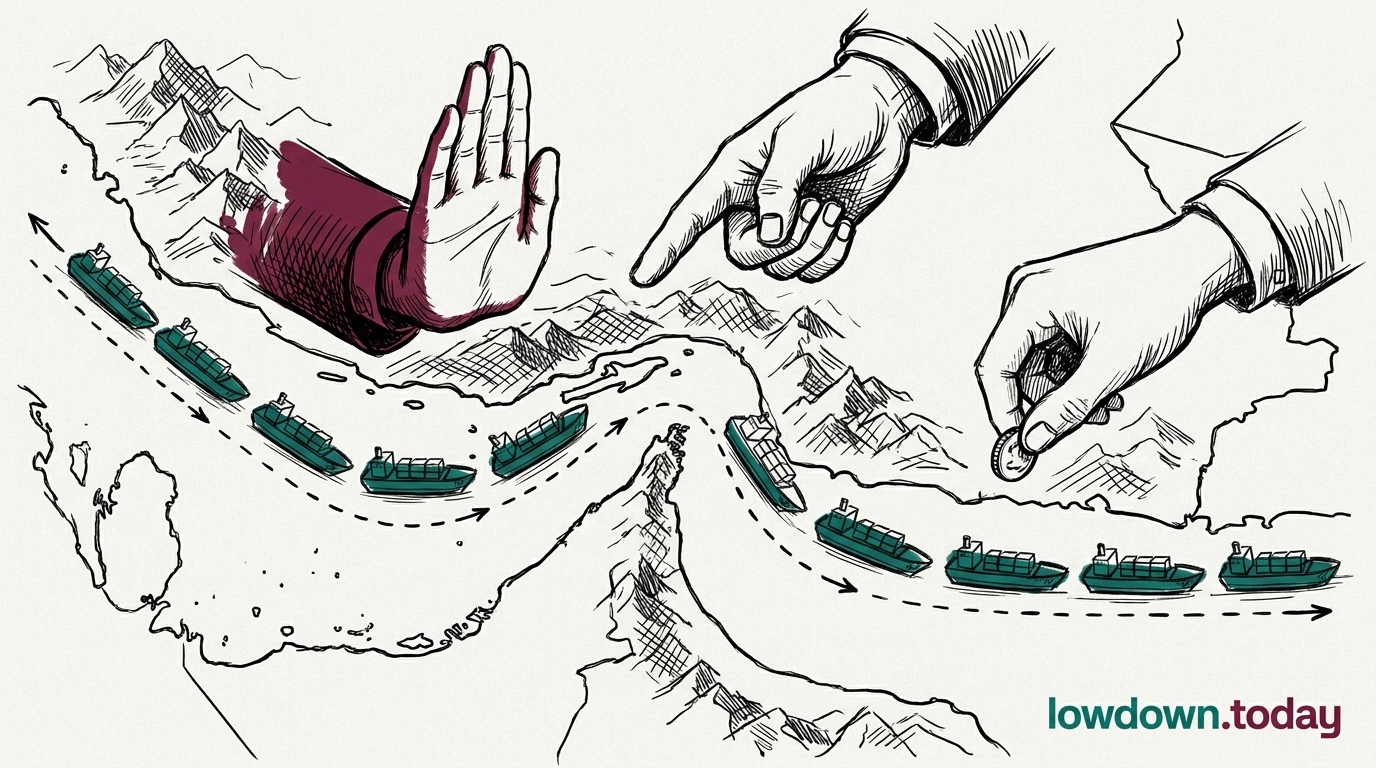
The European Commission, the EU's executive body, moved to freeze the $44.10 G7 price cap on Russian crude until January 2027, pausing the adjustment mechanism and killing the 15 July formula review that would have auto-lifted the ceiling toward roughly $751. The cap is the legal limit on what buyers can pay for Russian seaborne crude and still access Western shipping and insurance. The 15 June mini-package of 34 individuals and 47 entities is adopted; the freeze itself is sourced to Baker McKenzie synthesis, with no adopted Council legal text as of 18 June.
On a falling-Brent formula, the 15 July review would have lifted the $44.10 ceiling toward $75, restoring Russian earnings just as the GL 134C vessel-services lapse cut compliant-terms placement, so the freeze and the review were set to collide. The two clocks pulling opposite ways into Evian were flagged last week. Pausing the mechanism keeps both squeezes live at once rather than letting one undo the other.
Malta and Greece, both major shipowning states, continue to block the full maritime-services ban that would extend coverage to Western shipping services, leaving the 21st package partial. A freeze that adopts before 15 July locks the revenue constraint; a Malta-Greece stall past that date converts the cap into a decorative mechanism as the reference price collapses, with the Urals discount given more room to widen if the cap holds while Brent falls.





