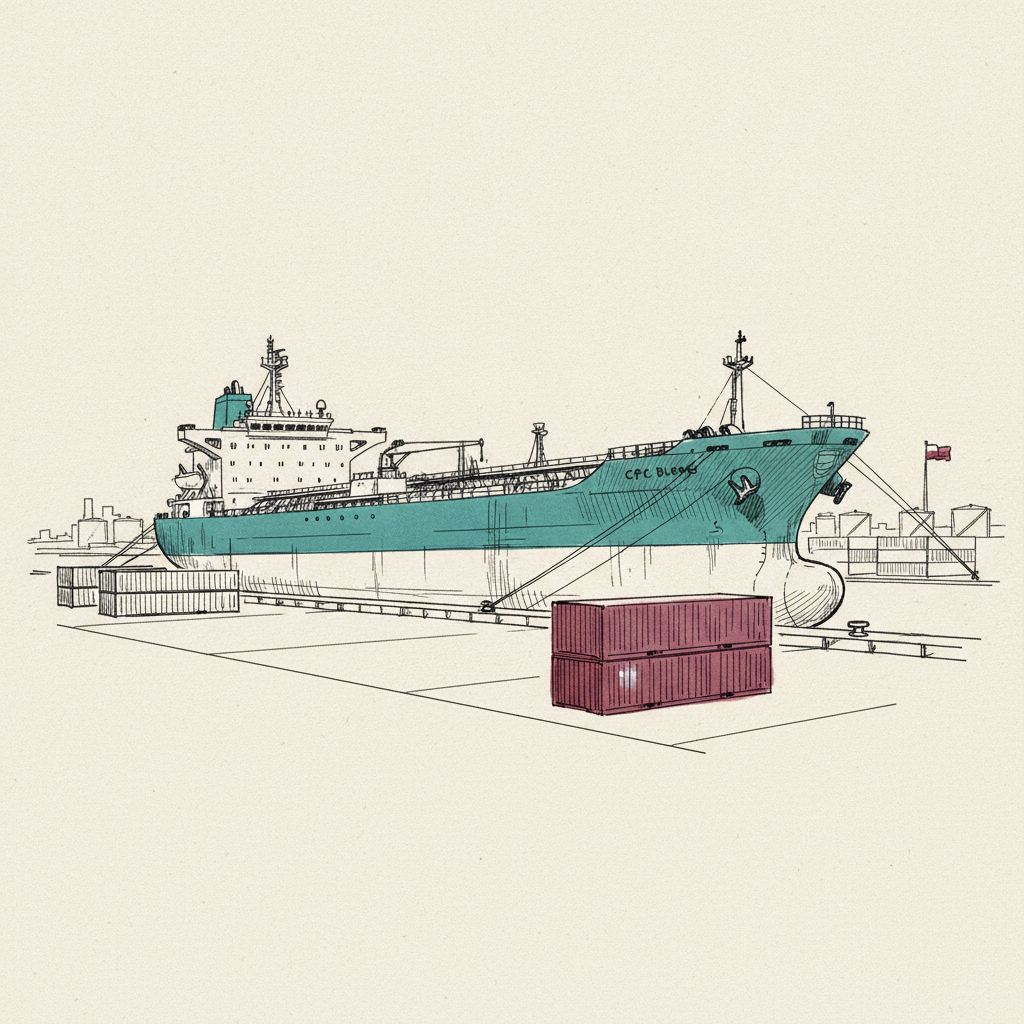
CPC Blend
Light sour Kazakh crude blend exported via Novorossiysk; 33° API, 0.59% sulphur.
Last refreshed: 8 June 2026
Why are European refiners scrambling for CPC Blend as Hormuz stays shut?
Timeline for CPC Blend
Mentioned in: EU moves to freeze the $44 cap
European Oil MarketsMed Aframax freight jumps as VLCCs hold
European Oil MarketsMentioned in: Lukoil-ISAB sale licence runs to 27 June
European Oil MarketsBackground
CPC Blend is Kazakhstan's primary crude export grade, a light sour oil with an API gravity of 33.3° and sulphur content of 0.59%, loaded at the Caspian Pipeline Consortium's Marine terminal at Yuzhnaya Ozereevka near Novorossiysk on Russia's Black Sea coast. The grade is a blend of seven Kazakh crude streams, of which Tengiz remains the largest component. The 1,580km pipeline from western Kazakhstan to Novorossiysk, commissioned in 2001, carries up to 1.3 million Barrels Per Day, representing roughly 80% of Kazakhstan's total oil production. European and Asian refiners prize CPC for its light sweet-adjacent quality and relatively low sulphur for a sour benchmark.
During the Hormuz crisis of 2026, the CPC/Augusta Suezmax route emerged as one of the few viable channels for non-Hormuz crude reaching Mediterranean refiners. The Suezmax route from Novorossiysk to Augusta in Sicily pushed to WS218 ($121,200/day) as of June 2026, reflecting acute demand from Italian and Spanish refiners losing access to Persian Gulf barrels. The CPC route matters because it passes through the Turkish Straits (Bosphorus and Dardanelles) rather than Hormuz or Suez, providing genuine route independence from The Gulf blockade.
The pipeline's vulnerability was demonstrated in April 2026 when Ukrainian drone strikes targeted the Novorossiysk terminal, briefly disrupting loadings and highlighting that the CPC route is itself exposed to conflict risk. That disruption underscored a broader supply-chain reality: with Hormuz blocked, any damage to either the CPC or Kirkuk-Ceyhan corridors removes a large fraction of the world's accessible non-Gulf crude from European markets simultaneously.
What is CPC Blend crude oil and where does it come from?
Why is the CPC Blend route important during the Strait of Hormuz blockade?
Was the CPC Novorossiysk terminal damaged in the Ukraine war?
How does CPC Blend compare to Brent crude in quality?


Written with AI from Lowdown's published reporting. Not individually reviewed by an editor. Updated 8 June 2026. Editorial standards.