Skip to content
You can now search across every topic, entity and event.What's new
Iran Conflict 2026
24JUN

Omani Vessels Bypass IRGC Corridor, Disable Trackers

2 min read
09:14UTC

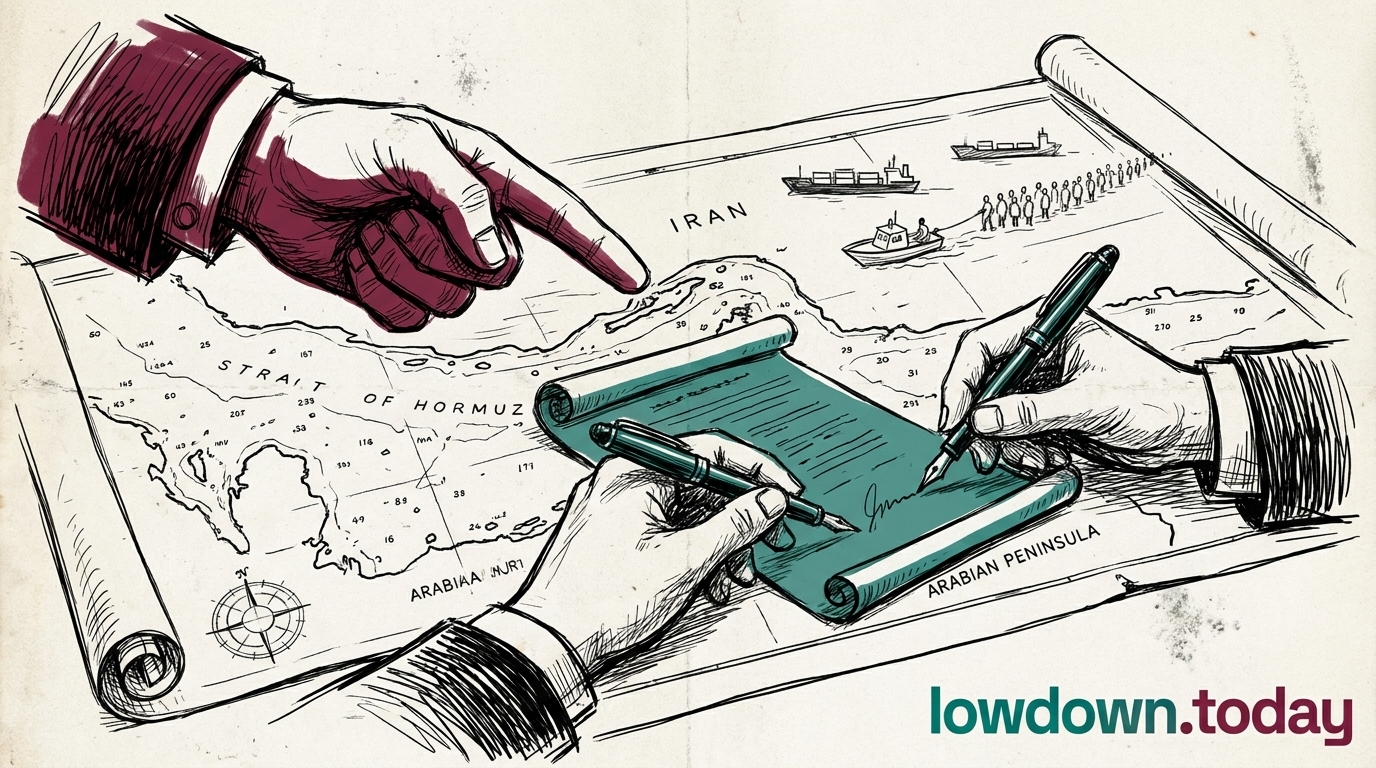
Three Omani vessels bypassed the IRGC's Larak Island toll corridor on 2 April, using the traditional international channel before disabling their AIS transponders, per Windward AI maritime intelligence.

ConflictDeveloping
Key takeaway

Oman's AIS-dark bypass suggests an undisclosed bilateral exemption from Iran's Hormuz toll, unconfirmed by either side.

Windward AI maritime intelligence tracked three Omani vessels using the traditional international Hormuz channel on 2 April, bypassing the IRGC's Larak Island toll corridor entirely. After completing the transit, the vessels disabled their Automatic Identification System (AIS) transponders, removing themselves from public tracking.

The Philippines deal and the Omani bypass occurred on the same day. The Philippines deal was announced through official diplomatic channels. The Omani manoeuvre was not. The deliberate AIS blackout after a corridor bypass is a signature of vessels that have received clearance through back-channels rather than the official toll mechanism. Vessels that have paid the IRGC toll have no reason to disable their transponders.

Oman has served as the primary Iran-West diplomatic backchannel for decades, facilitating the initial nuclear talks that led to the JCPOA. That history means Muscat's vessels bypassing the IRGC corridor is not an act of defiance; it is more likely an act of arrangement. An undisclosed bilateral exemption is consistent with both the AIS behaviour and Oman's established diplomatic pattern.

If confirmed, Oman's undisclosed deal and the Philippines' announced deal represent two distinct flavours of the same structural problem: the IRGC toll is already operating as a differentiated licensing framework rather than a blunt blockade, with exemptions allocated selectively across a fracturing coalition of former opponents.


Deep Analysis

In plain English

Three ships from Oman took a different route through the strait — one that avoids Iran's checkpoint — and then turned off their tracking systems. This strongly suggests Oman has a quiet deal with Iran that it has not announced publicly.

Deep Analysis
Root Causes

Oman's energy export dependency on Hormuz (it exports roughly 800,000 bpd through the strait) gives it both the motive and the leverage to negotiate a corridor arrangement with Iran.

Unlike the Philippines, which had to negotiate as a supplicant, Oman operates from a position of geographic leverage: its territory flanks the strait, and its cooperation with either side is operationally valuable.

Escalation

Stabilising for Oman-Iran relations; neutral for the broader conflict. Oman's backchannel function is a net positive for the prospect of indirect talks, as evidenced by the Axios report of US-Iran communication via Pakistan.

What could happen next?
  • Opportunity

    Oman's bilateral arrangement preserves its backchannel utility; Washington and Tehran are both likely to protect it as a communication line.

  • Meaning

    The IRGC's willingness to grant Oman an exception confirms the toll is a discretionary licensing system, not an absolute blockade — which creates negotiating space.

First Reported In

Update #57 · Bridge strike kills eight; Army chief fired

Windward AI· 3 Apr 2026
Read original
Causes and effects
Different Perspectives
Shipping and insurance industry
UKMTO counted about 20 US-facilitated Hormuz transits a day to 11 September against only 6 visible on AIS, with traffic still around 90% below the 138-a-day pre-war baseline. War-risk underwriters cannot price hulls they cannot see, or resolve whether the tanker El Gaia hit a mine, as Iran claims, or a missile and drone, as CENTCOM says.
European refiners
European refiners
European refiners, including Poland's Orlen, absorbed a roughly $26 gap between Dated Brent at $130.80 on 15 September and ICE Brent futures settling at $103.87 on 18 September, a spread that widened from $13.45 on 9 September rather than newly opening. Their futures hedges no longer cover what they now pay for physical barrels.
Saudi Arabia
Saudi Arabia
Saudi Aramco zeroed European term customers' October allocations and rerouted roughly 60 million barrels to Asia through Ras Tanura and Sohar, using Red Sea and Gulf terminal capacity built years ago to cut Hormuz exposure. Riyadh reallocated existing supply rather than negotiating a shortfall with Europe.
Qatar
Qatar
Qatar's energy minister Saad al-Kaabi told Bloomberg at the Qatar Economic Forum on 20 September that Bessent's two-year Hormuz-obsolescence forecast is wrong, and that Doha has deliberately built no bypass pipeline. Qatar's gas exports run through one waterway by choice, not oversight.
Iran (foreign ministry and Majlis)
Iran's foreign ministry and 130 Majlis deputies moved toward NPT withdrawal this week, with lawmaker Hossein-Ali Haji Deligani filing a triple-urgency bill on 20 September that Speaker Qalibaf has not yet scheduled. Tehran treats treaty membership as leverage still on the table, not yet spent.
Russia and China
Russia and China
Moscow and Beijing vetoed the Panel of Experts' renewal, maintaining Resolution 2231 lapsed in October 2025 and the 2025 snapback was never validly triggered, so the sanctions architecture the Panel enforces has no current legal standing. Both governments frame the veto as upholding law, not shielding Tehran.



