Skip to content
You can now search across every topic, entity and event.What's new
Iran Conflict 2026
23JUN

Oil priced a reopening that never happened

3 min read
11:42UTC

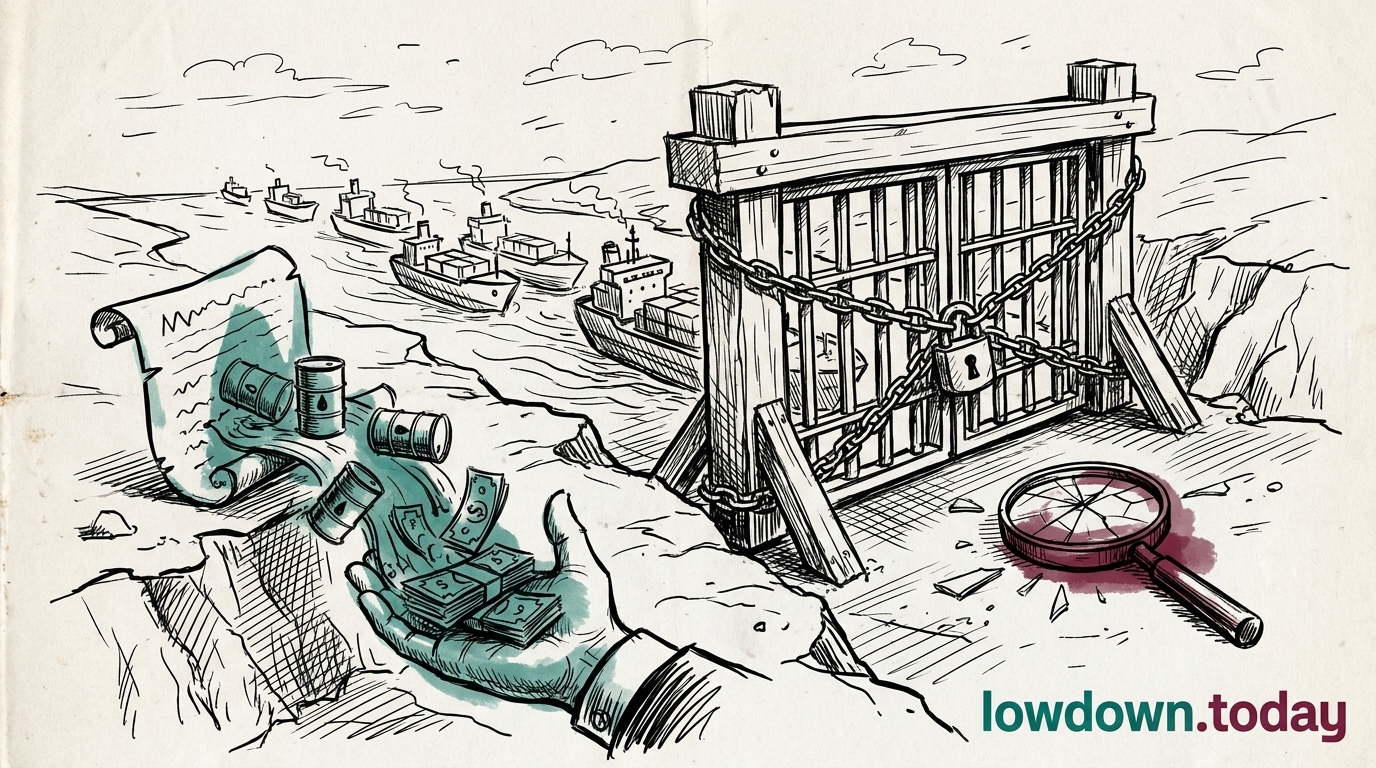
Brent crude held near $79.95 on 19 June, down about a tenth on the week, as traders priced a Hormuz reopening that no physical cargo has yet made real.

ConflictDeveloping
Key takeaway

Brent near $80 is the market hoping a strait reopens, not supply actually returning.

Brent Crude, the global oil benchmark, settled near $78.66 on 18 June and edged to roughly $79.95 on 19 June, down about 10 per cent on the week from above $100 at the height of the strait crisis 1. The fall tracked CENTCOM's lifting of the naval blockade: futures markets priced the diplomatic reopening the moment the order landed, then partially reversed as the insurer and mine reality set in .

At about $80 the market was not pricing a full supply return. The pre-conflict baseline was nearer $70, and Brent held its premium above that precisely because no additional Iranian or Gulf cargo had physically sailed. A barrel that cannot leave The Gulf, because no underwriter will cover the tanker carrying it, is a barrel the market can hope for but not buy. Price and supply parted ways: the futures curve repriced a strait that minesweepers had not cleared.

The United Arab Emirates' state oil producer had already assessed that stranded Hormuz barrels might not clear until 2027 , a judgement that still stood against the week's optimism. For consumers, petrol prices now reflect a reopening that has not happened. A single mine strike or an insurer hold could reverse the week's fall and send the benchmark back up, because the supply it is betting on remains, for now, theoretical.


Deep Analysis

In plain English

Oil prices on international markets fell about 10% in the week ending 19 June, as traders priced in the US-Iran peace deal and the end of the naval blockade. Brent crude settled near $78.66 on 18 June and edged to $79.95 on 19 June. Before the war started, the same benchmark sat around $70 a barrel. Financial traders moved faster than tanker ships can. The deal is signed, but the Strait of Hormuz still has mines in the water and London insurers still refuse to cover ships trying to cross. The UAE's state oil company assessed that the strait might not carry full cargo flows until 2027. Prices are cheaper than at peak war, but stranded supply means the pre-war $70 level is still months away.

What could happen next?
  • Consequence

    Brent at approximately $80 reflects a partial diplomatic risk-premium reduction but not a physical supply recovery. The remaining $10 premium above pre-conflict levels will compress as mine clearance progresses and insurers re-enter, but not until physical flows confirm the reopening.

  • Risk

    If Phase 2 nuclear talks fail or Iran invokes the MOU annulment clause over Lebanon, the diplomatic risk premium reverses and Brent recovers toward the $90-100 range seen during peak conflict.

First Reported In

Update #132 · Trump lifted the blockade, not the strait

CNBC· 19 Jun 2026
Read original
Different Perspectives
Turkiye
Turkiye
Erdogan followed the Pakistani delegation to Jeddah for an instrument that has not been signed. Ankara's entry widens Saudi Arabia's defence architecture beyond the existing Pakistan pact, adding a second non-Gulf military partner mid-conflict.
Oman
Oman
Muscat is the corridor's broker but has published nothing about the arrangement Fars describes on its behalf. The account leaves Oman administering outbound traffic only, a narrower role than the shared route its mediation has rested on since 1979.
Pakistan
Pakistan
Islamabad sent Sharif, Munir and Dar to Jeddah to widen a defence commitment it has honoured in cheaper registers since March, when Dar invoked the Saudi mutual defence pact. Jeddah tests whether that hedge becomes a binding trilateral instrument with Turkiye.
United States
United States
Washington rejected the Majlis Hormuz bill outright while CENTCOM's own tally kept climbing to 49 vessels redirected since 14 July. Both instruments tightened in the same week Trump promised the strait would reopen soon.
Iran
Iran
Iran's foreign ministry is selling a phased Hormuz corridor through Oman and denying any percentage cargo tariff, while its own Majlis is legislating fines to 20% and a bar on Israeli-linked cargo. The two accounts, from the same government, do not agree with each other.
Saudi Arabia
Saudi Arabia
Riyadh published a target forecast, not an attribution, for the campaign it says the Najran strike previewed. That keeps an Article 51 case available while it formalises a trilateral defence architecture with Pakistan and Turkiye.



