Skip to content
You can now search across every topic, entity and event.What's new
Iran Conflict 2026
23JUN

Hormuz tankers hit pre-war daily range

2 min read
11:42UTC

Al Jazeera counted 35 tankers exiting the Strait of Hormuz on Thursday 2 July, the first pre-war-typical daily total of the conflict, though its seven-day moving average still trails last year.

ConflictDeveloping
Key takeaway

Thirty-five tankers cleared Hormuz on 2 July, but the seven-day average still trails last year.

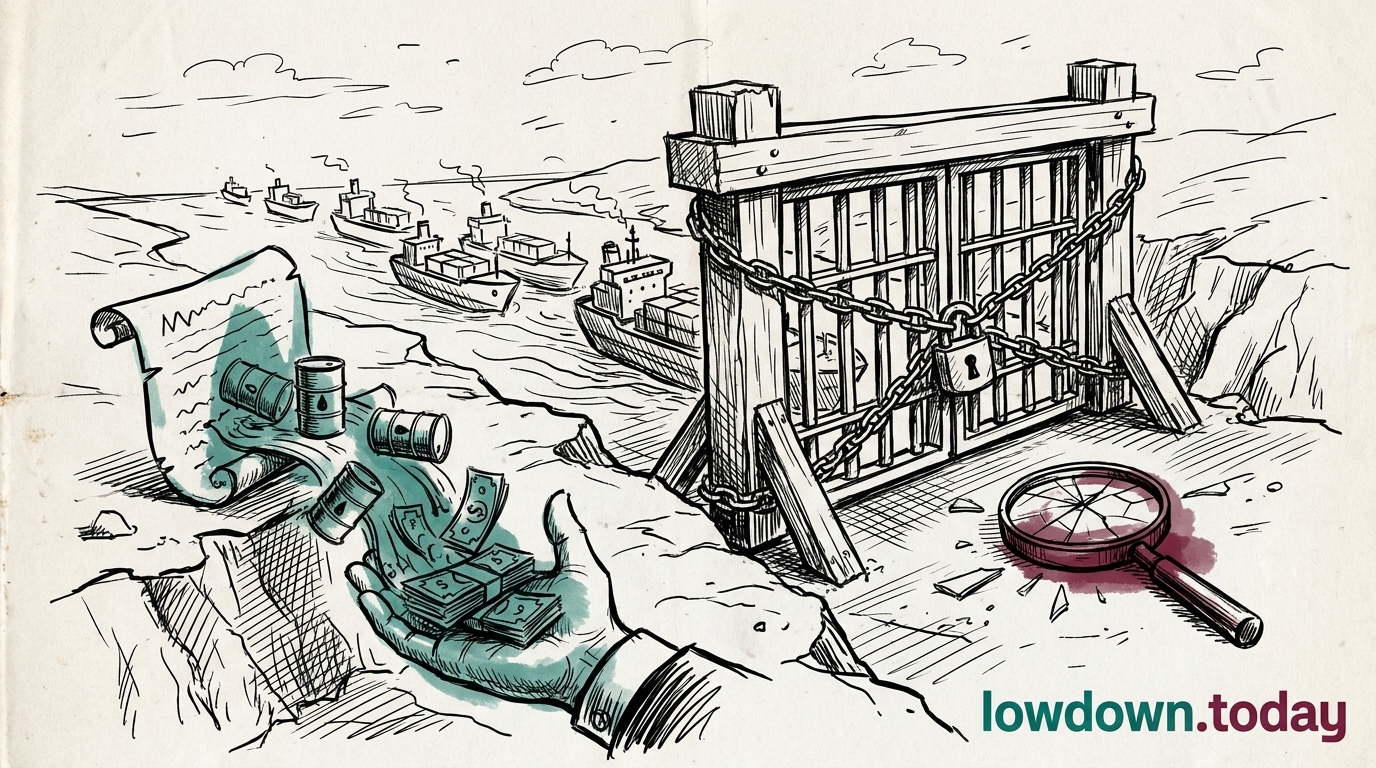
Al Jazeera counted 35 tankers exiting the Strait of Hormuz on Thursday 2 July, the first daily total back inside the pre-war-typical range since the conflict began 1. The broadcaster paired the count with a "has the oil shortage turned into a glut?" framing that moved quickly across trading desks.

Al Jazeera's own seven-day moving average still sits below last year's level, one strong session rather than a durable recovery. The Washington-Tehran arrangement runs on a 60-day interim transit-negotiation window dated from the 17 June memorandum, fragile by both sides' account.

IMF PortWatch put Hormuz transits at roughly a third of pre-crisis levels on its 3 July reading , so the day-count optimism and the underlying seven-day trend pull in opposite directions 2. That divergence, not the single session, is what a transit-exposed book prices.


Deep Analysis

In plain English

Thirty-five oil tankers left the Strait of Hormuz on 2 July, a chokepoint between Iran and Oman that carries about a fifth of the world's oil. That single-day count looks almost normal. But averaged over the whole week, and according to the IMF's own ship-tracking service, traffic is still running at only about a third of pre-conflict levels. Think of it like a motorway that clears after roadworks: one fast-moving lorry does not mean the jam has gone. Insurers and oil traders watch the weekly average, not the best day, because a single busy day can just mean a backlog of ships was let through together.

Deep Analysis
Root Causes

The 60-day US-Iran incident-avoidance understanding, established in Geneva on 21 June, expires around 20 August. The 2 July count sits closer to the start of that window than its expiry, so a single strong day says little about whether transit holds once the informal arrangement lapses.

IMF PortWatch's own early-July baseline already put daily transits at 27 to 43 against an 84 pre-crisis norm, so the 2 July count of 35 sits inside a range PortWatch had already logged, not a new trend; a single Thursday count can just as easily reflect a bunched convoy release as a genuine change in the underlying escort-clearance rate.

What could happen next?
  • Meaning

    A single strong transit day is not yet evidence of durable recovery, since IMF PortWatch's own rolling measure still shows roughly two-thirds of capacity missing.

    Immediate · Assessed
  • Risk

    The 60-day Geneva incident-avoidance window closes around 20 August; a transit recovery built on informal Iranian forbearance rather than a legal settlement could reverse abruptly once that window lapses.

    Medium term · Reported
  • Precedent

    Kpler and Windward's differing read on daily-versus-averaged transit data will likely recur at every future Hormuz recovery milestone, since neither tracker has adjusted its methodology to the current convoy-bunching pattern.

    Short term · Suggested
First Reported In

Update #24 · Hormuz tanker rebound is no LNG relief

Al Jazeera· 6 Jul 2026
Read original
Causes and effects
This Event
Hormuz tankers hit pre-war daily range
A transit-exposed desk prices the seven-day trend, and that trend still trails 2025 even as the single-day count returns to range.
Different Perspectives
Turkiye
Turkiye
Erdogan followed the Pakistani delegation to Jeddah for an instrument that has not been signed. Ankara's entry widens Saudi Arabia's defence architecture beyond the existing Pakistan pact, adding a second non-Gulf military partner mid-conflict.
Oman
Oman
Muscat is the corridor's broker but has published nothing about the arrangement Fars describes on its behalf. The account leaves Oman administering outbound traffic only, a narrower role than the shared route its mediation has rested on since 1979.
Pakistan
Pakistan
Islamabad sent Sharif, Munir and Dar to Jeddah to widen a defence commitment it has honoured in cheaper registers since March, when Dar invoked the Saudi mutual defence pact. Jeddah tests whether that hedge becomes a binding trilateral instrument with Turkiye.
United States
United States
Washington rejected the Majlis Hormuz bill outright while CENTCOM's own tally kept climbing to 49 vessels redirected since 14 July. Both instruments tightened in the same week Trump promised the strait would reopen soon.
Iran
Iran
Iran's foreign ministry is selling a phased Hormuz corridor through Oman and denying any percentage cargo tariff, while its own Majlis is legislating fines to 20% and a bar on Israeli-linked cargo. The two accounts, from the same government, do not agree with each other.
Saudi Arabia
Saudi Arabia
Riyadh published a target forecast, not an attribution, for the campaign it says the Najran strike previewed. That keeps an Article 51 case available while it formalises a trilateral defence architecture with Pakistan and Turkiye.



