Skip to content
Welcome, thoughtbot's Giant Robots listeners!Start here
Iran Conflict 2026
21JUN

TTF breaks 38-session range to €48.9

3 min read
17:51UTC

TTF rose 6% on 2 June to €48.9/MWh, breaking the 38-session €46-47 band, as Iran diplomacy stayed stalled.

ConflictDeveloping
Key takeaway

TTF's breakout to €48.9 confirms the 38-session range was consolidation, the €50 ceiling intact.

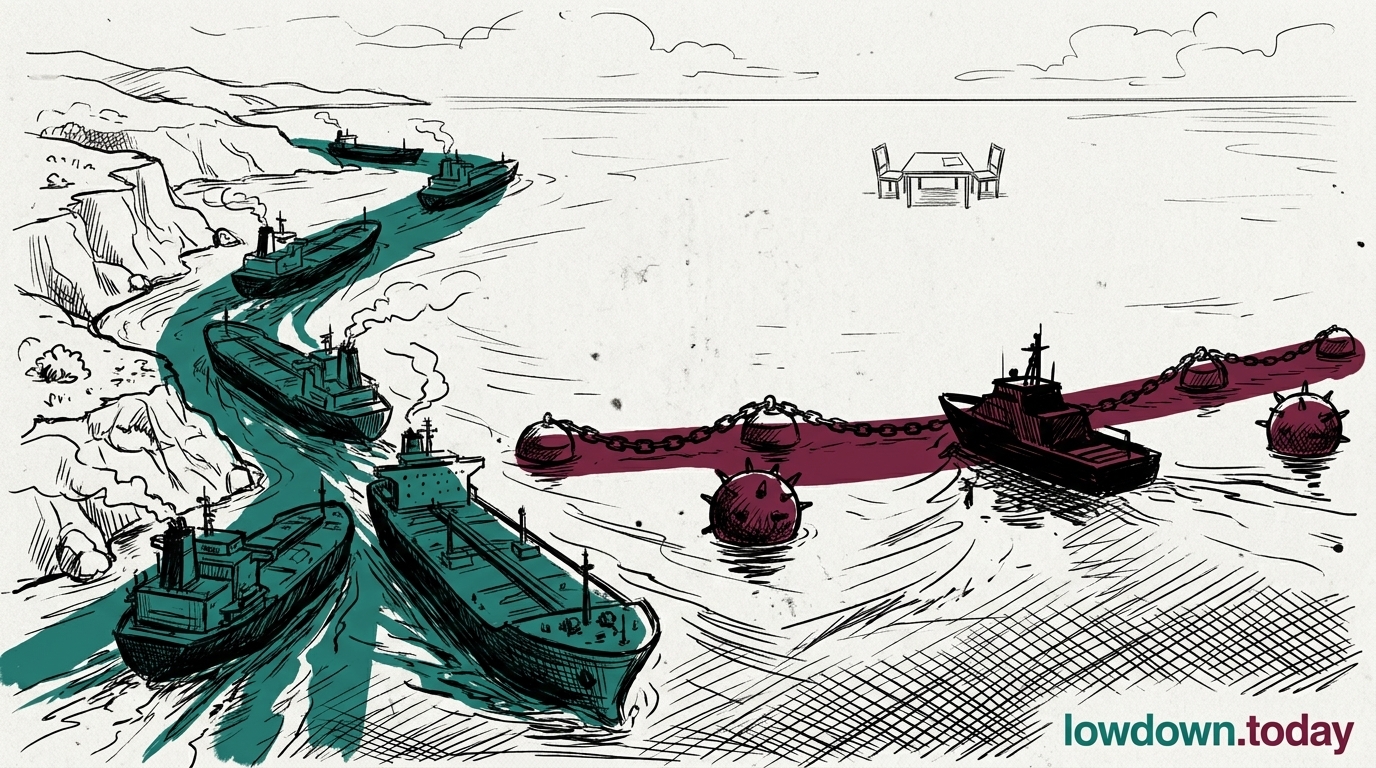
TTF broke the €46-47/MWh band it had held for roughly 38 sessions, rising about 6% on Tuesday 2 June to around €48.9/MWh⁠1 and re-approaching the €50 ceiling that capped the 18 May break at €50.17. The 25 May spike then hit €51.82 intraday before a US-Iran deal headline erased 8.1% in a session, confirming €50 as a diplomatic-premium ceiling. The 2 June move re-establishes that the structural premium is not fading: the 38-session hold was consolidation, not resolution.

The Iran diplomacy channel sets the ceiling. Each time a ceasefire headline materialises, TTF pulls 6-8% in a session; absent a headline, supply fundamentals re-establish the upward gradient. The asymmetry, a slow grind up against a sharp drop on diplomacy, is the trade expression of €50 as a diplomatic option rather than a physical floor.

Stacked with carbon, the level sets the marginal German CCGT at a clean spark spread barely positive to negative in off-peak hours. The €100-plus German power clear on 3 June was therefore a CCGT running at or below breakeven on a spread basis, dispatched because it was the marginal unit on the grid, not because the economics were compelling.

Deep Analysis

In plain English

European wholesale gas prices rose 6% on 2 June 2026, breaking out of the tight band they had held for almost two months. Stalled peace talks between the US and Iran drove the move, leaving Hormuz-routed LNG shipments offline. Higher gas prices feed directly into the cost of running gas power stations, which is why German electricity prices stayed above €100 through the same week.

Deep Analysis
Root Causes

Stalled US-Iran diplomacy sustained the TTF at the top of its range and triggered the 2 June breakout.

The Hormuz diplomatic channel functions as the ceiling. Each Iranian ceasefire headline , the 26 May US-Iran deal report that pulled TTF 8.1% in a session, establishes €50 as the ceiling where a diplomatic premium evaporates. Absent a headline, the physical supply gap re-establishes upward gradient.

The structural background is the TTF summer-winter strip inversion: the forward curve prices summer gas above winter, removing any commercial incentive to inject into storage and concentrating buying pressure in the prompt. The 38-session range was held by this equilibrium between physical tightness and diplomatic ceiling; the 2 June breakout reflects stalled diplomacy tipping the balance toward the supply-risk story.

What could happen next?
  • Consequence

    TTF above EUR 48 sustains German CCGT clearing above EUR 100 for day-ahead power, maintaining the structural FR-DE spread and the intra-EU manufacturing cost gap.

    Immediate · Reported
  • Risk

    A confirmed Troll A restart or Iran ceasefire headline would pull TTF 6-8% in a single session, as demonstrated by the 26 May reversal, collapsing the spread and reducing German power costs.

    Short term · Assessed
  • Risk

    Repeated EUR 50 ceiling tests without resolution increase the probability the market re-rates the Hormuz risk as a durable supply loss rather than a temporary diplomatic variable, potentially establishing a new structural floor.

    Medium term · Suggested
First Reported In

Update #15 · France EUR 9, Germany EUR 103: heat splits

Trading Economics / Barchart composite· 4 Jun 2026
Read original →
Different Perspectives
Office for Budget Responsibility
The OBR's 28 October forecast assumed $82 oil for 2026 and 2027, from market prices for the ten working days to 19 August, and blamed dearer wholesale energy on the war without naming Iran. It expects CPI inflation close to 4% in early 2027 even at that price.
Hengaw, Kurdish rights group
Hengaw reported the 3 November hangings of Amirhossein Maleki and Amirhossein Ebrahimi in Isfahan, saying Ebrahimi was tortured into confessing and that nine of 12 people sentenced to death in the case have now been hanged. Iran's judiciary holds that the defendants killed members of the security forces.
FINTRAC, Canada's financial intelligence unit
FINTRAC worked with the US Treasury on the 6 November designation of eight money services businesses in British Columbia, Ontario and Quebec. Treasury says the businesses still operate, some under new names, so closing them falls to Ottawa.
Abdul Qadir al-Dakhil, Governor of Nineveh
Al-Dakhil cancelled three Mosul International Airport contracts on 7 November over alleged links to armed groups, after meeting Prime Minister Ali al-Zaidi in Baghdad. He named no group or company, and said the contracts will go to international companies.
Kuwait
Kuwait
Kuwait condemned the Houthi missile fired towards the Madinah region on 5 November and restated its support for Saudi Arabia, the Qatar News Agency reported. Its state tanker company, Kuwait Oil Tankers Company, is among the Gulf state fleets on Iran's expanded Hormuz list.
Scott Bessent, US Treasury Secretary
Treasury designated an alleged Chandigarh false-flag network on 4 November and eight Canadian exchangers on 6 November, while State sanctioned alleged MANPADS intermediaries. None of the actions touches an oil buyer; they target the paper, cash and procurement around Iran's trade.

Written with AI from Lowdown's published reporting. Not individually reviewed by an editor. Editorial standards.
